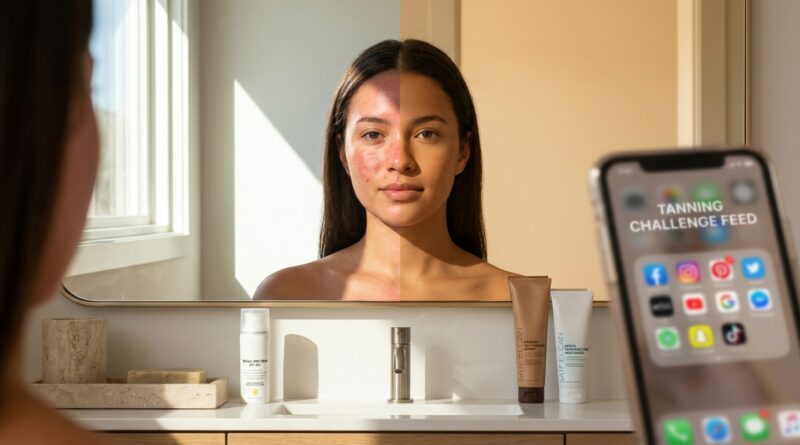
New ‘Tanmaxxing Myth-Buster’ Rule: Why Derms Say Extreme Tans Are Out And Smart Sunless Glow Is In
Your feed can make it feel like the darkest tan wins. If you have been doing a careful sunless routine and suddenly wondering whether you are being too cautious, you are not alone. A lot of people are feeling pulled in two directions right now. Social posts push “tanmaxxing” like it is a harmless shortcut to looking better, while dermatologists keep warning that chasing a burn is not beauty advice. It is skin damage. That gap is confusing, especially when everybody online seems so casual about it. The simple truth is this. Extreme tanning is out because the risks are real, and smart sunless glow is in because it gives you color without asking your skin to absorb avoidable UV damage. You do not have to choose between having fun and protecting your skin. You just need a better filter for what is trend hype and what is actually safe.
⚡ In a Hurry? Key Takeaways
- “Tanmaxxing” is not a safe beauty hack. A deep tan from UV exposure is a sign of skin injury, not skin health.
- If you want glow without the risk, use self-tanner or professional spray tans, then keep wearing broad-spectrum SPF every day.
- Sunless color is the safer option, but it does not replace sun protection. Fake tan can glow. It cannot block UV.
What the new myth-buster rule really means
Here is the clean, no-drama version. If a tanning trend tells you to stay in the sun longer, skip sunscreen, “build” through burns, or chase the deepest possible color at any cost, treat that as bad advice.
Dermatologists have been consistent on this for years. A tan caused by UV exposure is your skin responding to damage. It may look cosmetic on the surface, but underneath, UV rays can trigger changes linked to premature aging, dark spots, broken-down collagen, and increased skin cancer risk.
That is why the myth-buster rule is simple. The goal is not maximum tan. The goal is minimum damage.
Why “tanmaxxing” sounds tempting and goes wrong fast
Trends like this spread because they package risk as discipline. Drink this. Use this oil. Stay out a little longer. Push through the redness. It gets framed as commitment, when really it is just exposure.
The biggest myth: A base tan protects you
This idea refuses to die. People still say a “base tan” helps prevent burning later. In reality, that base tan still comes from UV damage. It is not a free pass. It is not armor.
The second myth: If you did not burn, you are fine
Not quite. Burning is a clear warning sign, but long UV exposure without a dramatic burn still adds up. Skin aging and pigment changes often show up slowly. That is part of what makes these trends tricky. The consequence is not always immediate, so the internet acts like there is none.
The third myth: Darker equals healthier
It may photograph well for a week. It does not mean your skin is thriving. Deep tans can leave behind uneven fading, rough texture, and stubborn discoloration, especially if you are repeatedly tanning hard.
Why dermatologists keep pushing sunless options
Because this is where you get the cosmetic result without the same UV cost. Self-tanners and spray tans color the top layer of skin. They do not require you to bake, burn, or gamble.
That does not make every product perfect for every person, of course. You still want to patch test if you have sensitive skin, prep dry areas, and choose a shade that looks believable on you. But from a tanmaxxing sunless tanning safety standpoint, this is the smarter lane.
If your feed has been making you second-guess that approach, it may help to read New ‘Tanmaxxing vs. Sunless’ Rule: How To Ditch Dangerous Deep-Tan Challenges Without Losing Your Glow. It gets into the social pressure piece, which is very real.
What is actually safe if you still want a glow
You do not need a twelve-step system. You need a few habits that work together.
1. Use sunless tanner for color
Lotions, mousses, drops, and spray tans are the easiest way to get visible bronze without chasing UV. Start lighter than you think you need. You can always deepen gradually.
2. Wear SPF like it is part of the routine, because it is
Broad-spectrum SPF 30 or higher is the baseline. Reapply if you are outside for extended time, swimming, or sweating. This matters whether you are bare-skinned or freshly bronzed.
3. Do not “tan through” sunscreen
This is one of those bad social media ideas that sounds clever until you think about it for five seconds. Sunscreen is there to reduce UV harm, not to help you slowly cook your skin more evenly.
4. Stop treating redness like progress
If your skin turns pink, hot, or tender, that is not part of the process. That is a warning. Back off immediately, cool the skin, moisturize, hydrate, and protect it from more sun.
5. Watch for pigment trouble
If your skin tends to get dark patches after sun exposure, you need to be extra careful. Repeated tanning can make uneven pigmentation much harder to fade later.
Easy checklist for tanmaxxing sunless tanning safety
Here is the practical version you can actually use.
- Pick self-tanner or spray tan if your goal is deeper color.
- Use broad-spectrum SPF 30+ every day on exposed skin.
- Reapply sunscreen every two hours outdoors, and after swimming or sweating.
- Avoid peak sun when possible, especially if you burn easily.
- Wear a hat, sunglasses, and cover-up when you will be outside a while.
- Never use burns as a sign that your tan is “working.”
- Patch test new sunless products if your skin is reactive.
- Moisturize dry spots like elbows, knees, and ankles before self-tanner.
- Check your skin regularly for changing moles or new spots, and see a dermatologist if something looks off.
Common questions people are too embarrassed to ask
Does self-tanner protect me from the sun?
No. It changes color, not your UV protection. You still need sunscreen.
Is tanning oil ever a safe shortcut?
Not if the idea is to intensify UV exposure. That is the exact logic dermatologists warn against.
What if I just tan “a little”?
Less exposure is better than more exposure, but the safest route to visible bronze is still sunless color plus SPF.
Can I enjoy the beach without trying to tan?
Absolutely. This is the part the internet forgets. You are allowed to swim, hang out, wear cute summer clothes, and take photos without turning your skin into a project.
At a Glance: Comparison
| Feature/Aspect | Details | Verdict |
|---|---|---|
| Extreme UV tanning | Can cause burns, speed up wrinkles, worsen dark spots, and raise skin cancer risk. | Not worth it. |
| Sunless tanning | Adds cosmetic color without requiring UV exposure. Needs prep and maintenance for the best finish. | Best option for safer glow. |
| Sunscreen use | Helps protect skin from UV damage, whether or not you are using self-tanner. | Non-negotiable. |
Conclusion
The loudest trend is not always the smartest one. Right now, TikTok and Instagram are pushing extreme tanning challenges that make risky behavior look normal, even aspirational. Meanwhile, dermatologists are warning about burns, melanoma risk, and pigment damage that can stick around long after the trend moves on. The good news is you do not have to give up the glow to protect your skin. Sunless products give you a much safer path to color, and a simple routine with SPF, shade, and smart habits lets you stay in the fun without getting pulled into viral nonsense. That is the real win here. Keep the bronze if you want it. Skip the damage. Your best tanning choices should be pro-skin, not just pro-trend.