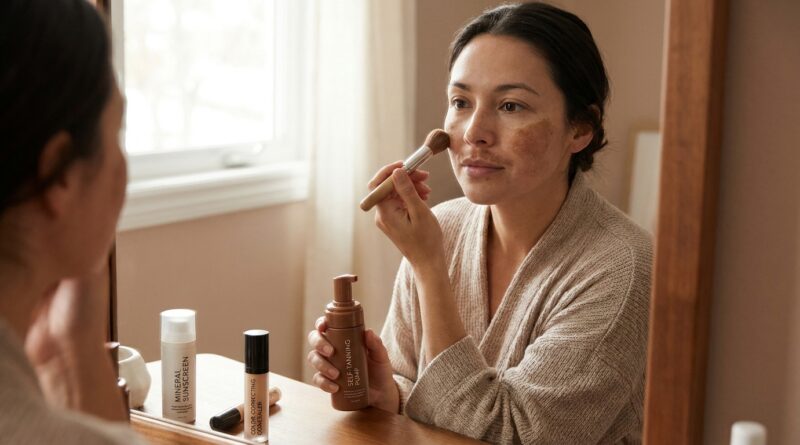
New ‘Tan-Friendly Melasma’ Rule: How To Fake A Glow Without Making Dark Patches Worse In 2026
Melasma can make even a “safe” glow feel like a trap. You skip the sun, do the right thing, reach for self-tanner, and somehow the very spots you were trying to blur end up looking darker, sharper, or oddly dirty. That is frustrating. It can also make you feel like every beauty tip was written for people who do not deal with pigment patches on their cheeks, upper lip, or forehead. The good news is that self-tanner is not automatically off-limits. You just have to use it differently. If you are wondering how to use self tanner if you have melasma, the big rule is simple: do not chase an all-over deep tan. Aim for a soft, controlled tint, prep pigment-prone areas carefully, and treat your face differently from your body. That gives you the cosmetic warmth you want without making dark patches stand out more than they already do.
⚡ In a Hurry? Key Takeaways
- If you have melasma, use a lighter self-tanner and apply less, or none, directly over the darkest patches.
- Buffer pigment-prone areas with moisturizer first, then build color slowly in thin layers instead of doing one deep tan.
- Self-tanner does not treat melasma, and any tan can make you look more uneven if you are not strict about sunscreen and heat protection.
Why self-tanner can make melasma look worse
Self-tanner usually works through DHA, which reacts with the very top layer of skin to create temporary color. The problem is that melasma patches and post-sun dark spots do not always behave like the rest of your skin.
Those areas can be drier, thicker-looking, or already deeper in tone. So when you apply self-tanner evenly, the result may not look even at all. The darker patches can grab onto more color visually, or the contrast around them becomes more obvious once the rest of your face warms up.
That is why the old advice, “Just apply it evenly everywhere,” often backfires.
The new tan-friendly melasma rule for 2026
Think of your face in zones, not as one canvas.
If you have melasma, your goal is not maximum bronze. Your goal is optical balance. That means using self-tanner to add gentle warmth to areas that can handle it, while going lighter over pigment-prone spots so the whole face reads more even.
The basic rule
Use the least amount of self-tanner on the darkest areas. Use the most blending around them.
For many people, that means:
- Less product on the forehead if that is where your melasma sits
- A very light hand over the upper lip
- Careful blending across the cheeks instead of one heavy coat
- More warmth on the perimeter of the face, jawline, neck, and body
How to use self tanner if you have melasma
1. Pick a lighter formula than you think you need
Dark mousses and ultra-deep drops are often too aggressive for pigment-prone skin. A light to medium face tanner is usually easier to control. Gradual tanning lotions are especially useful because they let you stop before your patches get too pronounced.
If your main concern is facial melasma, a gradual product often beats a one-night dramatic tan.
2. Patch test on the actual problem area
Do not just patch test on your arm. Test near the melasma itself, in a small hidden edge if possible. Wait a full day to see how the color develops. Some formulas look fine on normal skin but go muddy on darker patches.
3. Prep dry areas, but do not over-exfoliate your face
People hear “exfoliate before tanning” and go too hard. With melasma, your skin may already be sensitive from actives, peels, retinoids, or prescription pigment treatments. Scrubbing can leave you irritated, and irritation can make pigmentation harder to manage.
Instead, use a gentle cleanse and make sure flaky spots are smoothed with a plain moisturizer. Focus on comfort, not aggressive polishing.
4. Buffer dark patches with moisturizer first
This is one of the best tricks. Before tanning, dab a light layer of moisturizer over the areas that tend to go too dark. That creates a slight buffer so the self-tanner develops more softly there.
You are not trying to block all color. You are trying to slow it down.
5. Apply in thin layers, and stop early
One light pass is often enough for the face. If you want more warmth, add a second layer the next day only where needed. This is much safer than laying down a full, rich coat and hoping it develops evenly.
Melasma usually looks worse when the whole face gets too tan too fast.
6. Consider skipping the darkest patches entirely
Yes, really. In some cases, the smartest move is to tan around the patch and use makeup or tinted sunscreen to blend the rest. This works especially well on the upper lip, temples, or sharply defined cheek patches where self-tanner tends to exaggerate the edge.
7. Separate your face routine from your body routine
Your body can often handle a deeper tan than your face. That is fine. You do not need the exact same shade everywhere. In fact, a slightly lighter face often looks more natural and is easier to manage.
If you are already navigating special skin needs, you may also like New ‘Pregnancy-Safe Glow’ Rule: How To Use Self-Tanner When You’re Expecting In 2026, which follows the same practical idea of adjusting tanning habits to fit real-life skin concerns.
Where people usually go wrong
Choosing a formula that is too dark
A deep olive or violet-based tan can look beautiful on the body. On melasma patches, it can turn ashy or make discoloration look dirtier. Start lighter than your ego wants.
Using too many tanning drops in skincare
Tanning drops are easy to overdo. If you have melasma, count carefully. A tiny number of drops mixed into moisturizer is usually better than eyeballing it.
Forgetting that heat can be a trigger too
This is a big one. Many people think only UV makes melasma flare. But heat can also make it worse for some people. So if your fake tan routine includes a steamy shower, hot yoga, sitting in the sun while it develops, or blow-drying your face with warm air, you may be working against yourself.
Trying to fix melasma with more bronzer
Once your patches look too dark, adding more fake tan rarely helps. It usually creates a heavier, less natural result. Pull back, let it fade, and use temporary color products instead.
A practical day-to-day playbook
If your melasma is mild
Use a gradual tanning lotion or low-strength face mist every other night. Apply lightly across the face, then sheer out the product over pigmented areas with a damp sponge or clean fingers.
If your melasma is moderate or patchy
Moisturize the patches first. Apply self-tanner mostly to the outer face, jawline, neck, and high points where you want warmth. Use leftover product only over the pigmented zones.
If your melasma is very noticeable or currently flaring
Skip facial self-tanner for now. Tan the body and use a tinted mineral sunscreen, complexion product, or bronzing drops in makeup instead. Sometimes the best fake glow is the one that washes off at night.
What to use instead of direct self-tanner on problem spots
If a certain area always develops badly, stop fighting it. Try these instead:
- Tinted sunscreen for daytime evening-out
- Liquid bronzing drops mixed into foundation, not skincare
- Cream bronzer placed around, not on top of, the patch
- Color-correcting concealer for gray or muddy-looking areas
This gives you control without locking yourself into a week of uneven color.
Important skin-health reminder
Self-tanner does not protect melasma. It does not replace sunscreen. It does not mean your skin can handle more sun.
If anything, fake tan can create a false sense of safety. Meanwhile, UV exposure, visible light, and heat may still be feeding the pigmentation underneath. Daily broad-spectrum sunscreen, ideally tinted if visible light worsens your melasma, still matters. Hats matter. Shade matters.
And if you are using prescription fading treatments, check with your dermatologist about when to pause strong exfoliants or retinoids around tanning days so you do not end up patchy.
At a Glance: Comparison
| Feature/Aspect | Details | Verdict |
|---|---|---|
| Deep self-tanner on entire face | Can make melasma patches look darker, sharper, or muddy | Usually not the best choice |
| Light or gradual self-tanner with buffered patches | Lets you build subtle warmth while softening overdevelopment in problem areas | Best approach for most people |
| No tanner on patches, makeup-only blending | Gives the most control when melasma is active or very noticeable | Smart fallback option |
Conclusion
If you have been trying to figure out how to use self tanner if you have melasma, the answer is not “tan normally and hope for the best.” It is to go lighter, slower, and more strategically than everyone else. That may not sound glamorous, but it works better. Melasma and hyperpigmentation are showing up more and more in search, in derm offices, and in real life, while many people are also being told to stay out of the sun. So the need is real. Wanting a bronzed, healthier-looking glow while treating a stubborn pigment condition is not shallow. It is human. A careful self-tan plan, with less product on pigment-prone areas and more reliance on gradual color and tinted protection, gives you a realistic way to look good without making those dark patches the star of the show.