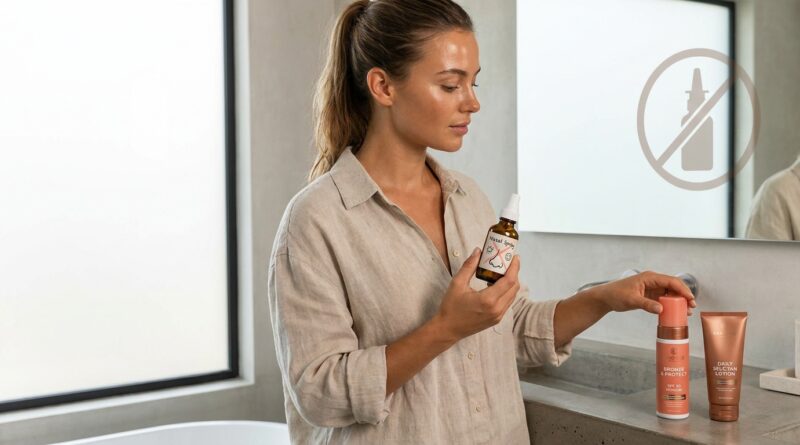
New ‘Nasal Tan Red-Flag’ Rule: Why Derms Say Spray Tan In Your Nose Is The One Glow Shortcut To Avoid
Your feed makes nasal tanning sprays sound weirdly simple. A couple of spritzes, no tanning bed, no beach day, deeper color. I get why people are curious. If you love a bronzed look, “sunless” can sound like the smart shortcut. The problem is that nasal tanning spray safety is a lot murkier than the videos make it seem. Many of these products are not the same thing as a regular self-tanner. They may contain Melanotan or similar lab-made peptides that work inside the body, not on top of the skin. That is exactly why dermatologists are waving the red flag. You are not just bronzing your outer layer. You may be affecting pigment pathways, hormones, nausea, moles, and potentially much more. If a product is being sold in DMs, has vague ingredient lists, or promises a “safe tan without UV” through your nose, that is your cue to slow down and skip it.
⚡ In a Hurry? Key Takeaways
- Nasal tanning sprays are not considered a safe swap for regular self-tanner, especially when they contain Melanotan or other unregulated peptides.
- If you want color without UV, stick with gradual self-tanners or a professional spray tan, and protect your nose and lungs from mist exposure.
- “Sunless” does not always mean safe. A product sprayed into your nose can still affect your whole body.
Why dermatologists are so concerned
The big issue is simple. Topical self-tanner sits on the skin and reacts with the outermost dead skin cells. Nasal tanning sprays are marketed to change your body’s pigment response from the inside.
That is a completely different category of risk.
Many viral products are tied to Melanotan, usually Melanotan I or II, or they hint at “peptides” without being clear. These compounds are not the same as DHA, the ingredient used in most self-tanners and spray tans. They are meant to stimulate melanocortin pathways involved in pigmentation. That is why people say they tan faster or look darker.
But when you alter body systems instead of just tinting skin, side effects become a real concern.
How nasal tanning sprays actually work
A standard lotion, mousse, or spray tan colors the skin surface. A nasal tanner is usually promoted as a mist you inhale or absorb through the nasal lining, so the active ingredient enters the body. The goal is not to “paint” your skin darker. The goal is to push your body to make more pigment.
That means the marketing line “like self-tanner, but easier” is misleading.
Topical bronzer versus internal pigment trigger
Here is the easiest way to think about it.
A DHA self-tanner is like staining the top layer of a wooden table. A nasal tanning product is more like changing the wiring behind the lamp. One affects the surface. The other aims to affect internal signaling.
That is why dermatologists do not put these in the same bucket.
What side effects get doctors worried
The reports and warnings around Melanotan-style products often include nausea, flushing, appetite changes, spontaneous erections in some users, darkening of freckles or moles, and uneven pigment changes. Dermatologists also worry about people with lots of moles or a personal or family history of skin cancer.
The phrase that should make you pause is this: darkening moles is not a cute beauty side effect.
When pigment behavior changes, it can make skin monitoring harder. Some experts have also raised concerns that these products could potentially encourage risky changes in pigment cells, though the exact long-term risk picture is still not something you want to test on yourself with an unregulated spray bought online.
And then there is the nose itself. Spraying mystery compounds into delicate nasal tissue is not risk-free. Irritation, dosing problems, contamination, and inconsistent absorption are all on the table.
The biggest myth: “No sun needed means no risk”
This is where people get tripped up.
Yes, avoiding UV tanning beds is smart. Yes, reducing sun damage matters. But “not UV” does not automatically equal “safe.” If a product affects your body systemically, the safety question shifts. It does not disappear.
That is why nasal tanning spray safety is not really about whether the tan comes from the sun. It is about what you are putting into your body, how it is made, and whether anyone trustworthy is regulating it.
Red flags in product listings and social DMs
If you are trying to sort the harmless from the sketchy, these warning signs help fast.
Red flag 1: Vague ingredient lists
If the label says “peptide blend,” “bronzing formula,” or “pro tanning accelerator” without listing exact active ingredients, walk away.
Red flag 2: Sold through DMs or private chats
If someone says “message me for the real stock” or sends payment links through social apps, that is not a good sign. Beauty products that affect the body should not feel like buying concert tickets from a stranger.
Red flag 3: Claims that sound too clean
“100% safe.” “Doctor approved.” “No side effects.” “Better than sunbeds.” Those are marketing lines, not proof.
Red flag 4: No real brand accountability
No company address. No batch information. No clear manufacturer. No way to verify what is inside. Hard pass.
Red flag 5: Before-and-afters that hide the full routine
A lot of users still tan in the sun or tanning bed while using these products. So the product may be getting credit for results that actually come from UV exposure too.
How this differs from a normal spray tan
This part matters because people often mix up the categories.
A salon spray tan or at-home DHA spray is a surface cosmetic. The main concern there is inhaling mist, not a peptide changing your internal pigment signaling. If you like spray tans, it is worth reading New ‘Spray-Tan Lung Safe’ Rule: The Fresh 2026 Science On DHA Inhalation And How To Protect Your Lungs In The Booth, because even regular spray tans are safer when you protect your nose and lungs during the session.
That is a very different conversation from using a nasal tanner on purpose.
Safer ways to get the glow
You do not need to gamble with mystery peptides to look bronzed.
Gradual self-tanners
These are great if you want control and a softer result. They build slowly, so you are less likely to get streaks or go too dark too fast.
Professional spray tans
If you want event-level glow, a good spray tan technician can get you there fast. Just use the protective gear offered and avoid breathing in mist.
Barrier-friendly prep
Exfoliate gently. Moisturize dry spots like elbows, hands, knees, and ankles. Skip harsh scrubs right before tanning. This helps color go on more evenly without beating up your skin barrier.
Body bronzing drops or wash-off color
Perfect for one-night color with almost no commitment.
What to say when a friend tries to sell it to you
You do not need to turn it into a fight. Keep it short.
Try this: “I’m sticking to topical tanners only. I don’t want to mess with anything unregulated that goes through my nose or affects pigment internally.”
Or even simpler: “I’m good. I only use regular self-tanner or spray tans.”
That is enough.
Who should be extra cautious
Honestly, everyone should be cautious here. But especially people with lots of moles, melasma, a history of pigment issues, a personal or family history of skin cancer, hormone-sensitive health concerns, or anyone prone to allergic reactions and nasal irritation.
If you already monitor changing spots with a dermatologist, adding a product linked to mole darkening is not a casual choice.
At a Glance: Comparison
| Feature/Aspect | Details | Verdict |
|---|---|---|
| Nasal tanning sprays | Often marketed as “sunless” but may contain Melanotan or vague peptide ingredients that act inside the body and are poorly regulated. | Avoid |
| Topical DHA self-tanners | Color the outer layer of skin without trying to change internal pigment signaling. | Safer option for at-home glow |
| Professional spray tans | Fast, even color when done well. Main caution is protecting your nose and lungs from inhaling overspray. | Good option with proper protection |
Conclusion
If this trend has you confused, that is completely fair. The branding is designed to blur the line between “sunless” and “safe,” and those are not the same thing. The smart move is to treat nasal tanning spray safety as a serious health question, not a beauty hack. When a product may contain Melanotan or similar peptides, comes from unregulated sellers, and works by affecting pigment inside the body, the risk is simply not worth the shortcut. The good news is you still have solid options. Gradual self-tanners, professional spray tans with proper protection, and good skin prep can get you the glow without rolling the dice on your skin, hormones, or lungs. That is the real win here. You do not have to risk an injection or a nasal mist just to keep up with a trend.