New ‘Ingredient-Swap Tan’ Rule: The 2026 Guide To Choosing Safer Self-Tanner Formulas For Your Skin, Not Just Your Shade
You buy a “clean” self-tanner, flip the bottle over, and suddenly it feels like you need a chemistry degree just to avoid a rash. That frustration is real, especially if your skin is reactive, acne prone, dry in winter, or quick to flare from fragrance and random plant extracts. The hard truth is that most self-tanners still use the same tanning active, DHA, but the skin trouble often comes from everything wrapped around it. Added perfume, color bronzers, essential oils, preservatives, and penetration boosters can turn a simple glow into hives, itchy patches, clogged pores, or that tight, hot feeling that lingers for days. The good news is you do not need to fear every bottle. You just need a smarter filter. Think of this as your self tanner ingredient safety guide 2026. We are not chasing perfect marketing words. We are looking for the ingredient swaps that give your skin a better shot at staying calm.
⚡ In a Hurry? Key Takeaways
- DHA is usually not the only issue. Fragrance, dyes, bronzers, essential oils, and harsh preservatives are often the real trigger for reactions.
- Choose self-tanners with short ingredient lists, no added fragrance, fewer trendy botanicals, and soothing support ingredients like glycerin or hyaluronic acid.
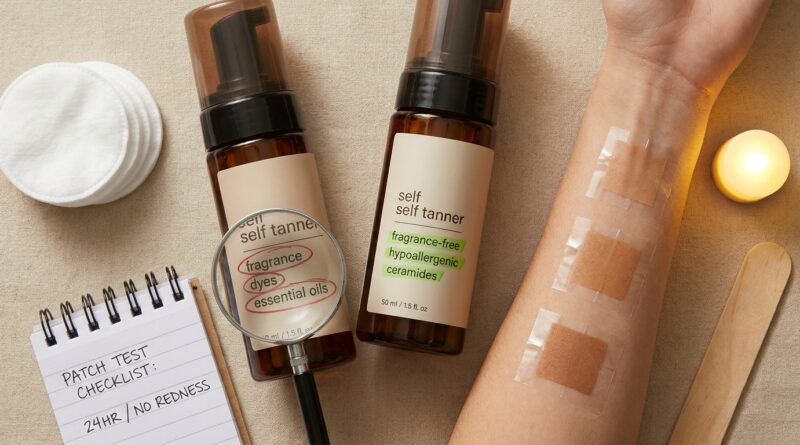
- Patch testing for 24 to 72 hours is the safest way to spot trouble before you put a formula all over your face or body.
Why the 2026 Ingredient-Swap Rule Matters
The big shift this year is simple. Stop shopping by shade name alone. Start shopping by the support ingredients around the tanning active.
Most sunless tanners still rely on DHA, short for dihydroxyacetone. It reacts with dead skin cells on the surface of your skin to create that tan look. On its own, DHA can still bother some people, but many of the complaints people blame on “fake tan” are tied to the rest of the formula.
That is why an ingredient-swap mindset matters. If one formula gave you a rash, the answer is not always “self-tanner is not for me.” Sometimes the real answer is “that version had too many extras my skin hated.”
First, Know What Usually Causes the Trouble
1. Fragrance is a common problem
If a label says “fragrance,” “parfum,” or lists lots of essential oils, that is a yellow flag for sensitive skin. Fragrance is one of the most common cosmetic triggers for irritation and allergy. It can sting, itch, or leave skin red and warm, especially on dry winter skin.
Safer swap: Look for “fragrance-free,” not just “unscented.” Unscented products can still contain masking fragrance.
2. Essential oils are not automatically gentle
Tea tree, citrus oils, lavender, peppermint, eucalyptus. They sound natural and soothing. On reactive skin, they can do the opposite. Citrus oils in particular can be irritating, and heavily scented botanical blends can stack up your risk fast.
Safer swap: A plain formula with boring moisturizers is often better than a “spa blend” packed with oils and extracts.
3. Added bronzers and dyes can be the hidden trigger
Many self-tanners include instant bronzers so you look tan right away. Helpful, yes. But these extras can stain, clog, or irritate skin, especially acne-prone skin or skin with eczema patches.
Safer swap: Clear or lightly tinted formulas often have fewer color additives than deep guide-color mousses.
4. Penetration enhancers can backfire
Some products use ingredients that help actives spread or absorb better. That can sound great in ads. But on sensitive skin, it may mean more sting, more disruption, and more chance that other irritating ingredients get where they should not.
Safer swap: Go for simple lotions, gels, or serums that focus on even application instead of “rapid deep absorption” claims.
5. Preservatives still matter
You do need preservatives. Nobody wants a contaminated bottle. But certain preservative systems can be more irritating for some users than others, especially if your skin barrier is already damaged from exfoliating or shaving.
Safer swap: If you know you react to a certain preservative family, avoid it specifically. If you do not know, keep a quick notes app log after each new product.
The Supporting Ingredients That Usually Feel Kinder
This is where smart ingredient swapping helps. You are looking for formulas that still tan, but cushion the skin instead of poking at it.
Look for these helpful types of ingredients
- Glycerin for hydration
- Hyaluronic acid for water binding
- Panthenol for barrier support
- Aloe, if you already know your skin tolerates it
- Allantoin for calming support
- Squalane for dry, tight skin
These do not guarantee zero reaction, but they are usually more useful than a formula whose main selling point is a cloud of perfume and ten tropical flower extracts.
How to Read a Self-Tanner Label Without Getting Lost
Here is the simple version.
Start with the first impression
If the front says things like “ultra dark instant bronze,” “tropical scent burst,” or “botanical infusion,” flip it over and inspect carefully. Those claims often mean more extras.
Then scan for the red-flag cluster
If you see fragrance, several essential oils, lots of plant extracts, and strong colorants all in one formula, that is a heavier risk mix for reactive skin.
Finally, check the calming base
If the formula includes humectants and barrier-friendly ingredients, that is usually a better sign than one built mostly around cosmetic wow-factor.
If social media has made you feel like your tan should look filtered and flawless every single time, it is worth reading New ‘AI Tan Trap’ Rule: Why Virtual Filters Are Quietly Wrecking Your Real-World Skin Habits. It is a good reminder that skin in real life has texture, quirks, and limits.
The Best Ingredient Swaps by Skin Type
For reactive or allergy-prone skin
Skip heavy fragrance, essential oils, and long extract lists. Pick fragrance-free formulas with short ingredient decks.
For acne-prone skin
Be careful with thick oils, heavy guide bronzers, and rich body butters used on the face. Lightweight gel or serum self-tanners are often a better fit.
For very dry skin
Choose formulas with glycerin, panthenol, or squalane. Dry skin can make self-tanner look patchy, but harsh fragrant formulas can also make that dryness worse.
For eczema-prone skin
Avoid applying over active flares. Look for fragrance-free lotion-based options with minimal extras. If your barrier is cracked or stinging, wait until it calms down.
How to Patch Test Smarter, Not Just Faster
This is the step people skip. Then they regret it.
Use a small hidden spot
Try behind the knee, along the jawline if testing a face tanner, or the inner arm if that area is usually reliable for you.
Wait long enough
Do not judge after one hour. Check at 24, 48, and even 72 hours if you have a history of delayed reactions.
Test on normal skin, not freshly shaved or scrubbed skin
Freshly exfoliated skin can react more strongly and give you a confusing result.
Watch for more than redness
Look for bumps, warmth, itching, tightness, tiny whiteheads, or dry shiny patches. Not every bad reaction looks dramatic right away.
Common Marketing Claims That Mean Less Than You Think
“Clean”
There is no single legal meaning here. A “clean” self-tanner can still contain fragrance or botanical triggers.
“Natural”
Poison ivy is natural too. Natural does not mean low-risk for sensitive skin.
“Dermatologist tested”
Useful, maybe. But it does not mean dermatologist approved for your specific allergies or acne triggers.
“For all skin types”
That is a broad promise, not a guarantee.
A Simple Shopping Checklist for Safer Self-Tanner Picks
- Fragrance-free beats perfumed
- Shorter ingredient lists are often easier to trust
- Fewer plant extracts means fewer wildcard triggers
- Clear or lightly tinted formulas may be gentler than heavy bronzer formulas
- Hydrating support ingredients help reduce that tight, overworked feeling
- Patch test every new formula, even if the brand says sensitive-skin friendly
At a Glance: Comparison
| Feature/Aspect | Details | Verdict |
|---|---|---|
| Fragranced vs fragrance-free | Fragranced formulas may smell nicer but are more likely to trigger irritation or allergy in sensitive skin. | Fragrance-free is the safer bet. |
| Heavy bronzer vs clear formula | Instant color helps application, but extra dyes and bronzers can add irritation or breakouts for some users. | Choose clear or lightly tinted if your skin is reactive. |
| Botanical-packed vs simple hydrating base | Trendy extracts sound nice, but more ingredients can mean more reaction points. A plain hydrating base is easier to tolerate. | Simple wins for sensitive skin. |
Conclusion
The safest way to shop self-tanner in 2026 is to stop falling for the front-label promises and start judging the support ingredients around the DHA. Today’s self-tanner shelves are packed with formulas that all lean on DHA but layer in different fragrances, dyes, bronzers, penetration enhancers and trendy botanicals, and dermatology papers plus real-world reviews are showing a rise in irritant and allergic reactions linked to these extras, not just the DHA itself. The good news is that you do not need to swear off sunless tan altogether. If you learn which ingredients are more likely to stir up trouble, look for calmer swaps, and patch test like a pro instead of just hoping for the best, you can keep your glow and cut down your odds of rashes, flares, and mystery breakouts during party season and winter dryness.