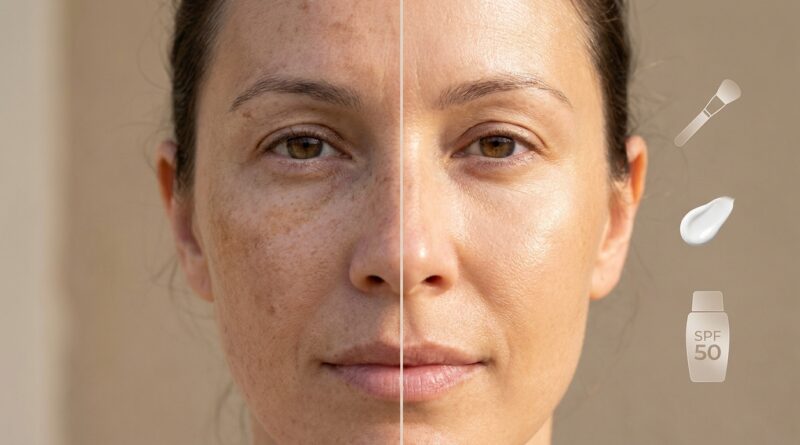
New ‘Melasma-Safe Tan’ Rule: How To Stop Self Tanner From Deepening Dark Spots On Your Face
You are not imagining it. One night your self tan looks smooth and glowy, and the next morning every melasma patch, sun spot, and old acne mark seems to have been outlined with a highlighter. It is frustrating, especially when you already gave up real sun because you were trying to be kinder to your skin. The tricky part is that self tanner does not create pigment the way UV does, but it can still make uneven tone look more obvious because it grabs harder to dry, rough, or slightly thicker areas. That is why a face can look “tan” overall while dark patches suddenly stand out more. The good news is there is a simple melasma-safe rule to start using right away: treat the face differently from the body, use less product, prep strategically, and never try to tan over active pigmentation the same way you would tan normal skin.
⚡ In a Hurry? Key Takeaways
- Self tanner can make melasma and dark spots look darker, not because it causes instant new pigment, but because it develops more obviously on uneven skin.
- Use a lighter layer on the face, buffer dark patches with moisturizer, and skip heavy application directly over melasma-prone areas.
- Sunless tan is still safer than UV tanning, but pigment-prone skin needs a different routine if you want a glow without spotlighting dark spots.
Why self tanner makes melasma and dark spots stand out
Self tanner works by reacting with the outermost layer of dead skin. That reaction can look deeper on spots that are drier, rougher, or simply darker to begin with. So while the product is not “creating” melasma overnight, it can make existing discoloration look stronger.
Think of it like wood stain on a table. If one patch is more porous, it drinks in more color. Skin can behave the same way.
This is why people searching for help with self tanner melasma dark spots keep running into the same complaint. The tan itself may be even. The underlying pigment is what suddenly looks louder.
The new melasma-safe tan rule
The rule is simple. Do not apply facial self tanner evenly across every inch of pigment-prone skin and hope for the best.
Instead, aim for optical balance, not maximum color. On a face with melasma or post-acne marks, less is usually better.
What that means in real life
Use a lower amount of self tanner on the face than on the body. Focus on the outer perimeter of the face first, like the forehead edges, temples, jawline, and neck. Then use whatever is left on your mitt or hands to lightly blend over the center of the face.
If you have obvious patches, put a thin layer of plain moisturizer over those spots first. That acts like a buffer so the tanner develops more softly there.
If your pigmentation is stubborn, do not apply extra tanner to “match” the rest of the face. That usually makes the contrast worse.
What to do tonight before you tan
1. Exfoliate gently, not aggressively
You want a smooth surface, not an irritated one. Use a soft washcloth or very mild exfoliant the day before or several hours before tanning. Skip harsh scrubs, rough brushes, and strong acids right before application.
Overdoing exfoliation can irritate melasma-prone skin, and irritation can make pigment issues harder to manage over time.
2. Moisturize the dark patches first
This is the step most people miss. Apply a light, even layer of moisturizer over melasma patches, old acne marks, and dry areas around the nose or mouth. Give it a minute to settle.
You are not blocking the tan completely. You are slowing it down in the places that tend to go too dark.
3. Choose a lighter formula for the face
If your body tanner is deep, extra-dark, or mousse-heavy, it may be too much for a pigmentation-prone face. Facial tanning drops mixed into moisturizer or a gradual tanning lotion usually give you more control.
That control matters more than speed.
4. Use the leftovers method
Apply tanner to the body or outer face first. Then use only the leftover product on your mitt for the areas with dark spots. This keeps the face from getting the strongest dose.
Where people go wrong
The biggest mistake is treating the face like the legs. Body skin can often handle a full, even coat without much drama. Facial skin, especially skin with melasma, usually cannot.
Another mistake is layering more product the next day because the face looks lighter than the body. That sounds logical, but it often deepens the contrast around pigmented spots.
A third mistake is applying tanner after using strong retinoids, peels, or active acne products without adjusting your routine. Those products can create uneven dryness, which gives self tanner more places to cling.
How to get a glow without making spots louder
Try “strategic tanning” instead of full-face tanning
You do not need wall-to-wall color. A little warmth around the hairline, cheeks, and neck can make the whole face look healthier without loading pigment onto problem areas.
Mix your tanner with moisturizer
If your formula allows it, dilute one pump or a few drops with your regular moisturizer. This is one of the easiest ways to soften the final result.
Use bronzing makeup where you want more depth
For many people, the best fix is not more self tanner. It is a bit of washable bronzer or skin tint in the spots where you want extra warmth. That gives you control without committing for several days.
What if your dark spots already look darker?
Do not panic and do not scrub your face raw. Start with a gentle cleanse. Then use a soft washcloth and a little cleansing oil or micellar water to lift some surface color gradually.
You can also use a bland moisturizer for a day or two and let the tan fade naturally. In most cases, the uneven look improves as the self tanner wears off.
If this keeps happening, it is worth reading New ‘Melasma-Safe Tan’ Rule: How To Stop Self Tanner From Supercharging Dark Patches On Your Face, which breaks down the same issue in a focused, practical way.
Products and habits that help
Best bets
Gradual tanning lotions, facial tanning drops, hydrating formulas, and light application tools usually work best for pigment-prone skin.
Use caution with
Extra-dark mousses, quick-develop formulas, and anything that tends to grab onto dry patches. These are not always bad products. They are just less forgiving.
Do not skip sunscreen
This part is important. Self tanner does not protect melasma from sunlight. In fact, if you love the tanned look, it can be easy to forget that your skin still needs daily UV protection. Broad-spectrum sunscreen is still part of the plan.
At a Glance: Comparison
| Feature/Aspect | Details | Verdict |
|---|---|---|
| Full-strength face application | Applies the same amount across normal skin and dark patches, which can make discoloration stand out more. | Usually not the best choice for melasma-prone skin. |
| Buffered application | Moisturizer on dark spots first, then a lighter layer of tanner over the face. | Best starting method for a more even result. |
| Gradual tan or drops | Lets you build warmth slowly and stop before spots get too noticeable. | The safest and easiest option for control. |
Conclusion
If self tanner keeps making your pigment look worse, the answer is not to give up and go back to UV. It is to change the way you use it. Right now there is a real gap between the boom in “safe” sunless tanning and honest, practical advice for people with pigmentation issues. Community posts are full of tanners with melasma and sun damage who feel stuck between risking more UV or watching their self tanner cling to every patch and freckle. A focused guide on melasma safe self tanning gives those readers answers they are not getting from brand marketing: why it happens, what is realistic and what they can do tonight to stop their tan from exaggerating dark patches. That kind of specific, problem-solving advice helps you keep the glow you like without sacrificing pigment control. Small changes matter here, and they can make tomorrow morning’s mirror a lot less annoying.