New ‘Hypoallergenic Tan Routine’ Rule: How To Build A Fragrance‑Light, Sensitive‑Skin Safe Glow In 2026
Your skin is not being fussy. If a so-called gentle tanning mist left you hot, itchy, blotchy, or weirdly tight, that reaction is real. A lot of people with eczema, rosacea, perioral dermatitis, and plain old sensitive skin are running into the same problem. The label says “clean,” “fragrance free,” or “hypoallergenic,” but the formula still sneaks in perfume mixes, botanical extracts, preservatives, or drying alcohols that can upset an already fragile skin barrier. That is why the new rule of thumb for 2026 is simple. Stop shopping by front-label promises, and start shopping by ingredient pattern, patch testing, and formula type. If you want a hypoallergenic self tanner for sensitive skin, the safest path is usually a short ingredient list, low fragrance, fewer essential oils, and a slow, careful test before you put anything all over your face or body.
⚡ In a Hurry? Key Takeaways
- A true hypoallergenic self tanner for sensitive skin is not defined by the marketing on the bottle. It is defined by a lower-risk ingredient list and a careful patch test.
- Start with fragrance-light lotions or creams instead of heavily scented mists and fast-drying sprays, especially for rosacea-prone or eczema-prone skin.
- If your skin burns, stings, or stays red after a test, stop right away. Saving your barrier is worth more than forcing a glow.
Why “hypoallergenic” is not a magic safety badge
This is the annoying part. Terms like “hypoallergenic,” “clean,” and even “fragrance free” can sound more precise than they really are. They are often marketing language first, medical guarantees second. Some products labeled gentle still contain masking fragrance, essential oils, plant extracts, or preservatives that are common triggers for reactive skin.
That does not mean every self tanner is bad. It means the front of the bottle is not enough. You need to flip it over.
What often causes the trouble
For many people, DHA is not the only issue. Reactions can come from fragrance blends, limonene, linalool, citrus oils, lavender oil, eucalyptus, peppermint, certain preservatives, or high amounts of denatured alcohol. Even “natural” ingredients can be a problem if your skin barrier is already stressed.
If you suspect DHA itself might be part of the issue, this guide is worth reading too: New ‘DHA‑Allergy Safe List’ Rule: How To Find A Fake Tan That Won’t Break You Out In 2026.
The 2026 sensitive-skin tan routine that makes the most sense
If you want color without playing ingredient roulette, use a routine that lowers risk at every step.
Step 1: Pick the least complicated formula type
For sensitive skin, creams, lotions, and milky serums often beat heavily fragranced waters and aerosol-style sprays. Why? They tend to be less drying, easier to control, and less likely to drift into your eyes, nose, or already irritated areas.
Face mists sound light and fresh, but they can be rough on reactive skin, especially when they contain perfume or alcohol. A tanning water is not automatically gentler just because it feels weightless.
Step 2: Read the top, middle, and bottom of the ingredient list
Here is a practical way to scan a label without needing a chemistry degree.
Better signs: short ingredient list, no added parfum, no essential oils, glycerin, hyaluronic acid, squalane, ceramides, panthenol, aloe if you already know aloe is safe for you.
Be more careful with: parfum, fragrance, limonene, linalool, citronellol, geraniol, eugenol, citrus peel oils, lavender oil, witch hazel, high alcohol content, and long lists of plant extracts.
One plant extract might be fine. Fifteen of them in one “clean beauty” bottle can be a lot for reactive skin.
Step 3: Patch test like you mean it
This is the step most people skip, then regret.
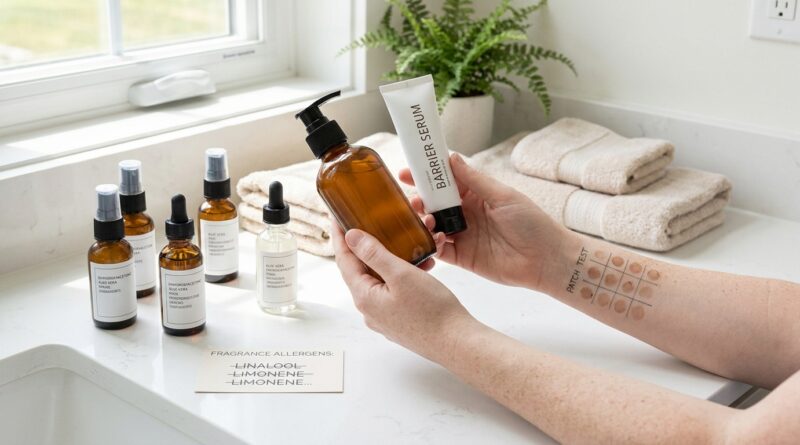
Apply a small amount behind the ear, along the jawline, or on the inner arm. Leave it on as directed. Then wait at least 24 to 48 hours. If you are very reactive, test again on a second small area before full use.
Watch for more than obvious hives. Sensitive-skin reactions can be sneaky. Look for warmth, tingling, delayed itching, rough texture, tiny bumps, or a patch that suddenly feels dry and angry.
Step 4: Prep skin gently, not aggressively
Do not scrub your face raw before tanning. Do not use acids, retinoids, benzoyl peroxide, or strong exfoliants right before application if your skin is easily upset. The goal is a calm barrier, not a squeaky-clean one.
Use a bland moisturizer earlier in the day if your skin runs dry. Let it settle fully before applying self tanner. On extra reactive areas like around the nose, corners of the mouth, and under the eyes, you can use a tiny bit of barrier cream to protect those spots.
Step 5: Go low and slow
The safest tan is usually the one you build gradually. A light layer every couple of days is often easier on sensitive skin than one strong, dark formula all at once. Less DHA exposure in one session, fewer added bronzers, and fewer correction attempts if it goes wrong.
What to buy, and what to skip
If you are searching for a hypoallergenic self tanner for sensitive skin, here is the simple buyer’s filter.
Usually better picks
Choose fragrance-light lotion, cream, or serum formulas with moisturizing support. Look for products aimed at sensitive skin, but still verify the ingredient list yourself. “Dermatologist tested” is nice to see, but it is not a free pass.
Usually riskier picks
Be cautious with strongly scented mousses, tropical-fragrance mists, rapid-develop formulas, and products packed with essential oils. Also be wary of products that brag more about scent than skin comfort. If it smells like a beach cocktail, your face may not thank you.
If you have rosacea, eczema, or a damaged barrier
This matters even more. Rosacea-prone skin often hates heat, fragrance, and alcohol-heavy formulas. Eczema-prone skin often reacts when the barrier is already cracked, dry, or inflamed. If your skin is flaring, skip self tan entirely until it settles. Tanning over inflamed skin usually makes the situation look and feel worse.
And yes, sometimes the problem is not the tan color ingredient itself. It is the whole formula around it.
Red flags that mean “stop using it”
Burning that lasts more than a few minutes. Swelling. Intense itch. Shiny tight skin. New rough patches. Tiny fluid-filled bumps. Eye irritation after using a mist. If any of that happens, wash it off gently, go back to your boring barrier-friendly moisturizer, and give your skin a break.
A simple shopping checklist you can use in store
Use this quick test before you buy:
- Is the formula a lotion, cream, or serum rather than a scented spray?
- Does the ingredient list avoid parfum and essential oils?
- Are there a few barrier-friendly ingredients like glycerin, squalane, or panthenol?
- Is there a strong perfume smell even before application? If yes, put it back.
- Can you patch test it before a full-face or full-body application?
If the answer to most of those is no, it is probably not your best bet.
At a Glance: Comparison
| Feature/Aspect | Details | Verdict |
|---|---|---|
| Formula type | Creams and lotions are usually less drying and easier to control than scented mists or fast-dry sprays. | Best starting point for sensitive skin |
| Fragrance level | Products with parfum, essential oils, or a strong perfume smell are more likely to trigger irritation. | Lower fragrance is safer |
| Testing method | A 24 to 48 hour patch test catches many problems before you commit to a full application. | Non-negotiable step |
Conclusion
The big shift for winter 2026 is this. Stop trusting soft-focus words on the front of the bottle, and start using a calm, repeatable system. Sensitive-skin and rosacea conversations around self tan face mists, hydrating tanning waters, and “gentle” sprays are rising for a reason. A lot of people are reacting to products that were sold as safe. The good news is that you can cut your odds of a bad reaction by choosing fragrance-light formulas, checking for common allergens, and patch testing before full use. That means fewer mystery rashes, fewer wasted bottles, and a much better chance of finding a hypoallergenic self tanner for sensitive skin that gives you color without picking a fight with your barrier. A nice glow is great. Keeping your skin calm is better.