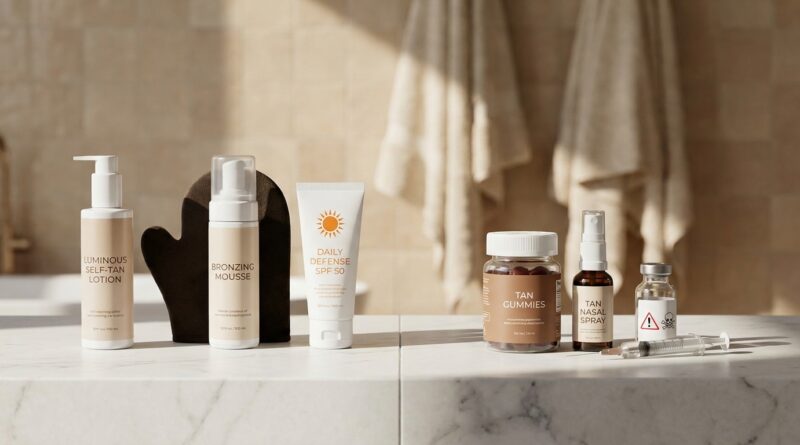
New ‘Tanning Gummies and Nasal Spray’ Rule: The Fake Tan Shortcuts Dermatologists Want You To Stop Trusting In 2026
You are not overreacting if those “tan gummies” and nasal sprays on your feed make you pause. The sales pitch sounds almost too perfect. No sun. No streaks. No mitt. Just swallow, sniff, or take a “booster” and wake up bronzed. But that nervous feeling you have is the right one. When dermatologists warn about these products, they are not trying to ruin your summer. They are trying to separate actually sunless tanning from sketchy shortcuts that work through your whole body, not just the surface of your skin. That difference matters a lot. If you have been asking, are tanning gummies and nasal sprays safe, the short answer is usually no, or at the very least, not proven safe in the way many people assume. The good news is this does not mean all fake tan products are bad. It means the skin-only options and the body-wide “tan hacks” are not the same thing.
⚡ In a Hurry? Key Takeaways
- Are tanning gummies and nasal sprays safe? Experts and health agencies say you should be very cautious. Many are unregulated, poorly studied, or linked to risky ingredients.
- If you want a safer no-sun glow, stick with topical self-tanners that color the outer layer of skin, especially DHA-based lotions, mousses, drops, or sprays used as directed.
- Do not let scary TikTok products put you off all fake tan. The real problem is the systemic stuff marketed as “clean glow” or “inside-out tanning,” not standard sunless tanners used on the skin.
Why this topic suddenly feels so confusing
The confusion is real because very different products are being lumped together under the same word: tanning.
One group is familiar sunless self-tanner. Think lotions, foams, mists, or drops you apply to your skin. These usually use DHA, short for dihydroxyacetone, to temporarily darken the outermost layer of skin. That is very different from lying in the sun.
The other group includes gummies, pills, nasal sprays, injections, peptides, and “melanin boosters” that claim to tan you from the inside. These are the ones raising alarms. They are not just sitting on the skin. They are being swallowed, inhaled, or injected, which means they may affect your whole body.
That body-wide effect is exactly why doctors get uneasy.
So, are tanning gummies and nasal sprays safe?
For most people, the practical answer is no, you should not assume they are safe.
That does not mean every single product will harm every single person. It means there is often a big gap between the claims in the ad and the actual evidence. Many of these products are sold online or through social media marketing with little real transparency about ingredients, dosage, purity, side effects, or long-term risks.
Some are marketed as supplements. Some are sold in legal gray areas. Some hint at peptide or hormone-like effects without clearly explaining what that means. And some are connected to ingredients that health authorities have warned people not to use.
If a product promises a full-body tan without UV exposure and without applying anything to your skin, that should set off your internal alarm.
What makes nasal sprays especially worrying
Nasal sprays can sound oddly harmless because people associate them with allergy relief or cold medicine. But a tanning nasal spray is not in that same trust category.
When you spray something into your nose, you are not just “trying a beauty product.” You are using a route that may help substances absorb into the body quickly. That is a serious delivery method, not a cute hack.
Concerns include:
Unknown ingredients or purity
Some products sold online may not be independently tested in a way that gives buyers real confidence. The label may not tell the whole story.
Body-wide effects
These products may aim to change pigment production or mimic peptide activity. That is not the same as a bronzing mousse sitting on the surface of your skin for a few hours.
Side effects that are easy to downplay online
Nausea, flushing, appetite changes, headaches, changes in moles or pigmentation, and other reactions are not the kind of details creators usually put in the thumbnail.
If you have seen “melanotan” talk on social media, that is part of the same broader problem. We covered that in more detail in New ‘Pill & Peptide Tan’ Rule: Why TikTok’s Tan Shots Are The One Glow Trend You Should Never Copy In 2026, because these trends can start looking normal long before they start looking safe.
What about tanning gummies and pills?
Gummies feel friendly. That is part of the problem.
People hear “gummy” and think vitamin, wellness, or low-risk beauty supplement. But a gummy format tells you almost nothing about whether the actual ingredient makes sense or has been properly studied for tanning claims.
Some products lean on vague words like carotenoids, glow support, melanin support, bronze blend, sun prep, or radiance complex. Those terms can sound sciencey while saying very little.
In some cases, pills marketed for tanning have been linked historically to ingredients that can change skin tone in odd ways or bring side effects people did not sign up for. In others, the formulas are simply not backed by good evidence that they can safely create the bronzed look people expect from the marketing.
That is the key issue. A supplement can be heavily branded without being well-proven.
The simple test: Does it color the skin, or act on the body?
If you remember one thing, make it this.
Topical self-tanner mostly works on the outer layer of your skin. Systemic tan products try to work through your body.
That is the line many shoppers miss.
Topical self-tanner
Usually a lotion, mousse, mist, gel, or drop. It creates a temporary tan look on the skin’s surface layer. It washes and fades over time.
Systemic tan products
Usually a gummy, pill, spray, shot, or peptide-based product. It claims to trigger or support pigment changes from within.
Those are not close cousins. They are different categories with very different risk profiles.
Why dermatologists do not want you scared away from all fake tan
This part matters because some people hear “unsafe tanning products” and assume they should avoid every fake tan option.
That would be the wrong takeaway.
Many dermatologists would much rather you use a standard topical self-tanner than chase a real tan through UV exposure or start experimenting with mystery sprays and supplements. A well-known topical self-tanner used as directed is in a completely different lane from a body-wide tanning product bought off a viral video.
So yes, doctors can be deeply skeptical of tan gummies and nasal sprays while still being fine with a classic self-tan lotion.
Red flags that a tanning product is not worth the risk
If you are shopping and something feels off, trust that instinct. Here are the most common warning signs.
It promises a “natural tan” without explaining how
If the mechanism is fuzzy, the product probably wants you to focus on the fantasy, not the facts.
It uses “clean,” “holistic,” or “wellness” as a shield
Those words can be useful in some contexts, but they are not proof of safety testing.
It relies on influencer diaries instead of solid medical guidance
A creator saying “I was fine” is not the same as safety data.
It says “for research use” or avoids clear directions
That is a giant red flag for anything people are putting in their body.
It is sold through DMs, private links, or sketchy storefronts
If the seller is hard to pin down, accountability usually is too.
If you want a safer sunless glow, what should you use instead?
Stay boring. Boring is good here.
Look for standard topical self-tanners from established brands. Lotions, mousses, tanning waters, face drops, and gradual tanners are all common options. These are easier to understand because you apply them to the skin and can patch test, adjust depth, and stop using them if your skin gets irritated.
Safer shopping checklist
Choose products that clearly explain:
- What active ingredient they use
- How to apply them
- How long the color lasts
- Whether they are for face, body, or both
- Basic warning and patch-test advice
If a product sounds more like a biohack than a beauty product, skip it.
What to do if you already bought one
Do not panic. But do pause before using it.
Check the ingredient list. See whether the seller clearly identifies what is in it, what it is supposed to do, and where it was made. If the details are vague, missing, or read like a chemistry riddle, that is your answer.
If you have already used a tanning gummy, pill, or nasal spray and notice side effects, contact your doctor or pharmacist for advice. If symptoms feel urgent, get urgent care. Keep the packaging or screenshots of the listing so you can show what you took.
At a Glance: Comparison
| Feature/Aspect | Details | Verdict |
|---|---|---|
| Topical self-tanner | Applied to skin only. Usually DHA-based. Temporary surface color that fades over days. | Generally the safer sunless option when used as directed. |
| Tanning gummies or pills | Swallowed products with broad claims about glow, melanin, or tanning from within. Often poorly explained or weakly supported. | Use caution. Do not assume safe just because it looks like a supplement. |
| Tanning nasal sprays or shots | Systemic products that may involve peptides or other active compounds affecting the body, not just skin. | Highest concern. Best avoided unless a licensed medical professional has a legitimate, evidence-based reason, which cosmetic tanning usually is not. |
Conclusion
If your feed has made these products look normal, that is the marketing doing its job, not proof that the science is settled. Right now there is a huge confusion spike between truly sunless, skin-only DHA products and systemic “tan hacks” like pills, gummies, shots, and nasal sprays that U.S. and international health bodies say are unregulated or potentially harmful. Clearing that up matters. It helps you avoid the newest products dressed up in “clean glow” language while also protecting you from another mistake, which is throwing out safer topical self-tanners just because the weird stuff exists. You do not need to become a chemist to shop smart. Just ask one simple question: is this sitting on my skin, or is it trying to act on my whole body? If it is the second one, that is your cue to walk away.