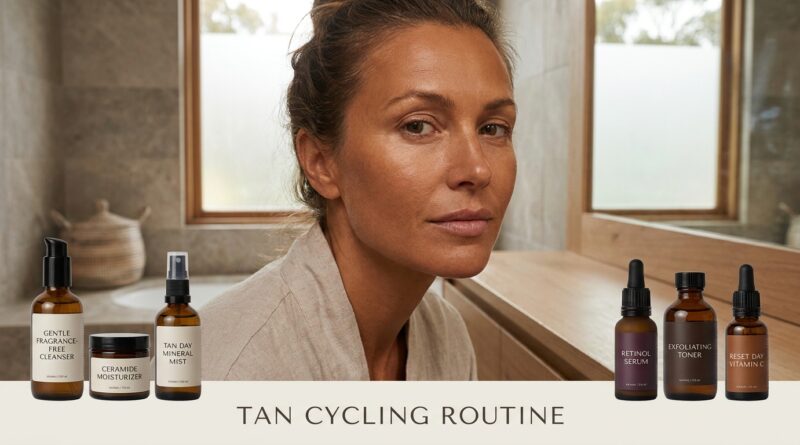
New ‘Tan Cycling’ Rule: The Spray-Tan-Safe Skincare Routine That Stops Your Glow From Wrecking Your Skin
You get a spray tan because you want skin that looks smoother, glowier and a little more put together. Then real life kicks in. You have a cleanser with acids, a serum with vitamin C, maybe retinol at night, and suddenly your “healthy glow” routine starts feeling like a chemistry experiment. That worry is valid. A great spray tan can fade fast, turn patchy or leave your skin feeling tight if your skincare routine is too harsh or badly timed. The new tan cycling rule is simple. Stop treating your face and body the same every day. Rotate your active skincare around your tan so you protect both your barrier and your color. That is what a smart spray tan safe skincare routine looks like now. It is less about buying a dozen “tan-friendly” products and more about knowing when to exfoliate, when to hydrate and when to back off.
⚡ In a Hurry? Key Takeaways
- A spray tan safe skincare routine means cycling strong actives so they do not strip your tan or stress your skin barrier.
- Use exfoliating acids and retinol before your tan, then switch to gentle cleansing, hydration and daily SPF for the first few days after.
- Self-tan is not sun protection, and irritated skin usually fades color faster, not better.
What the new “tan cycling” rule actually means
Think of tan cycling like skin scheduling. You do not use every strong product every night. You line them up around your spray tan instead.
Why? Because spray tans sit in the top layer of skin. Anything that speeds up shedding, dries out the surface or irritates your barrier can make that bronze disappear unevenly. That includes over-cleansing, scrubs, glycolic acid, salicylic acid, retinol and even some strong acne treatments.
The goal is not to avoid good skincare. It is to time it better.
The basic rhythm
Before your tan: exfoliate and smooth the skin.
Right after your tan: leave the skin alone and let the color develop.
For the next few days: keep the routine gentle, hydrating and boring.
As the tan fades: slowly bring back actives.
Why your skincare can wreck a fresh spray tan
Most people blame the tan formula when the real issue is routine clash.
Here are the usual troublemakers:
Acids
AHAs like glycolic and lactic acid loosen dead skin cells. That is useful before a tan. It is not useful the day after one.
Retinol and retinoids
These speed up cell turnover. Great for acne and texture. Not great if you want your faux glow to stick around.
Benzoyl peroxide and acne pads
These can be drying, irritating and bleaching. They can also create obvious fade spots.
Foaming cleansers and hot showers
They strip oils and dry the top layer of skin, which makes a tan look scaly and uneven fast.
Too much “glow” skincare
Stacking exfoliating toners, enzyme masks and resurfacing serums can quietly push your skin past its limit. If that sounds familiar, read New ‘DHA Dose’ Rule: How Much Self‑Tanner Your Skin Can Actually Handle Before It Starts Fighting Back. It explains the point where a safe glow routine can start feeling like too much.
Your spray tan safe skincare routine, day by day
24 hours before your spray tan
This is your prep window.
Use a gentle exfoliant on face and body. If your skin handles acids well, this is the time for them, not after the tan. Shave, wax or do hair removal early enough that the skin is calm by appointment time. Moisturize dry spots like elbows, knees, ankles and hands, but do not leave a heavy greasy film on the skin right before tanning.
Skip anything that tends to sting, peel or inflame your skin.
The day of your spray tan
Keep your skin clean and product-light. Avoid thick body lotions, oils and deodorant right before the session if your technician advises it.
After the tan, leave it alone during the development window. No actives. No scrubbing. No steamy workout if you can help it.
Days 1 to 3 after your spray tan
This is where most people should go into barrier-protection mode.
Use:
- A mild, non-stripping cleanser
- A simple hydrating serum, like hyaluronic acid or glycerin
- A bland moisturizer with ceramides, squalane or panthenol
- Broad-spectrum SPF every morning
Skip or limit:
- Retinol
- AHAs and BHAs
- Scrubs and cleansing brushes
- Peel pads
- Harsh acne spot treatments on tanned areas
Days 4 to 6
If your tan is stable and your skin feels comfortable, you can slowly bring back one active product, not all of them at once. Start with the one your skin needs most.
If you are acne-prone, that might be salicylic acid once or twice. If texture is your main issue, maybe one retinol night. Just do not stack them on the same evening and expect your tan to survive looking flawless.
When the tan is fading
Once the color starts breaking up, this is the moment to exfoliate again and reset properly. Gentle exfoliation helps remove patchiness and gives you a more even base for the next round.
The best ingredients during a tan cycle
If you want your routine to support both color and skin quality, these are usually the safe bets:
Ceramides
They help support the skin barrier, which means less dryness and less rough, flaky fade.
Hyaluronic acid
Good for adding water to the skin so the tan looks plumper, not cracked.
Glycerin
Simple, effective and underrated. It helps keep skin comfortable.
Niacinamide
Often a good middle ground. It can help with oil control, redness and barrier support without pushing exfoliation too hard.
Squalane
Useful if your skin gets dry after tanning, but pick lightweight formulas so you do not feel greasy.
Ingredients to treat with caution
These are not banned forever. They just need smarter timing.
Glycolic acid
Very effective, but often too aggressive right after a spray tan.
Retinol
Best used before or well after the fresh-tan phase, depending on how fast your skin turns over.
Benzoyl peroxide
Can bleach fabric and interfere with even-looking color. Use carefully and only where truly needed.
Strong vitamin C formulas
Not always a problem, but low-pH versions can irritate some people and make a fresh tan look less even if the skin gets reactive.
Do “tan-friendly” products actually help?
Sometimes yes. Sometimes it is mostly branding.
A truly tan-friendly product is usually one that is gentle, hydrating and not overloaded with exfoliating acids or harsh surfactants. That is helpful. But you do not need a full shelf of products stamped “spray tan safe” to make this work.
Read the ingredient list. If it sounds like a peeling treatment, it probably is not ideal for day two of your tan.
The SPF part people still get wrong
This is the big one. A spray tan does not protect you from UV damage. Not a little. Not enough. Not in a “well I look bronzed so I should be okay” way.
Melanoma rates are still a serious concern, and fake tan can sometimes create a false sense of security. Daily broad-spectrum SPF is still non-negotiable. If anything, a spray tan should make sunscreen easier to remember, because protecting your skin also helps protect your results.
If your sunscreen pills or looks streaky over your tan, switch texture, not habit. Try a lighter lotion, gel-cream or spray made for face or body depending on where you struggle.
A realistic morning and night routine
Morning
Gentle cleanse or just rinse. Hydrating serum. Moisturizer. Broad-spectrum SPF 30 or higher.
Night, fresh tan phase
Gentle cleanse. Barrier serum or essence. Moisturizer.
Night, later fade phase
Gentle cleanse. One active if needed. Moisturizer.
That is it. No ten-step marathon required.
How to know you are overdoing it
Your skin usually tells you before your tan does.
- Tightness after cleansing
- Patchy fade around the mouth, chin or jaw
- Itching or mild burning with products that usually feel fine
- Flakes that show up under makeup
- Tan grabbing to dry areas
If that sounds familiar, strip your routine back for a few days. More products are not always more helpful.
At a Glance: Comparison
| Feature/Aspect | Details | Verdict |
|---|---|---|
| Fresh spray tan care | Gentle cleanser, hydrating serum, barrier moisturizer, daily SPF. No scrubs, acids or retinol for the first few days. | Best for keeping color even and skin calm. |
| Using actives too soon | AHAs, BHAs, retinol and acne treatments can speed fading and trigger dry, patchy spots. | Usually not worth it right after tanning. |
| SPF with self-tan | A faux glow does not block UV. Sunscreen is still needed every day. | Essential for skin health and helps preserve results. |
Conclusion
The new rule is not complicated. Prep before the tan. Protect the barrier after. Bring strong actives back slowly. That is the real heart of a spray tan safe skincare routine. Right now, brands are pushing stronger self-tan formulas, more “tan-friendly” skincare and a lot of marketing noise at the same time melanoma risks and SPF confusion are still very real. You do not need hype. You need a routine that makes sense. If you cycle your products instead of piling them on, you can keep the golden glow you want without quietly wearing down your skin in the process.