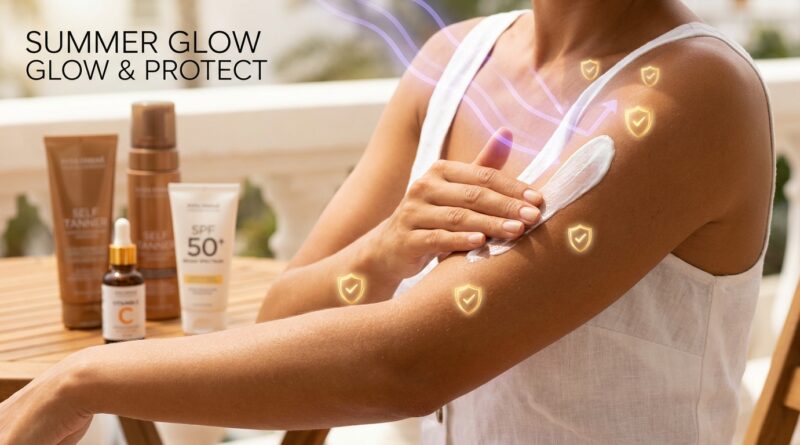
New ‘Post-Tan SPF’ Rule: Why Your Skin Is More Vulnerable To Sun Right After Self Tanner
You did the “safe” thing. You skipped baking in the sun, used self tanner, got that even bronze, then stepped outside and still came back pink. That is maddening. It also makes a lot of people ask the same question: does self tanner protect from sun? The short answer is no. A fake tan can make skin look darker, but it does not give your skin the built-in UV protection of real melanin. On top of that, dermatology reviews and safety documents suggest DHA, the active ingredient in many self tanners, may briefly increase free radical formation after application. So right after tanning, your skin may need more protection, not less. The good news is you do not need to give up your glow. You just need a smarter 24-hour plan with sunscreen, timing, and a few barrier-friendly habits that keep your bronze looking good without leaving your skin exposed.
⚡ In a Hurry? Key Takeaways
- Does self tanner protect from sun? No. A self tan changes color, not your skin’s UV defense.
- For the first 24 hours after applying DHA self tanner, be extra careful with broad-spectrum SPF 30 or higher, shade, and protective clothing.
- Some self tanners include SPF, but many do not, and even those that do should not replace your regular sunscreen routine.
Why you can still burn after self tanner
This is the part that feels unfair. You look tan, so your brain reads that as “protected.” But a sunless tan is mostly a color effect happening in the top layer of skin. It is not the same as a real tan created by melanin.
Real melanin offers a small amount of natural UV defense. Self tanner does not. So if you go outside with a fresh fake tan and skip sunscreen, or use too little, your skin can still burn just as easily.
That false sense of safety is a big reason people get caught out. The color says one thing. Your skin biology says another.
Does self tanner protect from sun?
No. Self tanner does not protect from sun unless the product also contains a tested sunscreen ingredient with a labeled SPF, and even then, you need to use it correctly.
What DHA actually does
Most self tanners use DHA, short for dihydroxyacetone. It reacts with proteins in the outermost layer of dead skin cells and creates a brownish pigment. That gives you the tanned look.
Important detail. This color sits on the surface. It does not mean your skin has more melanin. It does not mean you are safer in UV light.
What if the bottle says SPF?
Some products mix self tanner and sunscreen. That can help, but there are two catches.
First, many self tanners have no SPF at all. Second, if a self tanner does include SPF, most people do not apply enough of it for full sun protection. They also may not reapply it the way they would with a normal sunscreen.
So even in the best case, a tanning product with SPF should be treated as a bonus, not your whole sun plan.
Why the first 24 hours matter more
This is where the “post-tan SPF” rule comes in. Some safety documents and reviews have raised concern that freshly applied DHA may briefly increase free radical formation when skin is exposed to UV. Free radicals are unstable molecules that can add to skin stress and speed up visible aging.
That does not mean self tanner is automatically dangerous or that you should panic. It means the first day after applying it is a smart time to tighten up your sun habits.
Think of it like fresh paint. You do not want to mess with it while it is setting. Fresh self tanner is a moment to be more protective, not more relaxed.
The new “Post-Tan SPF” rule
If you use self tanner, especially one with DHA, follow this simple rule: for the first 24 hours after application, act like your skin needs extra backup.
What to do right after applying self tanner
Use your self tanner at night if you can. That way, the initial development window happens mostly indoors.
If you need to be outside the next day, wear broad-spectrum SPF 30 or higher on exposed skin. SPF 50 is even better if you will be out for a while.
Add sunglasses, a hat, and light protective clothing if possible. This is not overkill. It is the easy way to avoid that “how did I burn when I looked tan?” moment.
How long should you wait before sun exposure?
Try to avoid direct midday sun during the first 8 to 24 hours after application. If you must be outside, keep it brief and protect well.
The exact window depends on the formula and your skin, but the safe move is simple. Fresh tan equals fresh sunscreen diligence.
A good 24-hour routine that keeps your glow and protects your skin
The night you apply
Apply self tanner to clean, dry skin. Let it fully dry. Avoid layering harsh exfoliants, retinol, or strong acids right before unless your skin already tolerates that combo well.
If actives are part of your regular routine, this guide on New ‘Actives-Friendly Tan’ Rule: How To Use Retinol, Acids And Self Tanner Together Without Trashing Your Skin is worth a read. It can help you avoid barrier irritation, which makes sun sensitivity issues even more annoying.
The next morning
Use a gentle cleanser if needed. Then apply a simple antioxidant serum if your skin likes one. Vitamin C, green tea, niacinamide, or other antioxidant formulas can help support skin against everyday environmental stress.
After that, apply a broad-spectrum sunscreen generously. Face, ears, neck, chest, hands, shoulders. The usual spots people forget are often the first ones to go pink.
During the day
Reapply sunscreen every two hours if you are outdoors, and after swimming or sweating. Stay in shade when you can. If you are going to the beach, pool, festival, or walking around all afternoon, do not trust the fake tan to “carry” you.
What not to do after self tanning
Do not assume color equals coverage
This is the big one. Looking bronzed can trick you into using less SPF. Resist that urge.
Do not stack irritation on top of fresh DHA
A brand-new tan plus aggressive exfoliation, shaving, retinoids, or strong acids can leave skin irritated and patchy. Irritated skin and sun exposure are a bad mix.
Do not rely on makeup SPF alone
Tinted moisturizers and foundation with SPF are nice extras, but not enough on their own for serious sun exposure.
Who should be extra careful?
Anyone can burn after self tanner, but a few groups should be especially mindful.
- People with very fair or sun-sensitive skin
- Anyone using retinoids, acids, or acne treatments
- People with a damaged skin barrier, eczema, or recent over-exfoliation
- Anyone spending time outdoors the day after applying tan
If your skin stings easily or tends to flush, think of self tanner day as a low-drama skincare day. Keep the routine calm. Keep the sun protection high.
How to tell if your self tanner includes real SPF
Check the label for an actual SPF number and active sunscreen ingredients. If it just says things like “glow,” “bronzing,” or “sun-kissed,” that is cosmetic language, not protection.
Also check whether it says broad-spectrum. That matters because you want protection from both UVA and UVB. UVA is a big driver of photoaging, and UVB is more tied to burning.
If there is no clear SPF label, assume there is no sun protection.
At a Glance: Comparison
| Feature/Aspect | Details | Verdict |
|---|---|---|
| Self tanner color | DHA darkens the outer layer of skin so you look tan, but it does not create real melanin-based UV defense. | Looks bronzed, not protected |
| Self tanner with SPF | May offer some protection if clearly labeled with broad-spectrum SPF, but most people under-apply and forget to reapply. | Helpful extra, not enough alone |
| First 24 hours after application | Fresh DHA may briefly increase free radical formation with UV exposure, so sunscreen and shade matter even more. | Be extra cautious |
Conclusion
If you remember one thing, make it this: fake tan is color, not cover. New dermatology reviews and safety documents are pointing out two easy-to-miss issues. DHA may briefly increase free radical formation after application, and many sunless tanners either have no proper SPF or make people feel more protected than they really are. That combo can lead to surprise burns and faster photoaging. The fix is refreshingly simple. Time your self tanner so the first development window happens mostly indoors, use antioxidant skincare if your skin tolerates it, and wear a proper broad-spectrum sunscreen in the first 24 hours and beyond. You still get the bronze. You just lose the hidden risk. That is the sweet spot.