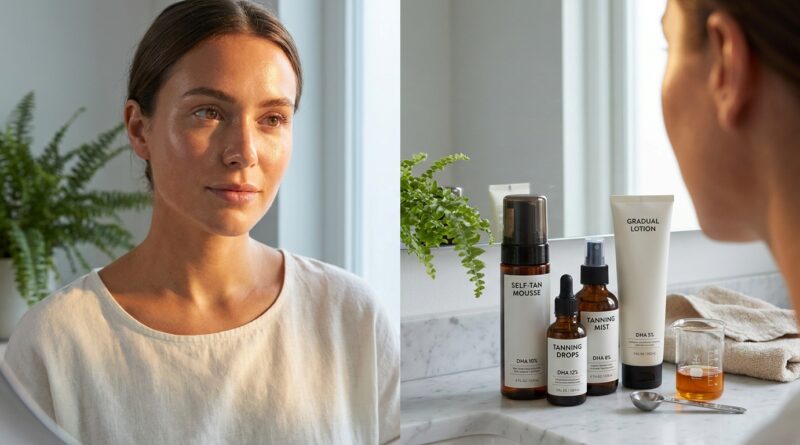
New ‘DHA Dose’ Rule: How Much Self‑Tanner Your Skin Can Actually Handle Before It Starts Fighting Back
You are not imagining it. There is a point where your “safe glow” routine can start feeling less like beauty and more like your skin filing a complaint. Tightness after rinsing. Random itchiness on your chest or arms. A tan that suddenly grabs patchy, fades dirty, or makes your skin look dull instead of bronzed. A lot of people assume that if self-tanner is safer than sunbathing, more must be fine. That is where things get messy. The real question is not just “is too much self tanner bad for your skin,” but how often you are applying DHA, how much of your body you cover, and what else is riding along with it, like fragrance, alcohol, exfoliating acids, or drying prep products. The good news is you usually do not need to quit tanning. You just need to stop treating self-tanner like paint and start treating it like skincare with limits.
⚡ In a Hurry? Key Takeaways
- Yes, too much self tanner can be bad for your skin if frequent full-body DHA use leaves you irritated, dry, itchy, or stuck in a cycle of over-applying on a damaged skin barrier.
- Use one main DHA product at a time, keep full-body applications to what you actually need, and build in “bronzer only” or low-DHA days between heavier tans.
- The biggest problem is often not DHA alone, but DHA plus fragrance, alcohol, spray exposure, harsh exfoliation, and layering drops, mousse, and mist all in the same week.
Why this question is suddenly getting louder
For years, the message was simple. Fake tan is the better option than UV tanning. That part still stands. Sunless tanning does not roast your skin with ultraviolet light the way tanning beds and sun exposure do.
But “better than UV” is not the same thing as “use as much as you want, as often as you want, with zero downside.” That is the disconnect many regular tanners are running into now.
DHA, short for dihydroxyacetone, is the ingredient that reacts with the top layer of your skin to create that bronzed look. It works on dead skin cells at the surface. In normal use, that is why it is generally seen as a safer cosmetic route than getting a real tan from the sun.
Still, if you are doing full-body mousse twice a week, mixing facial drops into serum every day, topping up with spray before events, and scrubbing hard in between, your skin is not experiencing “normal use” in the casual sense. It is experiencing a lot.
So, is too much self tanner bad for your skin?
Short answer. It can be.
Not because DHA automatically becomes dangerous the second you use it often, but because repeated, high-frequency use can push your skin barrier into irritation. And once that barrier gets unhappy, everything starts going wrong at once.
You may notice:
- tight or dry skin after tanning
- itching, especially on the chest, neck, or behind knees
- more sensitivity to fragrance or body wash
- patchy fade-off and darker pores
- a dull, flat look instead of a smooth glow
- stinging when you moisturize or apply your next tan
That does not always mean DHA itself is the only villain. Often, it is the whole stack. DHA plus perfume. DHA plus alcohol-heavy fast-dry formulas. DHA plus daily exfoliation. DHA plus shaving, hot showers, and aggressive mitt rubbing.
What “too much” actually looks like in real life
There is no universal magic number that fits every body, every product, and every skin type. But there are some common patterns that raise the risk.
1. Full-body DHA several times a week
If you are coating most of your body every two or three days just to maintain color, that is a sign to pause and look at the formula strength. You may be using a dark tan product when a medium, gradual, or low-DHA product would maintain your shade with less stress.
2. Layering multiple DHA products without realizing it
This is a big one. You use mousse on Sunday. Facial tanning drops Monday through Thursday. A spray tan on Friday. A gradual tanning lotion on your legs in between. None of these feel extreme on their own. Together, they can stack up fast.
3. Chasing depth instead of maintenance
Many people keep applying self-tanner as soon as the glow softens, instead of letting skin fully settle and fade. That can leave you applying over uneven, dry, or still-reactive skin.
4. “Correcting” patchiness with more product
If your tan is going blotchy because your barrier is dry, adding another coat usually makes it look worse, not better.
The hidden issue is often your skin barrier
Your skin barrier is basically your body’s outer shield. When it is in good shape, skin feels calm, flexible, and looks smoother. When it is beat up, it feels tight, rough, itchy, stingy, or weirdly greasy and dry at the same time.
Self-tanner does not have to wreck that barrier. But a heavy tanning routine can chip away at it if you are constantly exfoliating, shaving, cleansing, spraying, and reapplying.
Think of it like repainting a wall. If the wall underneath is cracked and dusty, each new coat looks worse. Your skin works the same way.
How to tell if the problem is DHA, fragrance, or the formula
This is where people get frustrated. They blame the tan itself, when the real issue may be the supporting ingredients.
If it is likely DHA overload or overuse
- Your skin gets more reactive the more often you tan
- Problems improve when you take a full week off
- Your face or body looks dull and overworked, not just dry
- You are using more than one DHA product in the same week
If it is likely fragrance or preservatives
- You get itching or redness fast, sometimes within hours
- Certain products trigger it and others do not
- The reaction is stronger on thin-skinned areas like chest or neck
If it is likely alcohol or drying prep habits
- Your skin feels squeaky, tight, or flaky
- The tan grabs to dry spots
- Moisturizer stings after tanning
If you are doing booth or spray tans often, it is also worth thinking beyond skin. Overspray matters. This is where New ‘Barrier-First Spray Tan’ Rule: How To Protect Your Lungs, Eyes And Skin At The Booth Without Giving Up Your Bronze is a smart read, especially if your routine includes frequent spray sessions.
A practical “DHA dose” rule for normal people
You do not need a chemistry degree to use self-tanner more safely. You need a simple ceiling.
Try this rule of thumb
Use one primary DHA product category per body area at a time.
- Body: Pick one main format, like mousse, lotion, or spray
- Face: Use drops or a facial tanner sparingly, not on top of every other tanner by default
- Maintenance: If you need more color between sessions, switch to bronzer or tinted body products before reaching for more DHA
For many people, a better rhythm looks like this:
- One fuller body tan application
- Several days of plain moisturizer
- Spot touch-ups only where needed
- At least one or two “no DHA” days before reapplying broadly
If you are tanning your whole body multiple times a week and your skin is acting up, that is your clue. Back down.
How to combine products without stacking irritation
This is the part brands do not always explain well.
Safer combo
- One body tanner
- Plain fragrance-light moisturizer
- Mineral SPF by day
- Wash-off bronzer for events
Riskier combo
- Dark mousse
- Daily tanning drops in skincare
- Gradual tan lotion every morning
- Body scrub every other day
- Alcohol-heavy setting spray or perfume on top
If that second list sounds like your routine, your skin may not be “bad at tanning.” It may just be overworked.
When to switch to low-DHA or bronzer days
You do not have to choose between pale and panicked.
There is a middle ground. If your skin is sending little warning signs, switch some of your routine away from DHA-heavy formulas.
Good times to make the switch
- your skin feels tight after showers
- you are seeing rough patches or clogged-looking dots
- your tan is fading unevenly every single cycle
- you have an event and want glow without risking a fresh reaction
Better alternatives for those days
- low-DHA gradual tan instead of dark mousse
- mineral SPF plus cosmetic bronzing drops
- wash-off body bronzer on legs, shoulders, and chest
- plain moisturizer and a break from active skincare
Red flags that mean stop and reset
Take a full break and simplify if you notice:
- itching that lasts more than a day or two
- burning or stinging with bland skincare
- redness that keeps returning
- rash-like bumps
- cracked, flaky, or shiny-overdry skin
At that point, it is less about getting the perfect tan and more about calming your skin down. Use a bland moisturizer, skip harsh exfoliation, and consider talking to a dermatologist if it keeps happening.
How to tan like skincare, not like paint
This mindset shift helps a lot.
Do this
- Patch test new formulas
- Keep your routine boring before and after tanning
- Moisturize regularly so the tan fades evenly
- Use the lightest strength that gets you where you want to go
- Take breaks when your skin starts feeling “off”
Skip this
- stacking three tanning products because one event is coming up
- scrubbing aggressively to remove old tan
- using fragranced actives right after a fresh tan
- assuming darker always means better
At a Glance: Comparison
| Feature/Aspect | Details | Verdict |
|---|---|---|
| Frequent full-body DHA use | Applying mousse, lotion, or spray over most of the body multiple times a week can dry out skin and increase irritation, especially if you exfoliate hard in between. | Fine for some occasionally, but back off if your skin feels tight, itchy, or dull. |
| Layering products | Body mousse plus facial drops plus gradual tan lotion can quietly raise your total DHA exposure and formula load. | Use one main tanner per area and keep maintenance simple. |
| Bronzer or low-DHA swap days | Using wash-off bronzer, gradual tan, or mineral SPF with tint gives skin a break while keeping color. | Smart move if your barrier needs recovery but you still want to look bronzed. |
Conclusion
Self-tanner is still the better choice than chasing a tan with UV, but that does not mean your skin wants endless coats with no recovery time. Right now there is a real gap between the simple public message that sunless tanning is safe and the more complicated question of how much DHA is too much when you cover large areas of skin again and again. Add fragrance, alcohol, exfoliation, and spray exposure, and it becomes even easier to push your skin past its comfort zone. The fix is not giving up your bronze identity. It is getting more strategic. Use self-tanner like skincare instead of paint. Keep your DHA load reasonable. Do not stack products just because they all promise glow. And when your skin starts pushing back, switch to low-DHA or mineral-SPF-plus-bronzer days before it turns into a bigger problem. That way you stay ahead of the safety conversation, instead of getting caught by it later.