New ‘Spray Tan Lung-Safe’ Rule: How To Protect Your Lungs And Skin Barrier In 2026’s Spray Booth Boom
Spray tans sound simple until you realize the part nobody really explains. You are not just putting color on your skin. In a booth, you can also end up breathing a fine mist of DHA, fragrance, and preservatives if the setup is bad or the salon rushes you through it. That is frustrating, because most people only get told about exfoliating, patch testing, and waiting before showering. The basic safety talk often gets skipped. For spray tan safety 2026, the big thing to know is this. Public health and regulatory guidance has long treated DHA as approved for external use, not for inhalation or contact with mucous membranes like your eyes, nose, and mouth. That does not mean you need to panic or give up spray tanning. It means you should walk in with a simple plan. A good tan should leave you bronzed, not coughing, blinking through overspray, or guessing whether your salon takes safety seriously.
⚡ In a Hurry? Key Takeaways
- For spray tan safety 2026, protect your eyes, nose, and mouth every time, because DHA is meant for external use and not for inhalation.
- Use nose filters, eye protection, lip balm, and keep your mouth closed while holding your breath during each spray pass.
- If you are pregnant, have asthma, or have sensitive skin, ask more questions before booking and skip any salon that brushes off ventilation or protective gear.
Why spray booth safety is getting more attention
Spray booths are popular again because they are fast, hands-off, and easy to book. You walk in pale and walk out looking like you spent a weekend away. I get the appeal.
But there is a gap between the glossy marketing and the real-world safety advice. Color gets all the attention. Air quality does not. Eye protection does not. What to do if you have asthma, allergies, or are pregnant often gets mentioned only if you ask.
The main ingredient in many sunless tanning formulas is DHA, short for dihydroxyacetone. It works by reacting with the top layer of dead skin cells to create that tanned look. On skin, that is the whole point. In your lungs, eyes, nose, or mouth, it is a different story. That is why spray tan safety 2026 is less about fear and more about exposure control.
What “external use only” actually means
This is where the confusion starts. People hear “approved” and assume that means approved in every way. It does not.
When health and regulatory sources say DHA is for external use only, they are drawing a line. Skin on the outside of your body is one thing. Breathing in aerosolized solution is another. Getting it on mucous membranes is another. So are your eyes, your lips, and the inside of your nose.
That is why a responsible salon should offer or encourage basic protection, especially in automated booths where there is a cloud effect. If the salon acts like that concern is weird, that is your sign to rethink the appointment.
Your simple pre-booth safety checklist
1. Ask about ventilation before you book
You do not need to interrogate anyone. Just ask, “Does the booth have active ventilation, and do you provide nose filters and eye protection?” A good salon should answer quickly and clearly.
If the staff seems confused, annoyed, or says nobody asks that, be careful. Safety should not depend on whether clients know the right questions.
2. Bring or request protective gear
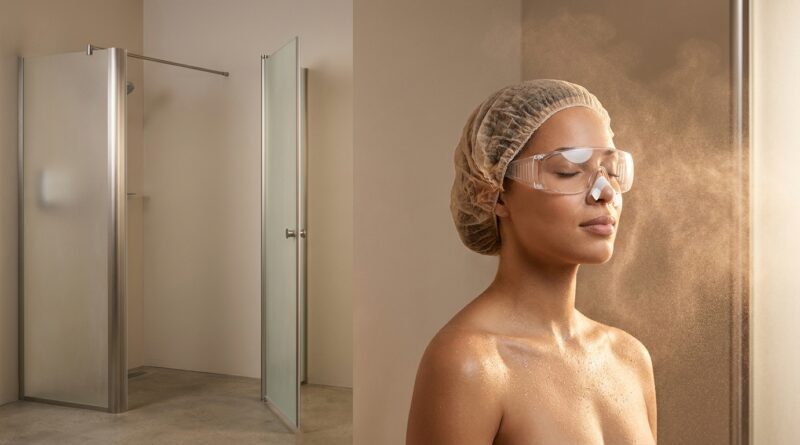
At minimum, think about:
- Nose filters
- Protective eyewear designed for spray tanning
- Lip balm to create a barrier on the lips
- Disposable undergarments or old dark clothing if needed
- A hair cap to keep solution off your scalp and hairline
Nose filters are especially useful because the mist is easy to inhale without noticing. Protective eyewear matters too. Closing your eyes is not the same thing as covering them.
3. Prep your skin barrier, not just your color
People usually exfoliate for an even tan, which is fine. Just do not overdo it. If your skin is raw, irritated, freshly shaved, or covered in active rash, you are not setting yourself up well.
Use a bland, fragrance-free moisturizer in the days before if your skin runs dry or reactive. Skip harsh acids and scrubs right before the appointment. A healthy skin barrier is less likely to sting, itch, or react.
How to protect your lungs, eyes, and mouth during the spray
This is the part most people wish someone had told them sooner.
Use the booth instructions, but do not treat them as enough
Booth directions usually tell you how to stand and when to turn. Helpful, yes. Complete, not always.
You should also:
- Insert nose filters before you enter
- Put on protective eyewear before the first spray starts
- Apply lip balm and keep your lips gently sealed
- Hold your breath during each spray pass if you can do so comfortably
- Turn your face away slightly when possible, based on booth instructions
If you cannot comfortably hold your breath because of asthma, anxiety, or another reason, that matters. Consider whether a booth is the best choice for you. A careful technician using a controlled handheld application in a well-ventilated space may be easier to manage, or you may decide an at-home lotion or mousse is the better call.
Do not talk in the booth
It sounds obvious, but people do it. Talking means opening your mouth in a cloud of mist. Save the questions for before the machine starts.
Leave if the air feels thick or the room feels poorly maintained
If you walk into a room and it smells overpowering, feels stuffy, or has visible residue all over vents and surfaces, trust your instincts. A clean booth room should not feel like a fog machine at a concert.
If you are pregnant or have breathing issues, take extra care
This is where personalized caution matters. If you are pregnant, trying to conceive, have asthma, COPD, allergies, or a history of strong skin reactions, do not rely on social media reassurance alone.
Pregnancy questions come up a lot, and for good reason. The concern is often less about normal skin use and more about avoiding inhalation and mucous membrane exposure. If that is your situation, read New ‘Pregnancy-Safe Tan’ Rule: What The 2026 DHA Safety Update Really Means For Your Sunless Glow. It does a good job of laying out the difference between panic and practical caution.
If you have respiratory issues, ask yourself a plain question. “Will standing in an aerosol cloud make my breathing harder today?” If the answer might be yes, skip the booth. There is no beauty treatment worth a coughing fit or chest tightness.
Red flags to watch for in a salon
Here is the friendly rule. If a salon is serious about results, it should also be serious about basic safety.
Watch for these warning signs
- No eye protection or nose filters offered
- Staff says you do not need protection because the formula is “natural”
- No clear ventilation system or a room that feels airless
- Rushed instructions before the booth starts
- Heavy residue buildup on walls, floor, or vents
- Staff dismisses questions about pregnancy, asthma, or sensitivities
That “natural” line is a big one. Fragrance and plant extracts can still irritate skin, lungs, and eyes. Natural does not mean inhale-all-you-want safe.
Aftercare is also part of safety
Once the spray is done, the goal is to let the color develop while getting any stray product off places it should not sit.
Do this after your session
- Wash your hands well, including between fingers and around nails
- Gently wipe nostrils and lips if there is visible residue
- Rinse eyes with clean water if they feel irritated
- Change out of damp or oversprayed clothing
- Moisturize later to support your skin barrier once your rinse time is up
If you notice wheezing, persistent coughing, burning eyes, or a strong rash, do not just chalk it up to “sensitive skin.” Reach out to a medical professional, especially if breathing symptoms show up.
Booth vs. other sunless tanning options
Not every sunless tan comes with the same exposure pattern. Booths are convenient, but they also create the most obvious inhalation question because the formula is dispersed into the air.
Lotions, mousses, and tanning drops usually give you more control because the product goes from your hands or mitt directly onto your skin. That can be messy, sure. But it also lowers the chance that you are breathing in a mist.
If safety is your top concern, especially during pregnancy or with asthma, a non-aerosol option may be the easier choice.
At a Glance: Comparison
| Feature/Aspect | Details | Verdict |
|---|---|---|
| Breathing exposure | Spray booths can create airborne mist, so nose and mouth protection matter more than with lotions or mousses. | Biggest safety issue to manage |
| Skin barrier impact | Over-exfoliating, shaving too close to the session, or spraying irritated skin can raise the chance of stinging and uneven results. | Prep gently, not aggressively |
| Best salon practices | Good ventilation, protective gear, clear instructions, and respectful answers about pregnancy or asthma are signs of a better setup. | Choose salons that treat safety as normal |
Conclusion
Spray tans do not have to be scary, but they also should not be treated like there is zero risk beyond a streaky ankle. The quiet truth behind spray tan safety 2026 is that public health and regulatory sites still warn that DHA is approved for external use, not for inhalation or around mucous membranes, while a lot of booth marketing stays focused on glow, speed, and convenience. That leaves everyday clients to fill in the blanks themselves. The good news is that the playbook is simple. Protect your eyes, nose, and mouth. Respect your skin barrier. Ask better questions if you are pregnant or have respiratory issues. Pay attention to salon red flags. You do not need to give up the bronze look. You just need a safer routine than “step into the cloud and hope for the best.”