New ‘Base Tan Myth-Buster’ Rule: Why Your Pre-Vacation Sun Sessions Are Still Trashing Your Skin In 2026
You are not silly for believing the base tan myth. A lot of people grew up hearing that a few sunbed sessions or some “careful” sun before vacation would stop a nasty burn later. It sounds practical. It feels like planning ahead. The hard truth is that a tan is your skin reacting to damage, not building a meaningful shield. That means those pre-trip sessions are adding UV exposure before your holiday even starts. If your social feed is full of scary warnings and not much useful advice, take a breath. The simple version is this. A base tan is not real sun protection, indoor tanning raises skin cancer risk, and there are much safer ways to get that bronzed look before you pack your suitcase. Once you know the swap, this gets a lot easier.
⚡ In a Hurry? Key Takeaways
- A base tan does not work like SPF. It is skin damage, not proper protection.
- Skip pre-vacation sunbeds and use a sunless tanner, SPF 30 or higher, and UPF clothing instead.
- Even one indoor tanning session adds unnecessary risk, especially for younger users, so the safest glow is the one that comes without UV.
Why the base tan myth keeps hanging around
The base tan myth survives because it feels half true. Yes, tanned skin may burn a little less quickly than untanned skin. But that tiny bit of extra pigment does not come close to the protection people imagine.
Dermatologists often compare a tan’s built-in protection to a very low SPF, roughly around SPF 3 at best. That is nowhere near enough for a beach day, a sightseeing trip, or hours by the pool. Most experts recommend SPF 30 or higher. So if you are counting on a tan to do the job of sunscreen, your math is off by a mile.
More important, you had to damage your skin to get that tan in the first place. That is the part people miss. The color may look healthy. The process is not.
What a tan actually is
Your skin is defending itself
When UV rays hit your skin, your body makes more melanin. That pigment darkens the skin. In plain English, the tan is your skin trying to protect itself after being injured by UV exposure.
That means the tan is a warning sign, not a wellness sign. It is evidence your skin had to respond to harm.
Indoor tanning is not a safer shortcut
Sunbeds and tanning booths can sound controlled, but controlled UV is still UV. The risk does not disappear just because the light is indoors. This is why doctors and skin cancer groups keep pushing back on the base tan myth so hard. Pre-vacation sessions stack more exposure on top of whatever sun you will get on the trip.
Why this matters more in 2026
This year, the message is getting louder because short-form videos have made myth-busting easier to spread, but also easier to oversimplify. You are seeing clips that say, “Base tans are fake protection,” or, “One indoor tanning session can raise melanoma risk.” Those warnings are worth hearing, but without a plan they just leave people anxious.
The useful takeaway is not “panic before vacation.” It is “change the routine.” Stop trying to prep your skin with UV. Start prepping your look and your protection separately.
What to do instead of “building a base tan”
1. Get your glow from sunless tanner
If what you really want is to look more even-toned, brighter, or vacation-ready, sunless tanning is the obvious swap. Mousses, drops, lotions, and spray tans can give you color without UV damage.
If you have noticed social media pushing darker and darker results, it may help to reset your goal. Natural-looking color usually looks better and is easier to maintain. Our piece on New ‘Tanmaxxing Myth-Buster’ Rule: Why Derms Say Extreme Tans Are Out And Smart Sunless Glow Is In gets into that shift nicely.
2. Use real SPF every day of the trip
This is the boring answer, but it is the one that works. Pack a broad-spectrum sunscreen with SPF 30 or higher. Apply enough. Reapply every two hours, and after swimming or sweating.
Most sunscreen mistakes are not about picking the wrong bottle. They are about not using enough, missing spots, or forgetting to reapply.
3. Add physical protection
Bring the hat. Bring the sunglasses. Bring the light cover-up or UPF shirt. Sit in the shade when the sun is strongest. These are not “extra” steps for overly cautious people. They are practical tools that lower the amount of UV your skin has to deal with.
A simple sunless glow routine before vacation
Three to four days before you leave
Exfoliate gently. Pay extra attention to dry spots like knees, ankles, elbows, and hands. Do not scrub your skin raw. The goal is smooth skin, not irritated skin.
One to two days before you leave
Apply your self-tanner or book a spray tan. If you are using product at home, moisturize dry areas lightly first so the tan develops more evenly. Use a mitt if the formula calls for one.
The day after application
Check for any patches and blend with a little moisturizer if needed. Then leave it alone. You are done. No UV required.
During the trip
Keep moisturizing so your sunless tan fades evenly. Continue using sunscreen every single day. A fake tan does not block UV any more than a real tan does.
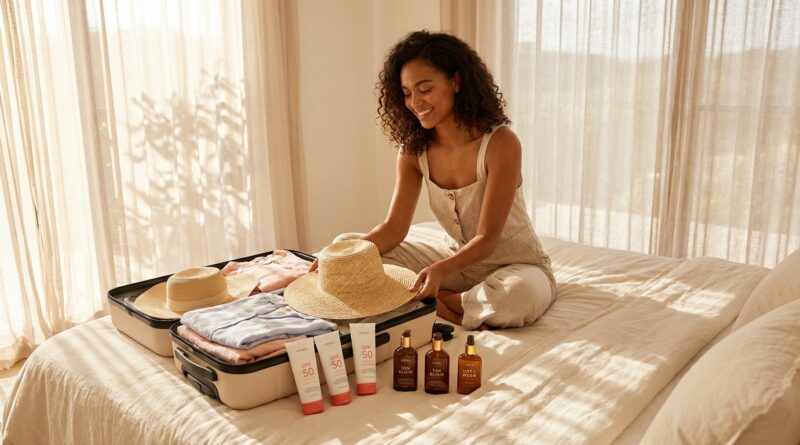
Travel-ready checklist you can actually save
Here is the no-drama version.
- Broad-spectrum sunscreen SPF 30 or higher
- Lip balm with SPF
- Sun hat
- Sunglasses with UV protection
- UPF swim cover-up or lightweight long-sleeve layer
- Self-tanner or tanning drops for pre-trip glow
- Tanning mitt
- Gentle exfoliator
- Fragrance-free moisturizer for tan upkeep
- A reminder on your phone to reapply sunscreen
Common questions people still ask about the base tan myth
“But I always burn less if I tan first.”
You may notice a slight difference, but that does not make it good protection. You are still exposing your skin to UV twice. Once to “prepare,” and again on the trip.
“What if I only do a few minutes?”
A shorter UV session is less exposure than a longer one, but it is still exposure you do not need. If your goal is color, sunless tanning gets you there without that tradeoff.
“Is outdoor sun safer than a sunbed?”
Neither is a smart way to build a base tan. Sunbeds are especially concerning because they can deliver intense UV exposure in a short time. Natural sun can feel less aggressive, but repeated unprotected exposure still damages skin.
“Can I skip sunscreen if I already have a fake tan?”
No. A self-tan is only color on the skin. It offers no UV protection unless a separate SPF product is applied.
At a Glance: Comparison
| Feature/Aspect | Details | Verdict |
|---|---|---|
| Base tan as protection | A real tan gives only minimal protection, far below recommended sunscreen levels, and comes from UV damage. | Myth, not a safe SPF substitute |
| Indoor tanning before vacation | Adds extra UV exposure before your trip and is linked with higher skin cancer risk. | Avoid |
| Sunless glow routine | Self-tanner, moisturizer, sunscreen, shade, and protective clothing give color and real protection without UV tanning. | Best option |
Conclusion
The base tan myth sounds harmless because it is wrapped in the language of being prepared. But a “prep tan” is still skin damage, and it is not giving you the kind of protection people assume. If your feed is full of scary warnings and half-explained stats, the better move is to turn that noise into a plan. Use sunless products for the glow. Use sunscreen and protective clothing for the actual protection. That way you get the vacation look you want without gambling with your skin to get it. That is the real myth-buster here, and it is a lot more useful than fear.