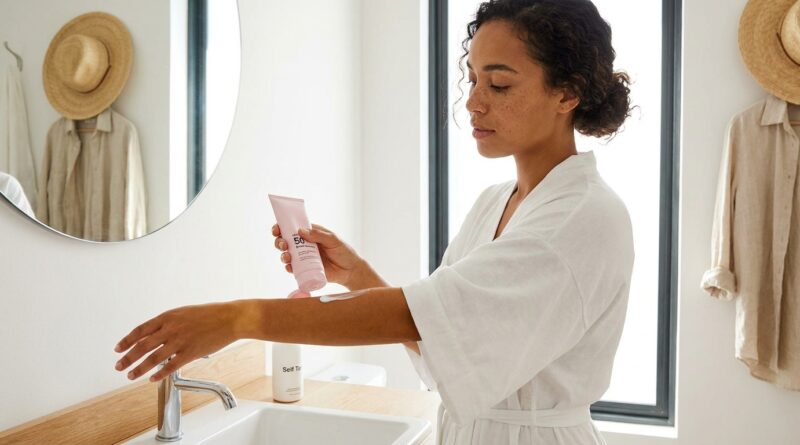
New ‘Sunscreen-Over-Sunless’ Rule: How To Protect Your Fake Tan Without Trashing Your Skin Barrier
You finally get your self tan looking even, golden, and expensive. Then real life happens. A sunny walk, a beach day, a lunch table on a patio. And suddenly the panic kicks in. Can you put sunscreen over self tanner without turning your glow patchy, streaky, or weirdly orange? Yes, you absolutely can, and you should. This is the part many people still get wrong. Self tanner changes the look of your skin, but it does not protect it from UV rays. In fact, some skin experts warn that freshly self-tanned skin may be a bit more sensitive right after application, which makes sun protection even more important. The trick is not skipping SPF. The trick is choosing the right kind, applying it at the right time, and reapplying it in a way that does not rub your tan off. Once you know the rules, you can keep the glow and protect your skin barrier too.
⚡ In a Hurry? Key Takeaways
- Yes, you can put sunscreen over self tanner, and you should. Fake tan does not give UV protection.
- Let self tanner fully develop first, then use a gentle broad-spectrum SPF 30 or higher, ideally in a lotion, gel-cream, or clear spray you can pat on without heavy rubbing.
- Skipping sunscreen to “save” your tan is not worth it. Freshly tanned skin can still burn, age faster, and face higher skin cancer risk.
The short answer to “can you put sunscreen over self tanner?”
Yes. Please do.
Self tanner works by coloring the top layer of dead skin cells. It is a cosmetic effect, not a shield. It does not act like melanin, and it does not block UVA or UVB rays.
That means if you walk into the sun with a gorgeous bronze finish and no SPF, your skin is still exposed. You can still burn. You can still trigger pigmentation, collagen damage, and long-term skin changes.
Why this question keeps confusing people
The confusion makes sense. A fake tan looks so convincing that your brain starts treating it like a real tan. And real tans, while not safe, at least come from UV exposure and involve some increase in pigment. Self tan is different. It is color on the surface.
There is another reason people hesitate. Sunscreen can feel greasy, some formulas pill, and aggressive rubbing can fade a tan unevenly. So people worry that SPF will wreck all that effort.
Good news. The answer is not to skip sunscreen. It is to get smarter about which formula you use and how you apply it.
What dermatologists want you to know about the first 24 hours
The first day matters most.
Right after self tanner, your skin needs a little peace
Most self tanners need several hours to fully develop. During that time, showering, sweating, swimming, or layering lots of products can interfere with the finish.
If you know you will be in direct sun soon after applying self tanner, it is better to plan ahead. Self tan the night before or at least give it the full recommended development time on the label before adding anything on top.
Some experts are extra cautious about fresh sunless tan and UV exposure
There has been renewed discussion around whether freshly applied self tanner may leave skin more vulnerable for a short window, especially if you head into strong sun right away. Even without getting too technical, the practical advice is simple. Avoid intense sun in those early hours if you can. Let the tan set. Then use SPF generously once your skin is clean and dry.
When to apply sunscreen over self tanner
Here is the easiest rule to follow.
If your self tanner is still developing
Do not layer sunscreen on top unless you truly have no choice and must go outside. If you do have to be outdoors, cover up with clothing, seek shade, wear a hat, and use the gentlest sunscreen you can manage, knowing it may affect the final result a bit.
If your self tanner has fully developed
You are good to go. After the development period, and ideally after your first rinse if the product calls for one, apply sunscreen as normal.
Make sure your skin is dry. Spread it gently. Do not scrub it in like you are polishing a countertop.
Which sunscreen textures are least likely to mess up a fake tan
This is where small choices make a big difference.
Best bets
Lotion, milk, serum, and gel-cream sunscreens are usually the safest picks for an even fake tan. They spread easily and do not require lots of rubbing.
Clear face mists and body sprays can also help with reapplication, especially later in the day, though you still need enough product for real protection.
Use more caution with
Thick mineral creams, heavy tinted sunscreens, and formulas that drag across the skin can leave marks if your tan is already a little dry or uneven. They are not bad products. They just take a gentler hand.
Also watch out for products loaded with alcohol if your skin barrier is already dry or tight. A fake tan tends to look worse on dehydrated skin.
Mineral or chemical sunscreen. Which is better over self tanner?
Both can work. The “best” one is the one you will use enough of and reapply properly.
Mineral sunscreen
Mineral formulas use zinc oxide, titanium dioxide, or both. They can be great for sensitive skin, but some leave a cast or sit more visibly on the skin. On a fake tan, that can sometimes look chalky if the formula is thick.
Chemical sunscreen
These often feel lighter and disappear more easily, which many self-tan fans prefer. They can be easier to spread without disturbing color.
If your skin is reactive, patch test first. Barrier health matters as much as your bronze.
How to apply sunscreen without creating streaks
This part is simple, but technique matters.
For the body
Use clean, dry hands. Dispense sunscreen in sections. Smooth it on gently in long strokes, then lightly pat to even it out. Do not go back over the same area again and again.
If you are using a spray, hold it close enough to coat the skin evenly, then pat it in lightly instead of rubbing hard.
For the face
Press, do not scrub. A lightweight SPF fluid or gel is often easier over facial tanning drops or facial self tanner.
If you are dealing with teen skin and social media trends at home, this is also a good time to read New ‘Teens And Tanning Drops’ Safety Rule: How To Protect Gen Z Skin From TikTok’s Fake-Glow Obsession, because a lot of younger users assume glow products equal protection. They do not.
How often should you reapply?
The boring answer is still the right one. Reapply every two hours when you are outdoors, and again after swimming, sweating, or towel drying.
Yes, even if you are trying to preserve your tan.
If you are spending a full day outside, a little fading is a much better trade than UV damage. And honestly, patchy sunburn ruins a tan faster than sunscreen does.
Will sunscreen make your self tan fade faster?
Sometimes a little. But not usually in a dramatic way if you apply it gently.
What causes bigger problems is friction. Rubbing hard, exfoliating, long hot showers, rough towels, and drying formulas tend to break up self tanner faster than sunscreen itself.
If your tan fades quickly every time you use SPF, the issue may be the texture, the amount of rubbing, or the dryness of your skin underneath.
How to protect your skin barrier while keeping your tan looking good
This is the piece people skip. Fake tan always looks better on calm, moisturized skin.
Start with hydration
Use a simple moisturizer daily, especially on elbows, knees, hands, ankles, and anywhere self tan tends to grab.
Avoid over-exfoliating
Exfoliation helps before tanning, not every day after. Too much scrubbing weakens the skin barrier and removes color fast.
Pick fragrance-light products if your skin is fussy
Fragrance is not automatically bad, but if your skin stings easily, simpler formulas are usually safer.
Be gentle after sun exposure
If you have been outside, cleanse softly, moisturize, and do not stack harsh acids or retinoids on irritated skin that same night unless you know your skin handles it well.
What if you have to be in the sun during the self-tanner development window?
Life happens. School runs, errands, dog walks, outdoor work. If you cannot stay indoors while your tan develops, lean on physical protection first.
- Loose long sleeves
- A wide-brim hat
- Sunglasses
- Shade whenever possible
- Shorter time outdoors
Then use sunscreen if needed, even if it is not ideal for the tan result. Skin safety wins.
Common mistakes people make
1. Thinking fake tan means built-in SPF
It does not.
2. Applying sunscreen too soon over a developing tan
This can interfere with the finish and create uneven color.
3. Rubbing sunscreen in too aggressively
That is what causes many streaks.
4. Choosing a very drying formula
Dry skin flakes. Flakes take tan with them.
5. Skipping reapplication because the first layer looked nice
Pretty is not the same as protected.
At a Glance: Comparison
| Feature/Aspect | Details | Verdict |
|---|---|---|
| Self tanner and UV protection | Self tanner adds color to surface skin cells but does not block UVA or UVB rays. | Always use sunscreen. |
| Best sunscreen timing | Wait until self tanner has fully developed, and ideally after the first rinse if directed by the product. | Best for even color and solid protection. |
| Best SPF texture for fake tan | Light lotions, gel-creams, fluids, and clear sprays usually disturb tan less than thick, draggy formulas. | Go gentle and avoid heavy rubbing. |
Conclusion
If you have been wondering can you put sunscreen over self tanner, the answer is a firm yes. That fresh wave of advice from dermatologists and public health experts is worth listening to. Sunless color is not sun protection, and newly self-tanned skin may be better off avoiding strong UV exposure for a short period right after application. The sweet spot is simple. Let your tan develop fully, use a broad-spectrum SPF 30 or higher, choose a texture that glides instead of drags, and reapply without scrubbing your skin raw. Do that, and you do not have to choose between looking bronzed and protecting your future skin. You get both. That is the real glow-up.