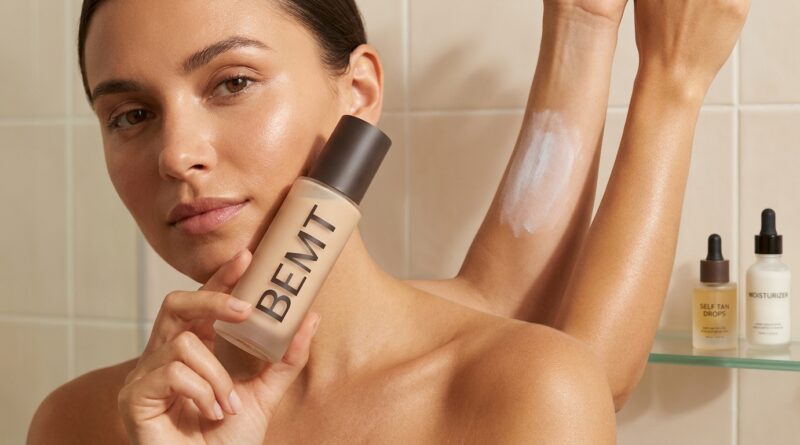
New ‘BEMT Glow-Safe’ Rule: How To Pick The New Sunscreens That Actually Protect Your Tan And Your Skin
You finally get your self tan even, your elbows behave for once, and then a new sunscreen buzzword shows up and ruins the peace. That is where a lot of people are right now with BEMT. You are hearing it is the first new US sunscreen filter in more than 20 years, that it gives better UVA protection, and that it may fix the chalky white cast problem. But if you love a sunless tan, your real question is simpler. Is BEMT sunscreen safe for self tanner, or is it going to streak, fade, pill, or irritate your skin? The good news is that BEMT itself is not known for stripping DHA color or bleaching your glow. The bigger issues are usually the full formula around it, especially heavy fragrance, high alcohol, exfoliating acids, and tinted pigments that sit oddly over developed tan. So yes, you can upgrade your SPF. You just need to read the label like a detective, not like a marketing ad.
⚡ In a Hurry? Key Takeaways
- BEMT sunscreen is generally safe for self tanner. The filter itself is not the usual reason a fake tan gets patchy.
- Check for broad spectrum protection, then scan for high alcohol, strong fragrance, acids, or heavy tint before buying.
- Patch test the sunscreen over fully developed DHA color for one full day before using it on your whole face or body.
What BEMT actually is, in normal-person language
BEMT stands for Bis-Ethylhexyloxyphenol Methoxyphenyl Triazine. You do not need to memorize that. What matters is why people care.
BEMT is a modern UV filter used in many sunscreens outside the US for years. People like it because it helps with broad spectrum protection, especially in the UVA range, which matters for long-term skin damage and hyperpigmentation. It is also photostable, which means it holds up well in sunlight instead of breaking down quickly.
That does not automatically make every BEMT sunscreen amazing. Think of BEMT like a good engine in a car. The full ride still depends on the tires, brakes, seats, and suspension. With sunscreen, the full formula still decides whether it sits nicely over self tanner.
Is BEMT sunscreen safe for self tanner?
Usually, yes.
If your self tanner uses DHA, which most do, the developed color sits in the top layer of skin. BEMT does not “eat” that color. It is not like a scrub, peel, or strong active ingredient that speeds up shedding on purpose.
When people say a sunscreen ruined their tan, one of these things is usually happening instead:
- The formula contains a lot of drying alcohol, which can make skin rough and patchy.
- It has fragrance or essential oils that irritate sensitive skin, leading to uneven wear.
- It pills when layered over moisturizer, bronzing drops, or self tan residue.
- It contains tint or pigments that grab onto dry patches and look muddy.
- The person applied sunscreen before the self tan had fully developed.
So if you are searching for a BEMT sunscreen safe for self tanner, focus less on the BEMT itself and more on the supporting cast in the ingredient list.
Why self-tan users should care about UVA coverage
A fake tan does not protect your skin from UV. It just changes the look of the outer layer. That is why proper sunscreen still matters, even if your skin looks bronzed already.
If you need a quick refresher, New ‘Sunscreen-Plus Glow’ Rule: Why Your Fake Tan Needs Real SPF To Stay Safe In 2026 explains this really well. A lot of people quietly assume their tan look means some built-in protection. It does not.
BEMT is getting attention because stronger, steadier UVA coverage may help close the gap between how sunscreen feels in real life and how it performs on paper. For self-tan users, that is a good thing. Better daily protection means less temptation to skip SPF because the old stuff felt chalky, greasy, or streaky.
How to read a BEMT sunscreen label without getting fooled
1. Start with “broad spectrum” and SPF 30 or higher
This is the first filter, no pun intended. If the front of the bottle is all about glow, bronze, radiance, skin finish, or hydration but the protection details are vague, put it back for a second and check the facts.
You want:
- Broad spectrum
- SPF 30 or higher for daily use
- Water resistance if you sweat, swim, or wear it outdoors for long stretches
2. Check the alcohol content
Alcohol is not always bad in sunscreen. Sometimes it helps the formula feel lighter and dry down faster. But when alcohol is high on the ingredient list, some self-tan users notice faster fading, especially on the face, chest, hands, and knees where the skin can be more reactive or dry.
If your fake tan fades in weird patches, try a lower-alcohol option first.
3. Watch the fragrance load
Fragrance does not necessarily remove your tan. It can, however, irritate skin that is already a little stressed from shaving, exfoliating, or repeated tanning products. Irritation often means rubbing, dryness, and texture. That is when your glow starts looking uneven.
If you are sensitive, fragrance-free is usually the safer bet.
4. Look for hidden exfoliators
Some “glow” or “brightening” sunscreens sneak in acids or resurfacing ingredients. Nice idea. Bad timing if your self tan is fresh.
Be cautious with formulas that highlight:
- AHAs like glycolic or lactic acid
- BHAs like salicylic acid
- Retinoid-like actives in a day formula
- Enzyme exfoliants
Those can speed up the loss of DHA color, especially if you use them every day.
5. Think about pigment interaction
Tinted sunscreens can be great. They can also be annoying over self tanner.
If the tint is too cool, too orange, too gray, or too heavy, it can clash with your developed tan and look dirty or uneven in photos. That is not BEMT causing the problem. It is the iron oxides or other pigments in the tint.
If you love tinted SPF, test it in daylight and take a selfie near a window before trusting it for an event.
The patch test that actually tells you something
A lot of people patch test sunscreen on bare skin, then act surprised when it behaves differently over self tanner. That is not a useful test if your real routine includes DHA.
Do this instead:
- Apply your self tanner as usual and let it fully develop.
- Pick a small visible zone like the jawline, outer cheek, collarbone, or inner forearm.
- Apply the BEMT sunscreen over that developed color.
- Wear it for a full day.
- Check for pilling, streaking, odd darkening, dryness, itching, and how the color looks after removal.
Then go one step further. Reapply it once during the day, because that is where some formulas start dragging or lifting color.
If it passes that test, you have a much better answer than any viral review can give you.
Face versus body. The answer may be different
This trips people up all the time. A sunscreen can be perfect on the body and awful on the face, or the other way around.
For the face
You usually want:
- Low pilling
- No heavy white cast
- Good layering under makeup
- Low irritation around eyes and nose
Face self tan is often lighter and fades faster than body tan, so a drying sunscreen may show damage sooner there.
For the body
You usually care more about:
- Easy spread
- No streaking over dry areas
- Water resistance
- How it sits on hands, ankles, knees, and elbows
If a formula grabs onto those dry zones, it may make your tan look older by day two, even if the UV protection is solid.
Will BEMT affect hormones?
This is one of those questions that gets messy fast online.
What you can say simply is this: people often mix up concern about one sunscreen filter with concern about an entire category. BEMT has been used in other markets for years and is generally considered a modern filter with a better reputation than some older filters that get more debate.
If hormone-related questions are a top priority for you, the practical move is to read the full active ingredient panel, not just the front label. Some products may pair BEMT with other filters. Judge the whole formula.
And if your skin is reactive, pregnancy-safe advice or medical concerns apply, it is reasonable to ask your dermatologist rather than letting TikTok comments decide for you.
Will BEMT sunscreen ruin selfies or cause flashback?
Usually, BEMT itself is not the selfie villain.
What affects photos more often is:
- Mineral filters that leave cast
- Heavy tint that oxidizes
- Shimmery “glow” formulas
- Greasy finishes that catch light strangely
If you care about photos, test the sunscreen in three conditions:
- Natural daylight
- Indoor bathroom lighting
- Flash photo
That sounds fussy. It is still less annoying than finding out at a wedding that your face is a different color than your neck.
What ingredients tend to play nicest with a fake tan
When shopping, these are often friendlier signs:
- Hydrating humectants like glycerin
- Barrier-supporting ingredients like ceramides
- Fragrance-free or low-fragrance formulas
- Non-exfoliating moisturizers
- Elegant textures that spread without lots of rubbing
Less rubbing matters more than many people realize. Even a good sunscreen can disturb tan if you have to massage it forever to get rid of streaks.
Red flags for self-tan users
Pause before buying if you notice:
- Strong perfume smell
- Alcohol very high on the list and your skin runs dry
- Marketing focused on “instant blur” or “universal tint” with no chance to test shade
- Brightening or resurfacing claims that suggest exfoliating actives
- Very matte formulas that can cling to flaky patches
None of these automatically mean “bad product.” They just mean “higher risk of annoying your fake tan.”
At a Glance: Comparison
| Feature/Aspect | Details | Verdict |
|---|---|---|
| BEMT filter itself | Modern UV filter with strong broad spectrum support and good photostability. Not known for stripping DHA color. | Generally self-tan friendly |
| Alcohol and fragrance in the formula | Can increase dryness, irritation, and uneven fading, especially on face and dry body areas. | Check carefully before buying |
| Tint and finish | Tinted or very matte formulas may clash with developed tan, cling to texture, or photograph oddly. | Patch test in daylight first |
Conclusion
BEMT sunscreens do not need to be scary if you self tan. For most people, the answer to “is BEMT sunscreen safe for self tanner” is yes, as long as the rest of the formula is not loaded with the usual troublemakers. That means broad spectrum protection first, then a careful look at fragrance load, alcohol content, and whether tint or pigments might fight with your developed DHA color. Most of all, patch test on top of real, developed tan instead of guessing from brand claims or TikTok hauls. This matters right now because BEMT products are just starting to hit shelves, and the I Love Tanning community is asking the same question at once. The good news is you do not have to choose between skin protection and keeping your glow. You can modernize your SPF routine and keep your tan looking good, if you shop with your eyes open.