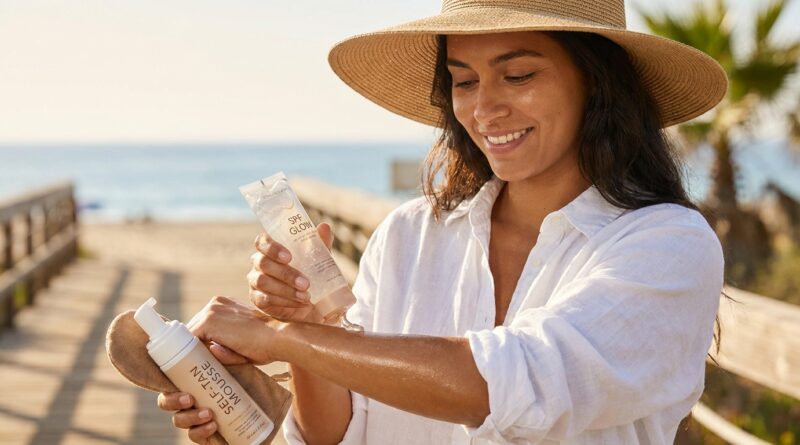
New ‘Sunless Tan + SPF’ Rule: The 2026 Safety Mistake Most Fake-Tan Lovers Still Make Outside
You did the “safe” thing. You skipped the tanning bed, picked a self tanner that actually looks natural, and walked outside feeling glowy and responsible. Then came the rude surprise. Red shoulders, a hot nose, and a sunburn sitting right on top of your expensive fake tan. It’s frustrating, and honestly, it keeps happening because a lot of people still quietly assume a bronzed look must mean at least a little built-in protection. It does not. If you’ve been wondering, does self tanner protect from the sun, the answer is simple: no. Not a little. Not enough. Not at all in any useful SPF sense. DHA-based self tanner can give you color without UV damage, which is great, but that color is cosmetic. It does nothing meaningful to block UV rays, prevent DNA damage, or stop premature aging. If you fake tan, SPF still has to be part of the routine every single time you go outside.
⚡ In a Hurry? Key Takeaways
- Self tanner does not protect from the sun. A fake tan has zero reliable SPF.
- Use a broad-spectrum SPF 30 or higher as the final step every morning, even if your tan looks deep.
- Good sun protection also helps your tan last longer by preventing burns, peeling, irritation, and patchy fade.
Does self tanner protect from the sun?
No. That’s the whole story in one word.
Self tanner changes the color of the very top layer of your skin. Most formulas use DHA, which reacts with dead skin cells to create that bronzed look. It can make you look tan, but it does not create a protective barrier that works like sunscreen.
This is where people get tripped up. A tan look and sun protection are not the same thing. One is color. The other is UV defense.
Dermatologists and cancer-prevention groups keep repeating this because the misunderstanding is still everywhere. A fake tan is safer than lying in the sun or using a tanning bed, but it is not a shield against UVA or UVB rays.
Why the myth sticks around
The confusion makes sense, even if it’s wrong.
A real tan gets mistaken for “protection”
People have heard for years that a natural tan gives a tiny bit of protection. Even that gets overstated, but it’s enough to keep the myth alive. Then self tanner enters the picture and people assume the same logic applies.
It doesn’t. Self tanner is just surface color. There is no melanin boost happening in the way people imagine.
Bronzed skin looks healthy
When your skin looks golden and even, your brain reads that as “summer-ready.” That visual cue is powerful. It can make sunscreen feel less urgent, even when it should be more urgent.
Social media hacks muddy the water
Viral posts love shortcuts. “SPF in my foundation is enough.” “I only need sunscreen at the beach.” “My tan acts like a base layer.” None of that holds up well in real life, especially if you’re outside for more than a quick walk to the car.
What self tanner actually does
Self tanner gives you color without requiring UV exposure. That is the win.
It helps you get the look you want without baking your skin. That can reduce the temptation to chase a “real” tan, which is good for your skin long term. But the safety benefit comes from avoiding UV tanning, not from any protection after the self tanner develops.
Think of it like this. Hair dye changes your hair color, but it doesn’t condition your hair unless the product is made to do that. Same idea here. Self tanner changes skin tone appearance, but it does not do the sunscreen job unless the product specifically includes SPF, and even then you should treat that carefully.
The 2026 mistake: treating SPF like a bonus instead of part of the tan routine
This is the big miss. People have updated their tanning products, but not always their sun habits.
They exfoliate. Moisturize dry spots. Apply mousse with a mitt. Sleep in it. Rinse it off. Admire the glow.
Then they go outside with only whatever SPF might be in their tinted moisturizer, or nothing at all.
That’s the gap. SPF needs to be part of the bronzing ritual, not some optional extra you remember at the last second.
What to do instead
1. Use broad-spectrum sunscreen every day
Go with SPF 30 or higher. Broad-spectrum matters because you want protection from both UVA and UVB. UVA drives aging and also plays a role in skin cancer. UVB is the main sunburn culprit.
If you’ll be outdoors for any real amount of time, put sunscreen on exposed skin even if the day looks cloudy.
2. Don’t rely on makeup SPF alone
This is one of the biggest traps. Makeup with SPF is fine as a backup, but most people do not apply enough foundation, skin tint, or powder to get the labeled protection. It’s just not realistic.
Use a dedicated sunscreen underneath. Then put your makeup on top.
3. Reapply if you’re outside
One morning application is not enough for a long day out. If you’re sweating, swimming, walking around town, sitting at brunch on a patio, or driving for hours in bright sun, reapply according to the product directions.
Sprays, sticks, and lightweight fluid sunscreens can make this easier without wrecking your look.
4. Add physical protection
Hats, sunglasses, shade, and lightweight cover-ups still matter. This is especially true for shoulders, chest, and the tops of feet, which people forget all the time.
Will sunscreen ruin my fake tan?
Usually, no. Bad sun habits are more likely to ruin it.
A decent sunscreen does not automatically strip your tan. In fact, protecting your skin often helps your self tan fade more evenly because you’re less likely to burn, dry out, peel, or over-exfoliate later to fix the damage.
If your tan gets patchy after sunscreen, the issue is often friction, dehydration, or the formula mix, not the idea of SPF itself.
How to make sunscreen more tan-friendly
Use a gentle, non-gritty formula. Let your self tan fully develop before layering lots of products. Pat products on instead of aggressively rubbing when possible. Moisturize regularly so your tan fades evenly.
If pigmentation is part of your concern too, New ‘Tan-Friendly Melasma’ Rule: How To Fake A Glow Without Making Dark Patches Worse In 2026 is worth a read, because melasma and UV exposure are a rough combination.
What about self tanners that say they include SPF?
This is where labels need a little common sense.
If a self tanner includes SPF, that SPF only works if you apply enough product, apply it evenly, and use it the way sunscreen is meant to be used. Most people do not apply self tanner generously enough or often enough for it to function as their only sun protection.
Also, self tanner and sunscreen have different jobs and different use patterns. Self tanner might go on once every few days. Sunscreen needs daily use and regular reapplication.
So if your tanning product happens to contain SPF, treat that as a small extra, not your full plan.
Common myths that need to go
“I look tan, so I’m less likely to burn.”
False. Looking tan from DHA does not change how UV hits your skin.
“My moisturizer has SPF 15. I’m covered.”
Probably not, especially if you’re outdoors for more than a few minutes. SPF 15 is often too low for real-world use, and most people under-apply.
“I only need sunscreen on vacation.”
Daily life counts too. Walking the dog, driving, outdoor workouts, errands, lunch outside. It adds up.
“A base tan protects me.”
Even a real tan is skin damage, not healthy protection. A fake tan is cosmetic color only.
A simple routine that actually works
If you love self tanning, keep it simple.
Morning
Apply moisturizer if your skin needs it. Then use broad-spectrum SPF 30 or higher on all exposed areas. Let it settle. Then do makeup.
Self-tan days
Do your normal prep. Apply your self tanner. Let it develop fully. The next day, go right back to sunscreen as usual.
Outdoor days
Reapply sunscreen. Wear a hat if you’ll be out a while. Try not to fry the exact skin you just spent time and money making look good.
At a Glance: Comparison
| Feature/Aspect | Details | Verdict |
|---|---|---|
| Self tanner and UV protection | DHA gives skin a bronzed appearance but does not block UVA or UVB in any meaningful SPF way. | Not sun protection |
| Makeup with SPF | Helpful as an extra layer, but most people do not apply enough to reach the labeled SPF. | Not enough on its own |
| Daily sunscreen with fake tan | Protects against sunburn and UV damage, and can help preserve a more even-looking tan by preventing peeling. | Best practice |
Conclusion
If you remember one thing, make it this: self tanner is a safer way to look tan, but it is not sunscreen. That’s the disconnect a lot of people still miss. The color can be convincing, but your skin is not suddenly protected from DNA damage, early wrinkles, dark spots, or skin cancer risk just because it looks bronzed. The good news is you do not have to choose between glow and good sense. Keep the mousse, drops, or spray you love. Just make broad-spectrum SPF part of the routine every time, not an afterthought. That one shift can save you from painful burns, weird patchy fade, and the expensive cycle of fixing a tan you accidentally cooked off in the sun. Fake the bronze. Wear the sunscreen. Do both, and your skin will be a lot happier for it.