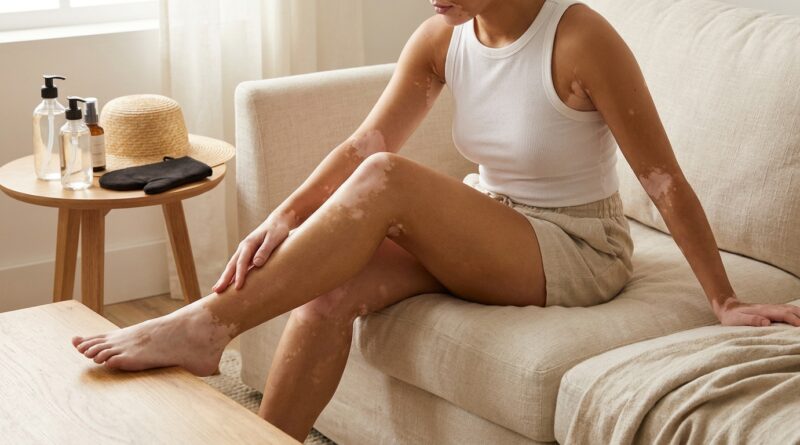
New ‘Vitiligo-Cover Glow’ Rule: How To Use Sunless Tanner To Even Out Patches Without Harming Fragile Skin
If you have vitiligo, trying a new tanning trend can feel like a small act of courage. You are not just chasing a glow. You are trying to avoid stinging, streaks, orange tones and that sinking feeling when a product makes the contrast stand out even more. The good news is that a self tanner for vitiligo safe enough for careful use does exist, but the rule is simple. Go slower than the bottle suggests. Depigmented skin can react differently, and color may grab in a way that looks obvious if you rush.
The safest approach is to treat self tanner like a test, not a makeover. Pick a fragrance-free formula with a short ingredient list, patch-test it on both pigmented and depigmented skin, build color in thin layers and keep sunscreen in the routine because self tanner does not protect against UV. If your skin barrier is irritated, sunburned or healing, wait. A believable result usually comes from less product, more prep and a little patience.
⚡ In a Hurry? Key Takeaways
- A self tanner for vitiligo safe enough for home use is usually a fragrance-free DHA-based product, applied slowly after patch-testing on several areas.
- Start with a light mousse, lotion or drops, moisturize dry edges first and build coverage over 2 to 3 sessions instead of one heavy coat.
- Self tanner is cosmetic only. It does not stop UV damage, and vitiligo patches still need daily broad-spectrum SPF.
Why self tanner can be tricky with vitiligo
Vitiligo changes the amount of pigment in the skin, but self tanner does not work by replacing that pigment. Most sunless tanners use DHA, short for dihydroxyacetone. It reacts with proteins in the outermost layer of skin and creates a temporary darker look.
That sounds straightforward, but real life is messier. Depigmented patches may take color differently from surrounding skin. Dry spots can turn darker or more orange. Uneven texture can make edges look sharper. And if your skin is already irritated, almost any cosmetic can feel worse than it would on calm skin.
That is why the new common-sense rule matters. Do not try to match your whole body in one go. Aim to soften contrast, not create perfect uniformity on day one.
What makes a self tanner for vitiligo safe
Look for simple, boring formulas
Boring is good here. Safer picks usually have:
- Fragrance-free or very low fragrance formulas
- DHA as the main tanning ingredient
- Minimal essential oils
- No obvious scrubbing acids in the same product
- A lotion, cream or mousse texture that spreads evenly
If your skin reacts easily, skip products marketed as “tingling,” “rapid dark,” or “extra bronzing.” Temporary bronzers can be useful, but some heavily tinted formulas are harder to judge on vitiligo patches and may contain extra color additives you do not need.
Patch-testing is not optional
This is the step most people skip, then regret. Test the product on:
- One small vitiligo patch
- One nearby area of normally pigmented skin
- One friction-prone spot, like the inner elbow or knee area
Wait 24 to 48 hours. Watch for itching, stinging, rash, unusual dryness or a strong orange cast. Also look at the color in daylight, not just bathroom light. If the match is off, it is better to find out on a one-inch spot than both legs.
Before you apply, prep matters more than people think
Do not apply on angry skin
If the area is sunburned, freshly shaved, cracked, inflamed or peeling, stop there. Self tanner sits on the outer layer of skin. When that layer is disrupted, the result is often patchy and more irritating.
Exfoliate gently, then moisturize strategically
You do not need a harsh scrub. In fact, harsh scrubs can make things worse. Use a soft washcloth or a mild, non-acid cleanser the day before. Then apply a plain moisturizer to very dry zones such as ankles, knees, elbows, hands and the edges of rough patches.
This step matters because dry skin grabs more color. A tiny bit of moisturizer acts like a speed bump, helping the product spread more evenly.
Step-by-step: how to apply self tanner on vitiligo patches
1. Start lighter than you think you need
Choose a light or medium shade. Dark formulas are less forgiving. If your goal is camouflage, gradual color almost always looks more believable.
2. Use a mitt or soft makeup sponge
A tanning mitt helps with large areas. A soft sponge or small dense brush can help around edges of patches where precision matters. This is especially useful on hands, feet, collarbones and around knees.
3. Apply to the whole area first, then refine
For example, if you are working on the lower leg, apply a thin layer over the entire lower leg first. Then go back and add a little more only where depigmented patches still stand out too much. This keeps the overall tone believable.
4. Build in layers
Wait for the first layer to develop fully, usually several hours or overnight depending on the formula. Then reassess in daylight. A second light layer is usually safer than one thick application.
5. Blend the borders
The most obvious giveaway is a hard edge. Use whatever is left on the mitt or sponge, not fresh product, to feather the border between patch and surrounding skin.
6. Wash hands well and let it dry fully
Even if you use a mitt, wash hands and nails after. Then wait before dressing. Loose dark clothing is your friend on tanning day.
Best body areas to start with
If this is your first time, do not start with your face before a big event. Test easier, less visible areas first, like:
- Shins
- Forearms
- Thighs
These areas are easier to blend and easier to cover if the color goes odd. Once you know how your skin takes the formula, you can decide if facial use is worth trying.
What about the face?
The face is where people get nervous, and for good reason. Facial skin can be more reactive, and mismatched color is harder to hide. If you want to try it, use tanning drops mixed into a plain moisturizer rather than a heavy body mousse.
Again, patch-test first. Keep the amount low. Avoid eyelids, nostrils and lips. And remember, makeup can often do the last 20 percent of blending better than more self tanner can.
How to avoid the classic mistakes
Problem: Orange patches
Usually caused by too much product, very dry skin or a formula that is too dark. Fix it by choosing a lighter shade, moisturizing dry zones first and using less.
Problem: Vitiligo patches look even more obvious
This can happen if surrounding skin darkens more than the patch or if the patch develops a different undertone. Try applying a thin all-over layer, then a careful second pass only where needed. If that still does not work, a wash-off body tint may be better for events.
Problem: Irritation or itching
Stop using the product. Wash it off if possible, moisturize with a bland cream and give your skin time to calm down. If irritation is strong or persistent, check with a dermatologist before trying another formula.
Important safety note: self tanner is not sun protection
This one trips people up. A tan look does not mean safer skin. Vitiligo patches have less natural pigment protection, so broad-spectrum SPF is still a must, especially on exposed areas.
Use sunscreen every day on areas you are trying to blend. If you burn, your color match will be ruined anyway, and more importantly, your skin barrier takes the hit.
When to skip self tanner completely
Press pause if:
- You have active irritation, eczema or a rash on the area
- You recently used a strong peel or retinoid and your skin is peeling
- You are not able to patch-test before a major event
- You have had past reactions to DHA, fragrance or color cosmetics
Sometimes the safest cosmetic choice is no cosmetic choice that week. That is not giving up. It is protecting your skin for the long run.
If you want better camouflage than self tanner can give
Self tanner helps soften contrast, but it does not always give perfect coverage. If you need more control for photos, weddings or beach days, consider body makeup or transfer-resistant camouflage products made for uneven tone. Those can be a better fit for small high-contrast areas.
The key is to avoid random social media hacks that pile on pigments without clear ingredient info. With reports from safety agencies in different markets raising concerns about some color additives and questionable imports, it makes sense to stick with established brands and clear labeling.
At a Glance: Comparison
| Feature/Aspect | Details | Verdict |
|---|---|---|
| Formula choice | Fragrance-free DHA lotion, mousse or drops with a short ingredient list | Best starting point for a self tanner for vitiligo safe enough for cautious home use |
| Application method | Thin all-over layer, then targeted second layer after full development | More natural than one heavy coat |
| Skin safety | Patch-test first, avoid broken skin, keep using broad-spectrum SPF | Non-negotiable if you want coverage without avoidable irritation |
Conclusion
Vitiligo is finally getting more attention in skincare conversations, but practical advice is still oddly hard to find. That leaves people stuck between wanting to soften contrast and worrying that the wrong product will irritate fragile skin or create an even stranger color mismatch. The safest path is not dramatic. It is careful. Choose vetted sunless tanners, patch-test on both light and normally pigmented areas, build coverage slowly and protect everything with SPF. That gives you a calm, evidence-aware way to use self tanner without gambling with your skin barrier. You do not need a perfect fake tan. You need a routine that helps you feel comfortable in shorts, swimsuits and photos while keeping your long-term skin health front and center.