New ‘Microbiome-Friendly Tan’ Rule: How To Keep Your Skin Flora Happy While You Fake It In 2026
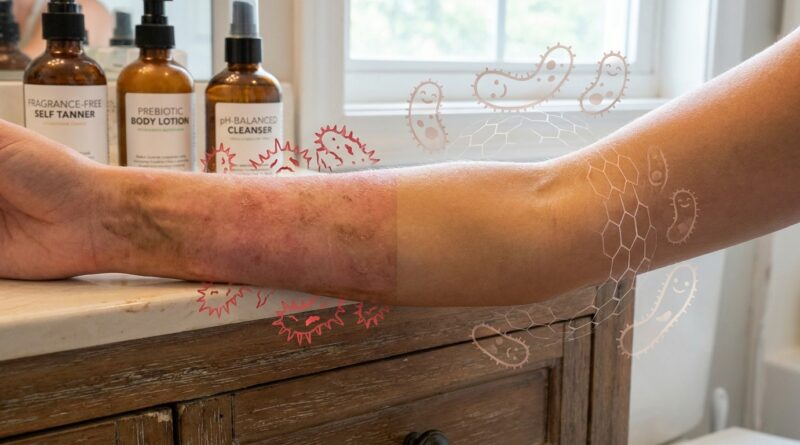
Your self-tan is not supposed to look perfect on day one, then turn patchy, itchy, or oddly flat by day two. That is frustrating, especially when you are already doing the “good skin” stuff like gentle exfoliating, moisturizing, and avoiding harsh scrubs. The missing piece may be your skin microbiome, which is the community of tiny microbes that live on your skin and help keep irritation down, support repair, and keep your barrier steady. In 2026, the smarter approach is not just barrier-safe tanning. It is a microbiome friendly self tanner routine. That means choosing formulas and prep habits that do not throw your skin’s ecosystem into chaos. The goal is simple. Get the glow, keep the comfort, and make the tan fade evenly instead of breaking apart in weird little islands.
⚡ In a Hurry? Key Takeaways
- A microbiome friendly self tanner routine focuses on gentle prep, simple formulas, and steady hydration so your tan develops and fades more evenly.
- Skip over-cleansing, strong acids, and rough scrubs right before and after tanning, because they can upset both your skin barrier and its helpful microbes.
- If your tan gets itchy, blotchy, or stingy fast, stop blaming yourself first. The formula or routine may be too harsh for your skin ecosystem.
Why your skin flora matters more than people realize
For years, fake-tan advice was mostly about color payoff and streak prevention. Then the conversation shifted to the skin barrier. That was a good step. But dermatology is now looking more closely at the microbiome too, because healthy skin microbes appear to help regulate inflammation and support recovery when skin is stressed.
Self-tan does not “kill all bacteria” in some dramatic way, but certain formulas, heavy fragrance, drying alcohols, aggressive exfoliation, and too much washing can create a rough environment for your skin’s normal balance. When that happens, skin can feel tight, reactive, dull, or uneven. And yes, your tan can look worse because of it.
If you have been wondering why the same product suddenly seems harder to wear, this is worth paying attention to. Product choice matters, but routine matters just as much.
What a microbiome friendly self tanner routine actually looks like
1. Prep gently, not aggressively
Old-school tanning advice often pushed intense prep. Long hot shower. Big scrub. Acid pads. Shave. Another scrub. That can leave skin smooth for a few hours, but not always happy.
A better approach is to exfoliate lightly 24 hours before tanning, not right before. Use a soft washcloth, a gentle enzyme exfoliant, or a mild lactic acid product if your skin already tolerates it. Avoid rough sugar scrubs, stiff mitts, and strong peel pads on the same day as tanning.
The point is to remove loose flakes without stripping everything else away.
2. Do not tan on angry skin
If your skin is red, stinging, over-exfoliated, freshly waxed, or irritated from retinoids, wait. Self-tan on stressed skin often develops unevenly because the top layer is already unstable. You may also get more itch and more dullness as the tan fades.
This is one of those boring tips that saves a lot of regret.
3. Choose calmer formulas
Look for self-tanners that feel more like skincare than paint. Fewer unnecessary extras is usually better. If your skin is sensitive, be careful with strong fragrance, lots of essential oils, or formulas that leave you feeling squeaky-dry after they set.
If you need help sorting products, this guide on New ‘Microbiome-Safe Glow’ Rule: How To Pick Self‑Tanners That Don’t Wreck Your Skin’s Good Bacteria does a good job of explaining why some tanners feel fine at first, then leave skin rough or stingy later.
4. Keep the rest of your routine boring for 48 hours
After tanning, this is not the time to experiment with acids, retinoids, body peels, or heavily fragranced body wash. Go simple. Use a gentle cleanser. Use lukewarm water. Pat dry. Moisturize with something plain and reliable.
Your tan needs a stable surface to fade nicely. Your microbiome likes stability too.
The biggest mistakes that wreck the glow and your comfort
Over-cleansing
If you wash your body with strong foaming cleansers twice a day, your tan may fade faster and your skin may get dry and irritated underneath. That can make the color look dirty or cracked instead of smooth.
Too many actives at once
Body serums with acids, acne washes, retinol lotions, and exfoliating mitts all have their place. But stacking them around tanning day is asking a lot from your skin. Use them on a schedule, not all together.
Ignoring itch or tightness
If your skin feels uncomfortable every time you self-tan, that is a sign. It does not always mean you are allergic, but it does mean your routine is probably too harsh or your formula is not a good fit.
A simple daily routine you can actually stick to
The day before
Take a short lukewarm shower. Cleanse gently. Lightly exfoliate dry areas like elbows, knees, ankles, and the backs of arms. Apply a basic moisturizer afterward. Then leave your skin alone.
Tan day
Start with clean, dry skin. Skip strong deodorant, perfume, and body oils on the areas you are tanning. Add a tiny bit of moisturizer only to very dry spots if needed. Apply your self-tanner evenly and let it dry fully before dressing.
The next two days
Use mild body wash. Moisturize once or twice a day. Avoid long hot baths, hard scrubbing, and extra exfoliation. If you need a top-up, use a gradual tanner instead of stripping everything off and starting over immediately.
Signs your routine is microbiome friendly
Your skin feels normal, not tight. The tan develops evenly. It fades gradually instead of breaking into patches. You are not getting random itch, little red bumps, or that strange “paper-dry” feeling by day two or three.
That is what success looks like here. Not just darker color. Better skin behavior.
When to stop and rethink everything
Pause your self-tanner and simplify your routine if you notice burning, persistent itching, rash, swelling, or repeated roughness after every use. Those are not signs to just “push through.” They mean your skin needs a reset, and possibly a different product.
If you have eczema, rosacea, very sensitive skin, or frequent body breakouts, patch testing matters even more. Try the product on a small area for a few days before doing a full-body application.
At a Glance: Comparison
| Feature/Aspect | Details | Verdict |
|---|---|---|
| Prep style | Light exfoliation 24 hours before tanning works better than intense same-day scrubbing. | Best for even color and calmer skin. |
| Product formula | Simple, hydrating, lower-irritation formulas are less likely to trigger tightness, itch, or patchy fade. | Worth prioritizing over trendy scent or instant color. |
| Aftercare | Gentle cleansing and daily moisturizer help protect both the barrier and the skin microbiome. | Most important step for keeping the tan looking good longer. |
Conclusion
The big shift in 2026 is that smart tanning is no longer just about avoiding streaks. It is about protecting the skin you are putting that glow on. Dermatology is moving from barrier-only thinking to barrier plus microbiome, and that matters because healthy skin microbes help calm inflammation and support repair. A microbiome friendly self tanner routine is simply a practical way to use that science in real life. Go gentler with prep, choose calmer formulas, and keep aftercare simple. You can stay bronzed without slowly beating up your skin, and that is a much better long-term beauty plan than chasing color for one good day.