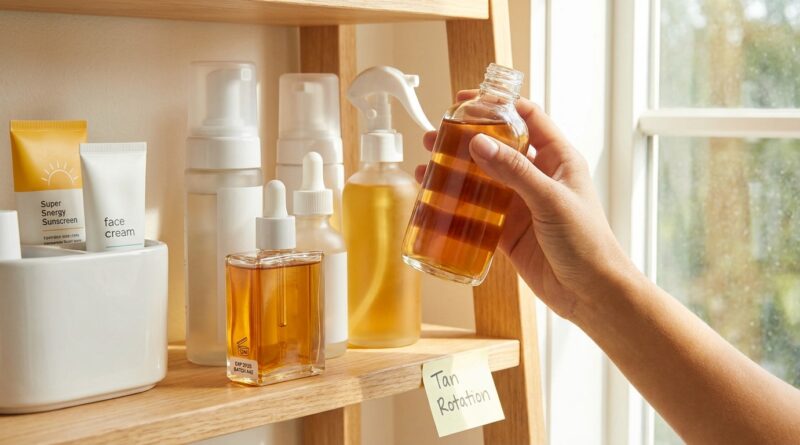
New ‘Expiration-Date Tan’ Rule: Why Out-Of-Date Self-Tanner Is The Hidden Irritant No One Is Talking About In 2026
You’re not imagining it. A self-tanner can look perfectly normal, still have plenty left in the bottle, and still be the reason your skin suddenly feels itchy, patchy, or strangely dry. That is what makes expired self-tanner so annoying. The color may still develop, just not evenly, and the ingredients may have started to break down long before the bottle looked “bad.” If you have been wondering how long does self tanner last before it expires, the safest real-world answer is shorter than most people think. In general, an unopened self-tanner is usually best within about 12 to 18 months. Once opened, many formulas are smartest to use within 6 to 12 months, and sometimes sooner if they were stored in a hot bathroom, near sunlight, or opened often. The new rule people need is simple. If the smell, texture, color, or your skin’s reaction changes, stop using it. A bargain bottle is not a bargain if it leaves you blotchy and irritated.
⚡ In a Hurry? Key Takeaways
- Most self-tanners are best used within 6 to 12 months after opening, even if the bottle is not empty.
- Store self-tanner in a cool, dark, dry place, not in a steamy bathroom or hot car.
- If the product smells off, looks darker or separated, or suddenly makes your skin sting or itch, toss it.
Why this is suddenly a bigger deal in 2026
People are buying bigger bottles, backup bottles, and sale bundles. That sounds smart until one sits half-used in a cabinet for a year. Self-tanner is not like a plain body lotion you can forget about forever. It uses active ingredients, most notably DHA, short for dihydroxyacetone, to react with the top layer of skin and create that bronzed look.
Over time, heat, air, light, and contamination from hands or applicators can change how that formula behaves. It may not just tan less well. It may tan unevenly, dry the skin more, smell stronger, or trigger irritation in skin that tolerated it just fine before.
That is why the new practical rule matters. Don’t judge self-tanner by how full the bottle is. Judge it by time, storage, and changes in the formula.
How long does self tanner last before it expires?
Here is the simple answer most people want.
Unopened self-tanner
Usually about 12 to 18 months from the date of manufacture is a reasonable comfort zone for many formulas. Some brands may aim for longer, but unless the packaging clearly says so, do not assume it stays fresh for years.
Opened self-tanner
Use it within 6 to 12 months if you want the best chance of even color and lower irritation risk. If it is a mousse, serum, or water-based formula that gets frequent exposure to air, I would lean toward the shorter end of that range.
If it was stored badly
Cut that timeline down. A bottle kept in a hot bathroom, gym bag, beach tote, or sunny windowsill can age much faster.
If you see the little open-jar symbol on the bottle with “6M” or “12M,” that means 6 months or 12 months after opening. That symbol matters more than your memory of when you bought it.
What actually goes wrong as self-tanner ages
The key active in many self-tanners, DHA, is not immortal. It can degrade over time, especially with heat and air exposure. Other ingredients, including fragrance, preservatives, plant extracts, and bronzing agents, can also shift.
That can lead to a few common problems:
- Uneven or orange color development
- More dryness than usual
- Stronger “biscuit” smell or a sour smell
- Stinging, itching, or mild rash-like irritation
- Patchy fading instead of a smooth fade
It is not always dramatic. Sometimes the first clue is just that your “holy grail” tanner suddenly stops behaving like itself.
The hidden irritant problem people miss
Most people blame their skin. They think the weather changed, their razor caused it, or they forgot to moisturize. Sometimes that is true. But sometimes the real issue is an old formula that has oxidized, separated, or lost stability.
This matters because there is growing concern in dermatology and regulatory circles about how self-tan ingredients behave on real skin over time, not just in a lab-fresh bottle. Consumers are using more product, keeping it longer, and getting very little guidance on safe shelf life.
That gap creates a perfect little mess. More bulk buying. More old product. More mystery irritation.
How to tell if your self-tanner has gone off
You do not need a chemistry degree. A few clues are usually enough.
1. The smell changed
Self-tanner never smells amazing, but you know its normal scent. If it becomes sour, metallic, extra sharp, or unusually strong, that is a warning sign.
2. The color in the bottle looks wrong
If the liquid or mousse looks much darker, oddly yellow, muddy, or uneven compared with when you first opened it, be careful. Oxidation can change appearance before you see skin problems.
3. The texture separated
Watery liquid on top, clumps, foam that collapses differently, or graininess all suggest the formula is no longer stable.
4. It suddenly feels stingy or itchy
If your usual product now causes tingling, burning, or itchiness, stop. Even if the reaction seems mild, your skin is giving useful feedback.
5. The tan develops strangely
Fast in some areas, weak in others, orange at the wrists, patchy at the knees. That can be a prep problem, but if your routine did not change, the bottle may be the issue.
The new “expiration-date tan” rule to follow
If you want one easy rule, use this:
Trust unopened self-tanner for about a year to 18 months, trust opened self-tanner for 6 to 12 months, and trust your senses even more than the calendar.
Toss it early if any of these are true:
- It smells different
- It looks darker, separated, or cloudy
- It was stored in heat
- It causes new irritation
- You cannot remember when you opened it, and it has clearly been around a long time
That last point is not glamorous, but it is honest. If the bottle feels like it has lived through two seasons, a move, and at least one holiday sale, let it go.
Best storage tips if you want your self-tanner to last
Storage makes a bigger difference than many people realize.
Keep it cool
A bedroom drawer or cabinet outside the bathroom is often better than a humid, steamy bathroom shelf.
Keep it dark
Direct sunlight speeds up breakdown. A sunny windowsill is a terrible place for active skincare or tanning products.
Seal it tightly
Air exposure matters. Put the cap back on right away.
Use clean hands and tools
If you touch the opening with wet hands, dirty mitts, or lotion-covered fingers, you increase contamination risk.
Write the open date on the bottle
This is the simplest trick of all. A small piece of tape with the month and year can save you from guessing later.
Who should be extra cautious?
Some people have less room for error.
- Anyone with eczema or very sensitive skin
- People using exfoliating acids, retinoids, or acne treatments
- Anyone prone to fragrance reactions
- People applying self-tanner after shaving or waxing
If that sounds like you, patch test older bottles before full-body use. Put a small amount on the inner arm or outer thigh and wait a day.
Is it dangerous, or just annoying?
Usually, expired self-tanner is more likely to be disappointing and irritating than truly dangerous. But “just irritation” can still mean days of itching, blotches, dryness, and a tan that fades like peeling wallpaper.
The bigger point is this. Products with active ingredients are not forever products. As more questions are asked about ingredient stability, absorption, and real-world use, it makes sense to treat self-tanner more like skincare and less like a random bottle that can sit around indefinitely.
Should you buy the big value size?
Only if you will actually use it in time.
If you tan weekly year-round, a bigger bottle may be fine. If you self-tan only for holidays, weddings, or summer weekends, the jumbo deal may cost more in the long run because you will be tossing part of it.
For occasional users, smaller bottles are often the smarter buy. You get fresher formula, more consistent color, and less chance of mystery skin drama.
At a Glance: Comparison
| Feature/Aspect | Details | Verdict |
|---|---|---|
| Opened shelf life | Best used within 6 to 12 months after opening, depending on formula and storage | Use sooner if stored in heat or if texture changes |
| Storage conditions | Cool, dark, dry storage helps preserve DHA and formula stability | Avoid bathrooms, cars, and sunny shelves |
| Signs to toss | Off smell, separation, darker color, irritation, uneven results | When in doubt, replace it |
Conclusion
If your self-tanner has been sitting around for ages, this is your nudge to check it before you slather it on again. There is growing concern in dermatology and regulatory circles about how much DHA and other self-tan ingredients actually penetrate the skin and how they behave over time in real-life conditions, yet most consumers hang onto bottles for a year or more without thinking twice. Right now people are buying bigger, value sizes and stocking up in sales while having almost no guidance on safe shelf life, storage, or how oxidation changes both color and irritation risk. The good news is that the fix is simple. Use a clear rule. Track when you opened it. Store it properly. Toss it if the smell, texture, color, or skin reaction changes. That one habit can mean fewer rashes, smoother fades, and a much better chance that your glow stays on your skin, not in your list of regrets.