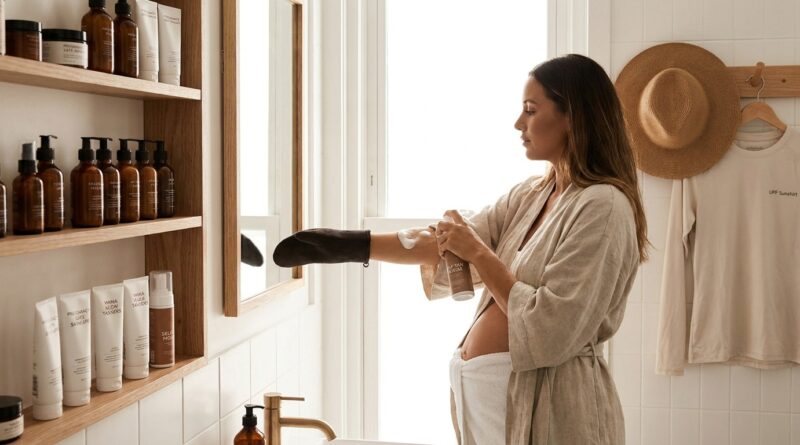
New ‘Pregnancy-Safe Glow’ Rule: How To Use Self-Tanner When You’re Expecting In 2026
If you are pregnant and trying to figure out whether self-tanner is okay, the advice out there can feel all over the place. One post says it is harmless. Another makes it sound terrifying. Meanwhile, your OB may just say, “Skip anything risky,” which is not exactly helpful when you still want a little color without baking in the sun. Here is the plain-English version. In 2026, the clearest guidance so far says DHA, the main ingredient in most self-tanners, is meant for external use on skin only and within approved concentrations. The bigger concern is not a basic lotion used carefully on intact skin. It is inhaling spray mist, getting product on lips, in the nose, in the eyes, or on other mucous membranes. So no, most pregnant people do not have to give up the glow completely. But the safest route is picking the right format, applying it carefully, and still wearing sunscreen every single day.
⚡ In a Hurry? Key Takeaways
- Yes, a pregnancy safe self tanner in 2026 is usually a lotion, cream, mousse, or wipe used only on the outside of the skin and kept away from eyes, lips, nose, and genitals.
- Skip spray booths and aerosol mists if you might breathe them in. If you do use a salon, ask exactly how overspray is controlled and what protective gear is offered.
- Fake tan is safer than UV tanning, but it gives you zero sun protection. You still need broad-spectrum SPF on top.
What changed in 2026?
The big update was a March 2026 fact sheet that made the DHA issue easier to understand. DHA is the ingredient that reacts with the top layer of your skin to create that tanned look. The new guidance did not suddenly say all self-tanners are bad. It clarified where the line is.
DHA is approved for external use on skin, up to specific concentrations, not for inhalation and not for coating mucous membranes. That matters because a self-tanning lotion on your arms is a very different thing from standing in a cloud of spray you can breathe in.
At the same time, skin cancer and dermatology groups kept repeating another important point. Sunless tanning is a safer choice than tanning with UV rays. But fake tan is just color. It is not protection. If you are pregnant, that can feel like two messages fighting each other. They are not, once you separate “getting color” from “protecting skin.”
So, is self-tanner safe during pregnancy?
For most people, the cautious answer is yes, with limits. The safest approach is to use a non-aerosol self-tanner that you apply by hand or with a mitt, on healthy skin, in a well-ventilated room, while avoiding areas where product can enter the body more easily.
That means lotions, creams, mousses, gels, drops mixed into body lotion, and towelettes are usually the better picks over spray booths or aerosol cans.
What should make you pause? Products that create a fine mist, products meant for all-over spraying near your face, and any method that makes it easy to inhale DHA or get it into your mouth, nose, or eyes.
Best pregnancy-safe self-tanner formats in 2026
1. Lotions and creams
These are the easiest to control. You can see where they go, rub them in carefully, and keep them away from sensitive areas. If you want the lowest-drama option, start here.
2. Mousses and gels
These can also work well if they are pumped into your hand or onto a mitt, not sprayed into the air. They dry fast, which is nice when you are already uncomfortable and do not want to stand around waiting.
3. Towelettes and tanning wipes
These are handy for touch-ups or smaller areas like legs and arms. They also limit mess. Just wash your hands well after use.
4. Drops mixed into body lotion
These can be useful if you want a softer glow and more control over how much color develops. Use fewer drops first. Pregnancy skin can be unpredictable, and color can grab differently on dry patches.
5. Spray booths and aerosol sprays
These are the least ideal choice during pregnancy because the mist can be inhaled, and it is harder to avoid contact with lips, nostrils, and eyes. If you are trying to be cautious, this is the format most experts would tell you to rethink.
Where to avoid DHA contact
This is the part many labels and salon ads gloss over. If you are using self-tanner while pregnant, be extra careful to keep it away from:
- Eyes and eyelids
- Lips and inside the mouth
- Inside the nose
- Genitals and other mucous membranes
- Broken, irritated, or freshly shaved skin
If you are applying near the face, use a very light hand and avoid the actual eye area, nostrils, and lips. Barrier balm or plain petroleum jelly around these spots can help stop migration.
A practical pregnancy-safe self-tanning routine
Step 1: Patch test first
Do this 24 hours ahead, even if you have used self-tanner before. Pregnancy can make your skin more reactive. Test on a small area like the outer thigh or inner forearm.
Step 2: Pick a controlled formula
Choose a lotion, cream, mousse, or wipe instead of a mist. Fragrance-free is often a nice bonus if smells are making you nauseous.
Step 3: Prep gently
Exfoliate lightly with a washcloth or mild scrub the day before, not right before. Moisturize dry spots like ankles, knees, elbows, and wrists so the tan does not turn blotchy.
Step 4: Apply with a mitt or gloves
This keeps your palms from staining and helps spread product evenly. Work in sections and use less than you think you need.
Step 5: Keep it off sensitive areas
Do not apply on lips, near nostrils, around the eyes, or on broken skin. If you are tanning your face, use what is left on the mitt rather than adding a full pump directly there.
Step 6: Let it dry completely
Wear loose, dark clothing and avoid sweating if you can. Easier said than done, yes. But it helps.
Step 7: Wash hands well
Even if you used a mitt. Get around nails and cuticles too.
What about in-salon spray tans?
If you are pregnant and still considering a salon spray tan, ask questions before you book. Do not assume every technician handles overspray the same way.
Questions worth asking
- Is the product applied by booth mist or by hand-held spray?
- What is the DHA concentration?
- How do you reduce inhalation and overspray?
- Do you provide nose filters, eye protection, and lip balm?
- Can sensitive areas be fully shielded?
- Is the room well ventilated?
If the salon seems vague, rushed, or annoyed by these questions, take that as useful information. A good salon should be able to answer clearly.
If your goal is the most cautious version of a pregnancy safe self tanner 2026 routine, home application with a lotion or mousse is still the better bet.
Do not confuse self-tanner with other tanning trends
This is where social media has made a mess of things. A topical self-tanner is not the same as ingestible tanning products, tanning shots, or peptides pushed by influencers. Those are a different category of risk entirely. If you have seen people promoting “tan pills” or injectable glow hacks, skip them. We covered that in New ‘Pill & Peptide Tan’ Rule: Why TikTok’s Tan Shots Are The One Glow Trend You Should Never Copy In 2026.
That article is worth a read if your feed has started making these products look normal. They are not.
How to wear sunscreen over fake tan
This part is simple but important. Your self-tanner gives you color, not a safety shield. You still need broad-spectrum sunscreen every day, especially during pregnancy when melasma and other pigmentation issues can flare more easily.
Best way to layer it
- Let your self-tanner fully develop first, based on the product directions.
- Apply moisturizer if needed.
- Use a broad-spectrum SPF 30 or higher every morning.
- Reapply if you are outdoors, sweating, or near windows for long stretches.
Mineral sunscreens with zinc oxide or titanium dioxide are often the easiest pregnancy choice if you want something simple and familiar. But the best sunscreen is the one you will actually wear enough of.
Common mistakes pregnant users make
Thinking “natural” means risk-free
Natural branding can be soothing, but it is not a medical category. Check the format and how it is used, not just the front label.
Using face mists too close to the nose and mouth
Even “fine mist” products can drift. Put the product on a mitt or hands first when possible.
Applying right after shaving
This can increase irritation and make the color catch unevenly. Wait a bit.
Forgetting SPF
This is the biggest one. Fake tan can make skin look sun-kissed, which tricks people into feeling protected. You are not.
When to check with your own clinician
It is smart to ask your OB, midwife, or dermatologist if:
- You have eczema, psoriasis, or very reactive skin
- You have broken skin or a rash
- You have had fragrance or preservative allergies before
- You are considering regular salon spray tans
- You just want a personalized yes-or-no based on your pregnancy
You are not overthinking it. This is exactly the kind of small, everyday question people deserve a straight answer on.
At a Glance: Comparison
| Feature/Aspect | Details | Verdict |
|---|---|---|
| Home lotion or mousse | Controlled application, less airborne exposure, easier to avoid lips, nose, and eyes | Best pregnancy-safe option for most people |
| Spray booth or aerosol tan | Higher chance of inhaling DHA mist or getting product on mucous membranes | Use extra caution or skip during pregnancy |
| Sun protection | Self-tanner adds color only and does not block UV rays | Always pair with broad-spectrum SPF 30+ |
Conclusion
If you have been stuck between “all self-tanner is dangerous” and “it is totally fine, stop worrying,” the truth sits in the middle. The March 2026 guidance helped clear that up. DHA, the main sunless tanning ingredient, is approved for external use up to specific concentrations, but inhaling spray mist or coating mucous membranes can increase systemic exposure in a way you do not want. That is why the safest move in a pregnancy safe self tanner 2026 routine is usually a lotion, cream, mousse, or wipe applied carefully at home. At the same time, the major skin and cancer groups are right that sunless tanning is a safer alternative to UV tanning. Just remember that your glow does not count as protection. You still need proper SPF on top. Once you know which formats to choose, what areas to avoid, and what to ask a salon, this stops feeling like rumor management and starts feeling manageable. That is the goal.