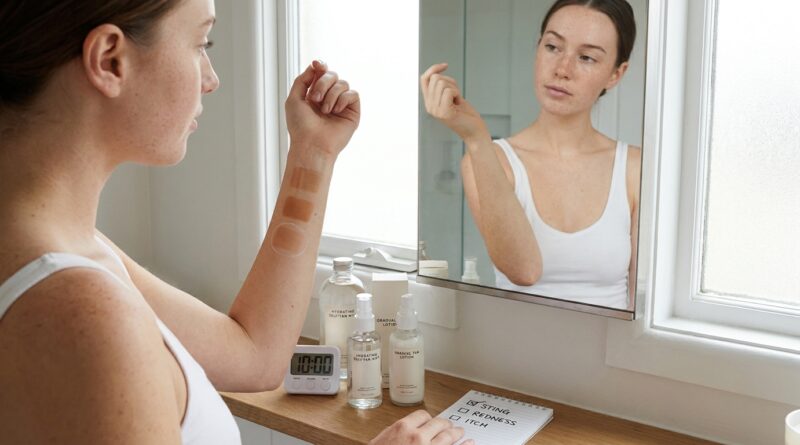
New ‘Sensitive-Skin Patch Test’ Rule: The 10-Minute Fake-Tan Safety Check Dermatologists Wish Everyone Did In 2026
You buy a self-tanner marked “sensitive skin,” apply it like you always do, and by the next day your cheeks sting, your chest is blotchy, or tiny bumps have shown up out of nowhere. It is maddening. And it is getting more common as formulas pack in stronger DHA levels, fragrance, bronzers, boosters, and skincare-style actives all in one bottle. If you have ever wondered how to patch test self tanner for sensitive skin without turning it into a whole science project, the good news is this: you can do a smart first check in about 10 minutes, then let your skin do the rest of the talking over the next 24 to 48 hours. This simple rule is less about being fussy and more about avoiding a full-body mistake. For sensitive skin, a tiny trial run is often the difference between a nice glow and a very long week of regret.
⚡ In a Hurry? Key Takeaways
- Patch test self-tanner on a small hidden area for 10 minutes first, then watch that spot for 24 to 48 hours before full use.
- Use the inner arm, jawline, or behind the ear, and test the exact formula you plan to use, not just the brand.
- Even “derm tested” self-tanners can irritate sensitive skin, especially if they contain stronger DHA, fragrance, or extra active ingredients.
Why this new patch-test habit matters now
Self-tanners used to be fairly simple. Now many are not. You will see rapid-develop mousses, extra-dark drops, barrier-care serums, acids, fragrance blends, shimmer, and color-correcting bronzers all mixed together. That means more chances for your skin to say “no thanks.”
Dermatology reviews still generally find topical DHA to be well tolerated for most people. But “generally well tolerated” is not the same thing as “risk free for everyone.” Irritation can still happen. So can contact allergy. And when brands keep changing formulas, even a product you used to love can suddenly stop being your friend.
That is why this fake-tan-specific check matters. It helps you catch a problem while the product is still on a patch the size of a coin, not spread from ankles to shoulders.
How to patch test self tanner for sensitive skin
The 10-minute first check
This is the fast part. Pick one small area of skin and apply a thin layer of the self-tanner. Leave it on for 10 minutes first. During that time, pay attention to immediate warning signs:
- Burning
- Sharp stinging
- Itching that starts quickly
- Redness that keeps building
- Warmth or swelling
If any of those happen, wash it off right away with lukewarm water and a gentle cleanser. Do not keep going just because the bottle says sensitive-skin safe.
The real patch test is the waiting part
If the first 10 minutes are uneventful, rinse only if the product instructions call for a rinse. Otherwise, leave it on exactly as directed. Then wait 24 to 48 hours and keep checking the area.
This matters because some reactions are delayed. You may not feel much right away, then wake up the next day with itchiness, rough texture, tiny bumps, or a rash.
Best places to test
Use a spot that matches where you actually plan to tan, but can still be hidden if things go wrong. Good options include:
- Inner forearm
- Inside of the elbow
- Along the jawline if you plan to use facial tanner
- Behind the ear for facial formulas
- Upper inner thigh for body products
If your face is the problem area, do not rely on an arm-only test. Facial skin often reacts differently.
What sensitive skin users should do before testing
Start with clean, calm skin
Do not patch test right after shaving, exfoliating, retinoids, acids, benzoyl peroxide, or a hot shower. Those can already leave the skin slightly irritated, which makes it harder to tell what the self-tanner is doing.
Try to test on a boring skin day. No flare-up. No sunburn. No active rash.
Check the age of the product
An old bottle can muddy the results. If a self-tanner has been sitting around for ages, you may blame your skin when the real issue is the formula has broken down. If you are unsure, it is worth reading New ‘Expiration-Date Tan’ Rule: Why Out-Of-Date Self-Tanner Is The Hidden Irritant No One Is Talking About In 2026. Expired self-tanner can be a sneaky irritant.
Test the exact product, not the brand
This catches people all the time. A brand’s classic mousse may be fine for you, while its “ultra dark express” version gives you hives. That does not mean your skin is random. It usually means the ingredient mix is different enough to matter.
What to look for over the next 48 hours
Think like a detective. You are not just checking for dramatic allergy-type symptoms. You are also looking for small signs your skin is unhappy.
- New itching
- Dry, tight, or hot-feeling skin
- Little red bumps
- Patchy roughness
- Rash-like redness
- Swelling
- Hives
If you see hives, significant swelling, or a strong burning reaction, stop using the product and consider speaking with a dermatologist, especially if you have had reactions before.
The mistakes that make patch testing fail
Testing for too short a time
Ten minutes is just the quick safety screen. It is not the whole test. If you apply it, glance once, and then tan your whole body an hour later, you are skipping the most useful part.
Testing on skin that is tougher than your usual problem area
Your legs may tolerate a formula that your neck or face hates. Match the test site to the site you care about.
Trying several new products at once
New mitt, new scrub, new body lotion, new tan. That is how you end up with no clue what caused the reaction. Change one thing at a time.
Ignoring your skin history
If fragrance usually bothers you, or your skin hates essential oils, that matters more than the front-label claims. Trust your pattern.
If the patch test goes well, can you use it everywhere?
Usually, yes, but still start small. For your first full use, consider tanning one section such as lower legs or one arm before going head to toe. That gives you one more checkpoint.
Also, remember that irritation is not always a true allergy. Sometimes it is a dose issue. A strong formula used too often, or layered over recently exfoliated skin, can be too much even if the ingredient list is technically fine for you.
When to be extra careful
You should be especially cautious with patch testing if you have:
- Eczema
- Rosacea
- A damaged skin barrier
- Recent chemical exfoliation
- Known fragrance allergy
- Very reactive facial skin
In these cases, a patch test is not optional. It is the smart first step.
A simple fake-tan patch-test routine you can actually stick to
Here is the easiest version to remember:
- Pick a hidden spot that matches where you want to tan.
- Apply a small amount of the exact self-tanner.
- Wait 10 minutes and watch for burning, stinging, or fast redness.
- Follow the product instructions from there.
- Check the spot again at 24 hours and 48 hours.
- If the area stays calm, do a limited first application before full-body use.
That is it. Not glamorous, but very effective.
At a Glance: Comparison
| Feature/Aspect | Details | Verdict |
|---|---|---|
| 10-minute check | Good for spotting immediate burning, stinging, or fast redness right after application. | Useful first screen, but not enough on its own. |
| 24 to 48 hour wait | Helps catch delayed irritation, allergy, tiny bumps, and rash-like reactions. | Most important part of the patch test. |
| Testing the exact formula | Different mousses, drops, and express versions from the same brand can behave very differently. | Always test the specific product you plan to use. |
Conclusion
Patch testing self-tanner is one of those small habits that can save you from a very big mess. That matters even more now, because while topical DHA is still generally considered well tolerated, there are real open questions around irritation, allergy, and long-term free-radical effects as formulas get stronger and more complex. Add in the fact that plenty of people are suddenly reacting to products they used for years, and it makes sense to stop guessing. A simple, fake-tan-specific patch test puts you back in control. It protects sensitive or compromised skin, helps you catch likely trouble early, and lets you try new formulas with a lot more confidence. In a crowded self-tan market full of stronger blends and extra additives, this is the calm, practical step dermatologists wish more people took before a full-body disaster.