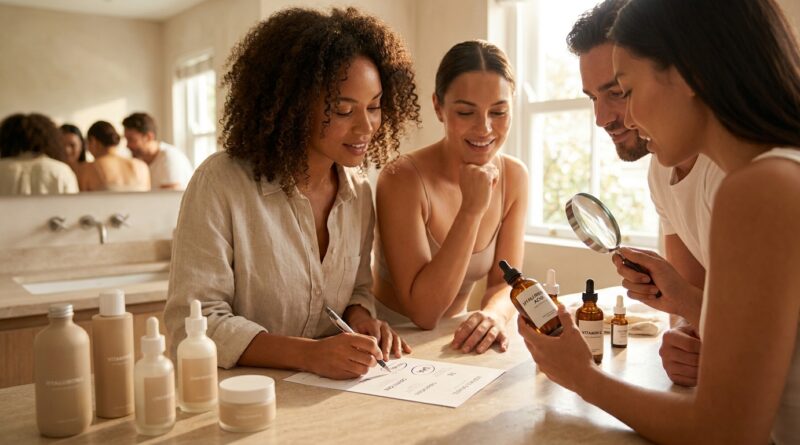
New ‘Skincare-Infused Tan’ Rule: How To Read Self-Tanner Labels When Your Glow Is Basically A Serum Now
You are not imagining it. Self-tanner labels have gotten weirdly complicated. What used to be a simple “bronzing mousse” now reads like a skincare serum, with hyaluronic acid, niacinamide, ceramides, peptides, and vitamin C all competing for your attention. That sounds great until your face starts stinging, your chest breaks out, or your “healthy glow” turns into a barrier tantrum. If you have sensitive, reactive, or acne-prone skin, the real question is not whether a self-tanner has skincare in it. It is whether that formula is actually safe to layer with the rest of your routine. The good news is you do not need a chemistry degree to sort the good from the glossy. You just need a few label-reading rules, and a little skepticism when marketing starts acting like a tan mist can replace half your bathroom shelf.
⚡ In a Hurry? Key Takeaways
- Skincare infused self tanner safety comes down to the full formula, not the hero ingredient on the front.
- Choose tanners with simple support ingredients like glycerin, hyaluronic acid, or ceramides, and be careful with added acids, strong fragrance, and essential oils.
- If you already use retinoids, exfoliating acids, or acne treatments, patch test first and avoid stacking too many actives on tanning day.
Why these new self-tanner labels feel so hard to read
Brands have figured out that “tan plus skincare” sells. So now face mists, drops, waters, and lotions are being sold as glow products and treatment products at the same time.
That is not automatically bad. Some formulas really do include helpful moisturizing and barrier-supporting ingredients. But plenty of products are still built around the same tanning active, DHA, with a few trendy extras added in small amounts for marketing.
If your skin is sturdy, you may never notice the difference. If your skin is sensitive, dry, rosacea-prone, or clog-prone, you probably will.
First, know what is actually making you tan
The main active in most self-tanners is DHA, short for dihydroxyacetone. It reacts with dead skin cells on the surface of your skin to create that temporary tan look.
DHA itself is not the enemy. But it can be drying for some people, especially in formulas that also contain alcohol, fragrance, or exfoliating ingredients. That matters because many “skincare-infused” products are still DHA-first products. The serum language can distract you from that.
What to look for on the label
Check the ingredient list, not just the front of the bottle. If DHA is near the top, this is mainly a self-tanner with skincare extras. If the formula also includes erythrulose, that can sometimes help create a slower, more even tan, though it can still be drying in some formulas.
Think of the skincare claims as supporting players, not proof that the product is gentle.
The simple rule: judge the whole formula, not the star ingredient
A bottle can brag about ceramides and still be full of irritants. It can mention vitamin C and still be loaded with fragrance. It can say hyaluronic acid and still dry your skin out if alcohol is doing most of the work.
That is the biggest rule for skincare infused self tanner safety. One nice ingredient does not cancel out five irritating ones.
Green flags
These ingredients usually make a hybrid self-tanner more skin-friendly:
- Glycerin
- Hyaluronic acid or sodium hyaluronate
- Ceramides
- Squalane
- Panthenol
- Aloe vera
- Colloidal oatmeal
- Allantoin
These tend to help with hydration and barrier support. They do not guarantee perfection, but they are good signs.
Yellow flags
These are not automatic deal breakers, but they deserve caution:
- Vitamin C, especially in already sensitive skin
- Niacinamide in very high-feeling formulas if your skin flushes easily
- Botanical extracts in long lists, especially if you react to plants
- Essential oils like citrus, lavender, peppermint, or eucalyptus
Plant-based does not always mean gentle. Sensitive skin often learns that the hard way.
Red flags
Be extra careful if you see:
- Strong fragrance or parfum high on the list
- Denatured alcohol near the top
- Exfoliating acids like glycolic, lactic, salicylic, or mandelic in the same product
- Retinol or retinal paired with self-tanning actives
- Heavy oils or butters if you break out easily
A “glow treatment” that tans, exfoliates, perfumes, and treats wrinkles all at once is often too much for reactive skin.
Be careful with face tanners that act like serums
This is where most people get tripped up. Face tanning drops and mists are now sold as if they are normal skincare. But if you already use cleanser, toner, serum, exfoliant, moisturizer, acne treatment, and SPF, adding a tanner-serum on top can push your skin over the edge.
Ask yourself one practical question. If this tanning product were just a serum, would my skin tolerate these ingredients in the same routine?
If the answer is “probably not,” skip it.
Good matches for sensitive or acne-prone skin
Look for face self-tanners that keep the formula boring. That is a compliment. A basic hydrating base plus DHA is often safer than a product trying to do six jobs at once.
If you are breakout-prone, lighter textures can help, but the ingredient list matters more than whether the bottle says mist, gel, water, or drops.
Do not stack actives on tanning day
This is the part many people miss. Your tanner may be fine on its own. The problem starts when it gets mixed with your existing routine.
If you use retinoids, benzoyl peroxide, exfoliating acids, prescription acne products, or strong vitamin C, give your skin a simpler routine on tanning day, especially on the face.
A gentle cleanser, plain moisturizer, and your tanner is usually enough. Once the tan has developed and your skin feels normal, you can slowly return to your regular actives.
If you want a safer starting point, read New ‘Invisible Patch Test’ Rule: The 5‑Minute Safety Check Every Self‑Tanner Should Do Before A Full‑Body Glow. It is one of the easiest ways to avoid a full-face or full-body regret.
How to read the order of ingredients without overthinking it
Ingredients are generally listed from highest to lowest amount, until you get into the very low-concentration range. You do not need to memorize chemistry terms. Just use this quick logic:
If the “skincare” ingredient is near the end
It may still do something, but it is probably not the main point of the formula. Treat it as a bonus, not a reason to buy.
If irritants are near the top
Pay attention. Fragrance, drying alcohol, or multiple acids listed early matter more than a tiny amount of ceramide at the bottom.
If there are ten trendy ingredients
That often means each one is present in a small amount. More names do not always mean better care.
Face versus body formulas really do matter
A body tanner can be too rich, too fragranced, or too occlusive for your face. A face tanning mist can be too lightweight for dry body skin and may leave patchy results on elbows and knees.
If a brand says one product works “everywhere,” read the texture and ingredient list carefully. That kind of shortcut is convenient, but not always smart if your skin is picky.
For the face
Choose lighter, simpler, fragrance-free or low-fragrance formulas. Avoid heavy oils if you get clogged pores.
For the body
Hydration matters more because DHA can cling unevenly to dry patches. Here, richer ingredients can actually help, unless you are body-acne prone.
Marketing words that sound reassuring, but mean very little
These phrases can be fine, but they are not proof of safety:
- Clean
- Non-toxic
- Derm-approved
- Natural glow
- Skin-loving
- Infused with skincare
They are not useless, but they are not enough. Go back to the ingredient list. That is where the real story is.
A safer shopping checklist for hybrid self-tanners
Before you buy, run through this:
- What is the tanning active, usually DHA or DHA plus erythrulose?
- Is the base hydrating, with ingredients like glycerin or ceramides?
- Is there strong fragrance, essential oil, or drying alcohol?
- Are there exfoliating acids or retinoid-style actives mixed in?
- Does this clash with my current skincare routine?
- Would I put this on compromised, freshly exfoliated skin? If not, wait.
If you have eczema, rosacea, frequent breakouts, or a history of contact irritation, patch testing is not optional. It is the cheapest insurance policy in your bathroom.
At a Glance: Comparison
| Feature/Aspect | Details | Verdict |
|---|---|---|
| Hydrating support | Glycerin, hyaluronic acid, ceramides, squalane, panthenol | Usually a good sign for more even, less drying color |
| Added actives | Vitamin C, acids, retinoid-type claims, strong treatment language | Use caution, especially if you already use actives |
| Irritation risk | Fragrance, essential oils, drying alcohol, long botanical lists | Higher chance of stinging, redness, breakouts, or barrier stress |
Conclusion
Skincare-infused self tanners can be genuinely useful. Some give better hydration, a smoother fade, and a more even glow than older formulas ever did. But the label needs a reality check. A few trendy ingredients do not make a product barrier-safe, and a serum-style bottle does not mean your skin will treat it like skincare. If you read past the front claims, avoid stacking too many actives, and choose formulas with real barrier support instead of hype, you can get the glow without the mystery rash. That is the win here. Enjoy the new wave of hybrid tanners, just with a little more label discipline than the marketing department would prefer.