New ‘Endocrine‑Safe Fake Tan’ Rule: How To Read Hormone‑Disruptor Warnings Without Ditching Your Glow In 2026
You are not overreacting if the recent hormone-disruptor headlines have made your fake tan bottle suddenly feel suspicious. A lot of the coverage is scary, vague, and not very helpful. It talks about “beauty products” and “chemical exposure” in broad strokes, then leaves you standing in the bathroom wondering whether your self-tanner, SPF, or body lotion is quietly causing harm. The good news is that this is not an all-or-nothing situation. You do not need to toss every bronzing product you own or give up the glow that helps you avoid real sun damage. What matters in 2026 is learning how to read ingredient lists a bit smarter, knowing which warning signs deserve your attention, and understanding that self-tanner and sunscreen play very different roles. If you use self-tan as part of a sun-safe routine, you can absolutely keep doing that. You just want better products and a calmer, more informed way to choose them.
⚡ In a Hurry? Key Takeaways
- Self-tanner is not the same thing as sunscreen, and most concern in 2026 is about certain added ingredients, not the idea of fake tan itself.
- Check labels for fragrance-heavy formulas, older UV filters, and vague ingredient language if you want a lower-exposure routine.
- The safest move is simple: keep using sunscreen, use self-tanner for color only, and switch to simpler formulas as regulations tighten.
What the new warnings actually mean
When experts talk about endocrine disrupting chemicals in self tanner and sunscreen safety 2026, they are talking about ingredients that may interfere with the body’s hormone system. That sounds dramatic because it is a serious area of research. But it does not mean every product on your shelf is dangerous, or that one application is a disaster.
The bigger issue is repeated exposure over time, especially when the same types of ingredients show up across multiple products. Think sunscreen, body lotion, fragrance mist, self-tanner, deodorant, and makeup all layering onto the skin every day.
The new UN and WHO attention matters because it pushes regulators and brands to take a harder look at ingredients that have raised questions for years. Europe is already moving faster than many other markets, which usually means shoppers elsewhere will start seeing reformulations, new labels, and “free from” claims more often.
First, separate self-tanner from sunscreen in your mind
This is the part that gets muddled in headlines.
Self-tanner gives color
Most self-tanners use DHA, short for dihydroxyacetone, to react with dead skin cells on the surface and create a tan look. That is very different from baking your skin in UV rays. For many people, self-tanner is part of a healthier routine because it replaces intentional tanning.
Sunscreen protects from UV damage
Self-tanner does not reliably protect your skin from the sun. Even if your skin looks bronzed, you still need SPF. So if anyone is using fake tan as a full substitute for sun protection, that is the first habit to fix.
The smartest routine is this. Use self-tanner for appearance. Use sunscreen for protection. Do not expect one to do the other’s job.
Which ingredients are people most worried about?
Most concern is not about the bronze color itself. It is about some supporting ingredients that can show up in self-tanners, sunscreens, or both.
1. Certain UV filters
Some older chemical sunscreen filters have faced scrutiny for possible hormone-related effects. The names people often watch most closely include oxybenzone and octinoxate. Research and regulation vary by country, and risk depends on dose and use pattern, but these are the kinds of ingredients that get flagged most often in public discussions.
2. Fragrance and parfum mixes
“Fragrance” can be a black box term covering many compounds. Not all are endocrine disruptors, but if you want a simpler routine, heavily fragranced products are an easy place to cut exposure.
3. Preservatives under review
Some preservatives have faced hormone-disruption questions over the years. You may see shoppers trying to avoid certain parabens, for example. The science is not always as clean or settled as social media makes it sound, but if you are trying to reduce concern, these are commonly screened out by cautious buyers.
4. Extra “glow” additives you do not really need
A plain self-tanner is one thing. A self-tanner mixed with fragrance, shimmer, color guide, anti-aging actives, botanical blends, and SPF can turn into a chemistry set fast. More features often means more ingredients to vet.
How to read a label without needing a chemistry degree
You do not need to memorize every ingredient in cosmetics law. Just use a short checklist.
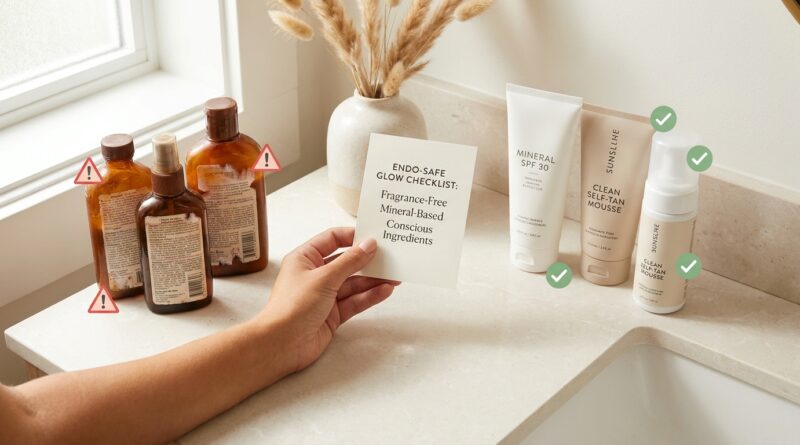
Look for a short, boring ingredient list
Boring is good here. If a self-tanner does one thing well and does not try to be perfume, skincare serum, body shimmer, and sunscreen all at once, that is usually easier to assess.
Be cautious with “fragrance” near the top
If parfum or fragrance appears high on the list, that tells you scent is a big part of the formula. If you are aiming for a lower-exposure routine, choose unscented or very lightly scented options.
Treat combo SPF-tanner products carefully
They are convenient, but they blur two jobs. If you want tighter control over ingredients, use a separate self-tanner and a separate sunscreen you trust.
Watch for older sunscreen actives if hormone safety is your focus
If a product includes chemical UV filters and you are trying to avoid the ones most often discussed in endocrine headlines, read the active ingredients section closely. Mineral sunscreen products with zinc oxide or titanium dioxide are often the simpler choice for people who want to sidestep that debate.
What about DHA itself?
This is where nuance matters. DHA is the main active in most self-tanners, and it has been widely used for years. For healthy adults using standard lotions or mousses on intact skin, the biggest concern is generally not that DHA is a known hormone disruptor. The bigger practical caution has been about avoiding inhalation, especially with spray tans, and avoiding use on broken or irritated skin.
So if you are trying to clean up your routine in 2026, the lower-stress move is not “avoid all DHA.” It is “be pickier about the whole formula, and be sensible about how you apply it.”
Practical DHA tips
Choose lotion, cream, or mousse over aerosol if possible. Apply in a ventilated area. Do not spray around your face and mouth carelessly. Wash your hands after use. Let it dry fully before dressing.
A calmer 2026 routine that still gives you color
If you want to keep your glow and reduce the stuff you worry about, start here.
Step 1. Pick one straightforward self-tanner
Choose a product with DHA as the main tanning active, minimal fragrance, and no bonus SPF. You want simple.
Step 2. Use a separate sunscreen every day
If endocrine disrupting chemicals in self tanner and sunscreen safety 2026 is your main search focus, this is the biggest habit shift. Do not rely on bronzed skin or a combo product. Use a dedicated sunscreen you are comfortable with.
Step 3. Consider mineral SPF if you want fewer ingredient debates
Zinc oxide and titanium dioxide are often the go-to options for people trying to avoid the chemical filters that spark hormone-disruption concern. They are not always as elegant cosmetically, but formulas keep improving.
Step 4. Cut down duplicate fragrance exposure
If your self-tanner is scented, maybe your body lotion does not need to be. Reducing overlap across products can be more realistic than trying to find one perfect product.
Step 5. Patch test and rotate slowly
Do not overhaul everything in one panic order. Replace products as they run out. Patch test new formulas. Pay attention to irritation, because damaged skin is not where you want extra exposure.
Red flags to ignore, and red flags to take seriously
Ignore this
“Chemical-free.” That phrase is marketing nonsense. Everything in a bottle is made of chemicals, including water and plant extracts.
Also be skeptical of dramatic claims that one product “destroys hormones” with no mention of dose, frequency, or specific ingredients.
Take this seriously
Clear ingredient disclosure. Regulatory updates. Independent safety reviews. Brands that reformulate when concerns are raised. Those are useful signals.
Also take seriously any product that irritates your skin, makes you cough when applied, or depends on a mystery fragrance blend you cannot identify.
What changes are likely in 2026 and beyond?
You will probably see more beauty brands talking about hormone-safe formulas, stricter EU ingredient rules, and more products reformulated to remove ingredients that attract scrutiny even before outright bans happen.
That does not mean every new label claim is meaningful. Some brands will slap “clean” or “endocrine-safe” on the front while keeping the details fuzzy on the back. So your best defense is still old-fashioned label reading.
If a product makes big safety claims, it should be easy to see what is not in it and what is in it.
At a Glance: Comparison
| Feature/Aspect | Details | Verdict |
|---|---|---|
| Basic self-tanner | Usually DHA-based. Best when lightly scented or unscented, with a short ingredient list. | Good choice for color, if you keep the formula simple. |
| Self-tanner with built-in SPF | Convenient, but mixes cosmetic tanning with UV protection and can include more debated ingredients. | Less ideal if you want maximum clarity and control. |
| Separate mineral sunscreen plus self-tanner | Keeps jobs separate. Easier to choose a lower-concern SPF and a straightforward tanner. | Best overall for a cautious, practical 2026 routine. |
Conclusion
You do not have to choose between being informed and looking like yourself. The new UN and WHO spotlight on personal care products is useful because it gives shoppers a reason to ask better questions before rules tighten even more, especially in Europe. And for people who depend on self-tanner as part of a sun-safe lifestyle, that matters. Most headlines stop at fear. The practical answer is much calmer. Use self-tanner for color. Use sunscreen for protection. Prefer simple formulas, less fragrance, and separate products when possible. That way you can keep your glow, lower the ingredients that worry you most, and stay ahead of the safety changes coming in 2026 instead of scrambling later.