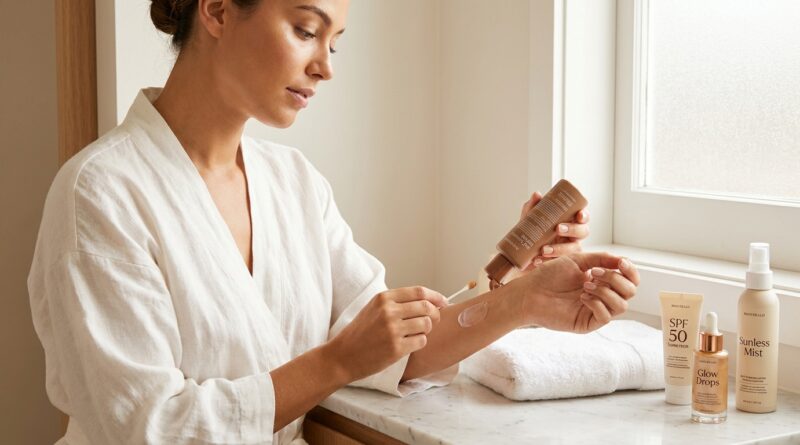
New ‘Invisible Patch Test’ Rule: The 5‑Minute Safety Check Every Self‑Tanner Should Do Before A Full‑Body Glow
You buy a new self-tanner because the bottle says “gentle,” “clean,” or “derm-approved,” then 20 minutes later your skin is itchy, your eyes are watering, or a weird rash shows up along your jawline. It is frustrating, and honestly, a little confusing. There are so many new tanning drops, mists, gradual lotions, boosters, and “skincare-infused” formulas that it is getting harder to tell what your skin will actually tolerate. The good news is you do not need a chemistry degree to protect yourself. You just need a simple rule. Before any full-body tan, do a quick invisible patch test. It takes about five minutes to apply, and it can save you from a weekend of stinging, blotches, and panic-googling. Think of it as a seatbelt for your glow routine. Small step. Big payoff.
⚡ In a Hurry? Key Takeaways
- Do a self tanner patch test safety check on a small hidden area before using any new tanning product on your whole face or body.
- Apply the product behind the ear, along the jaw, or on the inner arm, then wait 24 hours to watch for redness, itching, stinging, or bumps.
- This simple habit helps catch irritation, allergy issues, and scent or spray sensitivity before you end up with a full-body reaction.
Why this new patch test rule matters now
Self-tanners are not just basic mousses anymore. Now you have facial drops mixed with serums, bronzing waters, “tan accelerators,” fragrance-heavy mists, and formulas packed with acids, botanicals, and glow boosters.
That sounds fun until your skin decides it hates one ingredient in the mix.
The problem is not always the tanning agent itself. It can be the fragrance, preservative, essential oil, added active, or spray mist that bothers you. Some people react with itching or hives. Others get burning around the eyes, sneezing, or a rash that shows up hours later.
That is why self tanner patch test safety is becoming less of a nice idea and more of a basic rule.
The 5-minute invisible patch test
This is easy. You are not testing for a perfect tan result yet. You are checking whether your skin can calmly live with the formula.
Step 1: Pick a hidden spot
Choose one small area where a little color will not bother you if it develops. Good options include:
- Behind the ear
- Along the lower jawline
- Inner forearm
- Inside of the upper arm
- Near the side of the neck, if you are testing a face product
If it is a facial tanner, test closer to the face. If it is a body tanner, the inner arm is usually fine.
Step 2: Clean and dry the area
Do not test over perfume, body oil, retinol, or heavy moisturizer. Wash the spot with a gentle cleanser or just mild soap and water, then dry it well.
Step 3: Apply a small amount
Use the exact amount you would normally use on that area. Do not coat your whole arm. A patch about the size of a coin is enough.
If it is a spray or mist, spray onto a cotton pad or glove first if possible, then dab it on. That lowers the chance of breathing in the mist during the test.
Step 4: Leave it alone
Let it dry. Do not scrub it off right away unless it starts burning badly. Then wait 24 hours.
Yes, the application takes five minutes. The waiting part is the important bit.
Step 5: Check for warning signs
Look for:
- Redness
- Itching
- Burning or stinging
- Swelling
- Tiny bumps or hives
- Watery eyes or sneezing from the scent or spray
If the area feels calm and looks normal after 24 hours, that is your green light to move on.
What counts as a fail
A patch test is not pass or fail based on color. It is about comfort and skin response.
Stop using the product if you get:
- Strong stinging that does not settle quickly
- Raised bumps
- Hot, angry-looking redness
- Itchy patches
- Eye irritation from the fumes or mist
- Tightness that feels wrong, not just dry
If your reaction is severe, or you have trouble breathing, swelling, or widespread hives, seek medical help right away.
Why “derm-approved” does not mean safe for everyone
This part trips people up. “Derm-tested” or “sensitive skin friendly” does not mean every single person will be fine with it. It usually means the product was tested in some way and did well for many users.
Your skin is still your skin.
If you already know you are reactive to fragrance, essential oils, or certain preservatives, trust that history. A trendy bottle does not cancel out your personal pattern.
That is also why some people are moving toward gentler options. If regular formulas keep bothering you, you may want to read New ‘DHA‑Free Tan’ Rule: The Sensitive-Skin Safe Glow Trend That Finally Skips The Smell, The Hives And The Guesswork. It is especially useful if the usual self-tanner smell or sting keeps ruining the experience for you.
Special rules for face mists, drops, and sprays
These are the products people tend to get casual with, and they are often the ones that cause the most regret.
Face drops
Do not mix a brand-new tanning drop into your favorite moisturizer and smear it all over your face on day one. Patch test the drops alone first. If that goes well, then test your usual mixed routine on a second small spot. Sometimes the combo is the problem.
Sprays and mists
Even if your skin is fine, your nose, throat, or eyes might not be. Use sprays in a well-ventilated area. Hold your breath for the actual spray if needed, and avoid spraying directly toward your eyes.
If a mist makes you cough or your eyes burn during the patch test, that is useful information. Do not ignore it just because the color looks nice.
“Skincare-infused” tanners
These can include acids, niacinamide, plant extracts, or anti-aging ingredients. Nice in theory. But more ingredients mean more chances for your skin to object.
The best time to patch test
Not right before a wedding, vacation, date, or beach weekend.
Patch test at least one or two days before you actually need the tan. That gives you time to spot delayed irritation and switch plans if needed.
Common patch test mistakes
- Testing on top of irritated or freshly shaved skin
- Trying the product for the first time on your whole face
- Using too much product in the test area
- Ignoring mild itching because “it will probably be fine”
- Testing one formula, then using a different shade or version later
- Forgetting that a scented spray can bother your lungs even if your skin seems okay
One more thing. If you buy the same tanner in a “new improved formula,” test again. Reformulations happen all the time.
Who should be extra careful
Everyone should patch test, but it matters even more if you:
- Have eczema or rosacea
- Get fragrance headaches
- React easily to skincare
- Use retinoids, exfoliating acids, or acne treatments
- Have had hives or contact dermatitis before
- Are trying a spray tan mist in a small bathroom with poor airflow
If your skin barrier is already angry, wait until it calms down before testing anything new.
At a Glance: Comparison
| Feature/Aspect | Details | Verdict |
|---|---|---|
| Patch test location | Hidden spot like behind the ear, jawline, or inner arm lets you test safely without visible streaks. | Best first step |
| Wait time | Apply in five minutes, then monitor for 24 hours for redness, itching, hives, or eye irritation. | Do not skip |
| Sprays vs lotions | Sprays add possible breathing and eye sensitivity. Lotions mainly test skin contact, though fragrance can still be an issue. | Sprays need extra care |
Conclusion
The smartest glow habit right now is not buying more products. It is slowing down long enough to test them first. With so many skincare-infused tans, DHA alternatives, and boosted formulas hitting the market, a lot of people are basically using their face and lungs as the test lab without meaning to. A simple self tanner patch test safety ritual takes that risk down fast. Five minutes to apply. One day to watch. A lot less drama later. That is how you get to experiment without the fear, cut down on reactions and panic-DMs, and keep the focus where it belongs. Protect your skin first, then chase the glow.