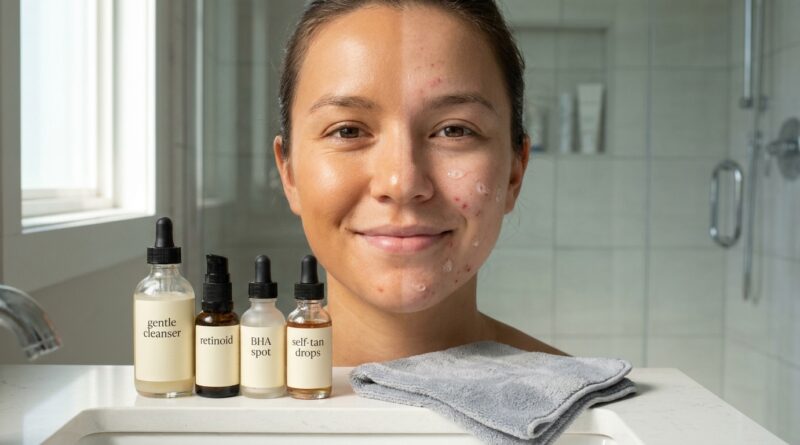
New ‘Tan-Safe Acne Routine’ Rule: How To Keep Your Self-Tan While Treating Breakouts In 2026
You finally get serious about acne. You use the benzoyl peroxide wash, the retinoid, maybe a peeling serum. Then two days after applying self-tan, your glow is patchy, your chin is pale, and your forehead looks like it gave up first. It is incredibly annoying. A lot of people feel like they have to pick one: clearer skin or believable color. The good news is that you usually do not need to choose. The real fix is not stopping acne care. It is changing when, where, and how you use it. If you want to know how to self tan with acne skincare routine changes that actually work, the new rule is simple: keep your acne actives targeted, keep your hydration steady, and treat tan days differently from treatment nights. That approach helps your self-tan fade more evenly without pushing you back toward UV tanning, which is the part worth protecting.
⚡ In a Hurry? Key Takeaways
- Yes, you can keep a self-tan while treating acne, but you need to separate tanning days from strong active days.
- Use benzoyl peroxide, retinoids, and acids in thinner, more targeted ways, then lean on gentle cleanser, moisturizer, and short lukewarm showers.
- If your skin barrier is irritated, both acne and tan usually look worse, so calm skin first before adding more treatment steps.
The new tan-safe acne routine rule
The big shift for 2026 is this: stop treating your whole face and body like one giant acne zone right before and right after self-tan.
Most fake tan fades faster when skin is being scrubbed, peeled, dried out, or constantly stripped. Acne products do not just fight breakouts. Many of them speed up turnover, dry the surface, or make you cleanse more aggressively. That is why your tan disappears unevenly.
The practical rule is simple. On tan days, protect the surface. On treatment days, target the acne. Do not do both at full force at the same time.
Why acne products remove self-tan so fast
Self-tan sits in the top layer of skin. It is temporary by design. Acne treatments often make that top layer shed faster or become dry and flaky.
Benzoyl peroxide
Benzoyl peroxide can be great for inflamed acne, but it can be drying. If you use a strong wash twice a day and leave skin squeaky clean, your tan often fades faster and goes blotchy.
Retinoids
Retinoids speed up cell turnover. That is helpful for acne and post-acne marks, but it also means your fake tan can disappear faster, especially on the face.
Exfoliating acids
AHAs, BHAs, and peeling pads can smooth texture and unclog pores. They can also take a fresh tan off in record time if you use them all over, too often, or too close to application day.
Hot showers and cleansing devices
This part gets ignored. Long hot showers, rough washcloths, spin brushes, and scrubbing mitts used too often can do as much damage to your tan as any serum.
How to self tan with acne skincare routine changes that actually help
1. Create a “tan window”
Give your self-tan a calm period. That means no harsh exfoliation, no strong masks, and no unnecessary scrubbing for about 24 hours before and after application.
If your skin gets irritated easily, stretch that to 36 hours. This one change helps more than most people expect.
2. Keep acne treatment targeted, not everywhere
If you break out mainly on the chin, jawline, shoulders, or back, treat those areas. Do not automatically coat your entire face or body in drying products.
Spot treating or zone treating can save a lot of your tan while still keeping breakouts under control.
3. Switch to a gentle cleanser around tan day
Use a non-stripping cleanser the night before, the day of, and the day after self-tan. You want clean skin, not raw skin.
If you use an acne wash with benzoyl peroxide or salicylic acid, consider pausing it briefly on fresh-tan days and using it on alternate days if your skin can handle that change. If your acne is severe or medically managed, stick with your dermatologist’s plan first.
4. Moisturize more than you think you need to
Hydrated skin holds a fake tan better and fades more evenly. It also handles acne actives better.
Look for a simple, fragrance-free moisturizer that will not feel heavy or greasy. Gel-cream or lotion textures are often the sweet spot for breakout-prone skin.
If your face always feels stingy after self-tanner, the barrier may be the real issue. That is where New ‘Skin-Barrier-First Tan’ Rule: How To Fake Glow Without Wrecking Your Face In 2026 is worth a read, because a weak barrier makes both acne care and tanning harder.
A routine that keeps both acne care and your glow on track
The day before self-tan
Use a gentle cleanser. Skip leave-on acids and scrubs. Use your regular moisturizer. If you must use acne treatment, keep it to breakout zones only.
Self-tan day
Cleanse gently. Make sure skin is dry. Apply a light moisturizer only to areas that grab too much color, like around the nose, corners of the mouth, dry patches, elbows, knees, and ankles if you are tanning the body.
Then apply self-tan evenly. Do not pile acne serums on top right away.
The first night after self-tan
Keep it simple. Gentle cleanse if needed. Moisturizer. That is usually enough.
If you are very acne-prone and nervous about skipping treatment, use a tiny amount only on active spots instead of doing a full-face acid or retinoid night.
The next 2 to 4 days
Bring your acne actives back slowly. Start with alternate nights. Use less product than usual. Watch the driest areas first, because that is where tan tends to break apart and look patchy.
Best approach by product type
If you use benzoyl peroxide
Try short-contact use or a targeted wash on breakout zones instead of leaving it sitting on every area daily. Also remember benzoyl peroxide can bleach towels, pillowcases, and some fabrics. Self-tan transfer plus bleach marks is a miserable combination.
If you use retinoids
Retinoids and self-tan can coexist, but spacing matters. Many people do better applying self-tan on a night they skip retinoid, then waiting another night before restarting. If your face tanner always vanishes first, this is usually why.
If you use salicylic acid or AHAs
Use them less often during the life of your tan, or reserve them for oily, clogged areas only. An all-over acid swipe every night is great at removing congestion and also great at removing your color.
If you use acne devices
Light therapy is usually less of a problem than cleansing brushes, abrasive tools, or at-home resurfacing gadgets. Devices that create heat, friction, or exfoliation tend to shorten tan life fast.
Shower rules that make a bigger difference than people think
This is where many good routines fall apart.
- Keep showers lukewarm, not hot.
- Keep them shorter when your tan is fresh.
- Pat skin dry instead of rubbing hard with a towel.
- Do not use rough exfoliating gloves daily just because you are worried about acne.
A lot of self-tanning forum complaints in the last day have had the same pattern. Strong cleanser. Long hot shower. Active serum. Then surprise when the tan is gone by day two. It is usually the full combo doing the damage, not one single product.
What to do about acne scars and post-breakout marks
This is the tricky part. People often use exfoliants and retinoids heavily because they are also trying to fade acne scars or dark marks. Fair enough. But if you are in a self-tan phase, go slower.
Use fake tan as a temporary cosmetic boost, then do your more aggressive brightening or resurfacing in between tanning cycles instead of during them. Think in blocks, not all at once.
For example, you might spend one to two weeks prioritizing a tan-safe maintenance routine, then a separate stretch focusing harder on scar-fading actives when you do not mind being untanned.
Ingredients and habits that are usually tan-friendlier
- Gentle, low-foam cleansers
- Fragrance-free moisturizers
- Niacinamide, if your skin tolerates it
- Hydrating serums with glycerin or hyaluronic acid
- Pimple patches for individual spots
- Short-contact acne treatments instead of layering multiple leave-ons
What usually makes things worse
- Using every acne product every day
- Applying retinoid right before self-tan
- Daily exfoliating pads all over the face
- Hot showers and aggressive towel drying
- Trying to scrub off flakes instead of fixing dryness
- Applying fresh self-tan over irritated, peeling skin
When to pause tanning and focus on skin first
If your skin is burning, stinging, peeling heavily, or breaking out in angry clusters, pause the self-tan for a bit. The answer is not usually more bronzing product. It is calming your skin down first.
Self-tan tends to cling to irritation, dry patches, and healing blemishes. That can make acne look more obvious, not less obvious.
At a Glance: Comparison
| Feature/Aspect | Details | Verdict |
|---|---|---|
| Strong acne actives on tan day | Retinoids, leave-on acids, and harsh washes can speed fading and cause patchiness | Best to pause or reduce briefly |
| Gentle cleanser plus moisturizer | Helps protect skin barrier, supports more even color, and lowers irritation risk | Best base routine for tan longevity |
| Targeted acne treatment | Using treatments only where you break out most protects unaffected areas from unnecessary fading | Smart middle ground |
Conclusion
If you have been frustrated because every breakout fix seems to erase your glow, you are not imagining it. A lot of people are doing all the “right” things for acne, then accidentally wiping out their self-tan with harsh cleansers, leave-on acids, devices, and long hot showers. That is exactly why the tan-safe acne routine matters now. Safer sunless tanning only works as a true alternative to UV tanning if people can actually keep it looking decent while caring for real skin concerns. The fix is not perfection. It is a calmer routine, smarter timing, and more targeted use of actives. Try this in your next tanning cycle: gentle cleanse, steady hydration, short showers, fewer all-over treatment nights, and spot-focused acne care when possible. That gives you the best shot at clearer skin, a longer-lasting tan, and a routine that feels realistic enough to stick with.