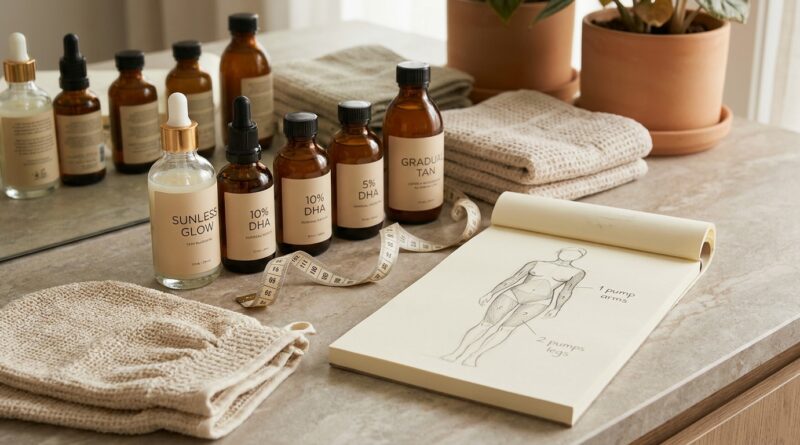
New ‘DHA-Max Line’ Rule: How Much Self-Tanner Is Actually Safe To Slather On At Once?
If you have been side-eyeing your tanning mitt lately, fair enough. A lot of people are hearing scary little snippets about DHA limits, skin absorption, and “safe dose” talk, but almost nobody is translating that into real-life advice like, “Okay, so how many pumps is too many for my legs?” That gap is the problem. Most self-tanner users are not measuring milliliters in a lab. They are doing what they always do. One pump, another pump, maybe a second coat because the first one looked patchy. The good news is that self-tanner does not suddenly become dangerous because you used it on your whole body. The smarter answer is dose awareness. Think thin, even layers, not endless product. If you want the practical version, a sensible full-body application is usually one light coat, section by section, with a pause before deciding if you truly need more.
⚡ In a Hurry? Key Takeaways
- A safe common-sense approach is one thin full-body coat at a time, not a heavy double or triple slather in one session.
- Use a “DHA-max line” by body section. Roughly 2 to 4 pumps per large area and 1 to 2 pumps per smaller area is a practical ceiling for most mousses.
- The biggest risk is overapplying without realizing it. More product does not always mean a better tan, just more buildup and more unnecessary exposure.
Why everyone is suddenly asking how much self tanner is safe to use
DHA, short for dihydroxyacetone, is the active ingredient in most self-tanners. It reacts with the top layer of dead skin cells to create that bronzed look. For years, most people only heard one basic message. Self-tanner is safer than lying in the sun.
That is still broadly true. But newer safety conversations are getting more specific. They are asking not just whether DHA is used, but how much, how often, and over how much of the body. That matters because a full-body, double-coat routine is very different from using a little gradual tan lotion on your arms twice a week.
The tricky part is that product labels rarely give clear dose guidance. They tell you to apply evenly. Helpful? Barely.
The short answer: what is a sensible amount per session?
If you want the plain-English answer to how much self tanner is safe to use, here it is. For most at-home mousse, lotion, or gel self-tanners, one light coat over the areas you actually want tanned is the sensible starting point. Not one heavy coat. Not a panic-fueled double application five minutes later.
A practical upper line for many people is:
- Legs: 2 to 4 pumps per leg
- Thighs: included in that total if your product spreads well, or add 1 to 2 extra pumps per upper leg if needed
- Arms: 1 to 2 pumps per arm
- Torso front: 2 to 3 pumps
- Back: 2 to 3 pumps
- Face: pea-size amount or a few drops if it is a face formula
- Hands and feet: whatever is left on the mitt, plus a tiny extra dab only if needed
That usually puts a full-body session in the rough range of about 12 to 20 pumps total for an average-build adult using a typical mousse. Some products spread farther. Some need more. But if you are blowing past that and layering again right away, you are likely using more than you need.
Your practical “DHA-max line”
This is not a legal rule printed on a bottle. It is a practical consumer rule to help you avoid turning one tanning session into a product free-for-all.
Step 1: Divide the body into zones
Think in six zones:
- Right leg
- Left leg
- Right arm
- Left arm
- Front torso
- Back torso
The face, neck, hands, and feet are detail zones. They need much less.
Step 2: Set a pump budget before you start
This sounds nerdy. It works. Before you tan, decide your cap. For example:
- 3 pumps per leg
- 2 pumps per arm
- 3 pumps front torso
- 3 pumps back torso
- 1 small amount for neck and face if the formula is suitable there
That gives you a full-body plan without mindless overuse.
Step 3: Wait before adding more
The biggest mistake is assuming “I can still see product, so I must need more.” A tanning mousse is not wall paint. Spread it fully, let the guide color settle, and wait. If one area truly looks missed, spot-fix it. Do not restart the whole body with coat number two.
Step 4: Build depth on another day, not in a panic spiral
If you want darker color, the lower-stress move is a second light application 12 to 24 hours later, not a thick same-night pile-on.
What actually makes an application feel less safe?
Usually, it is not one normal use. It is the stack of habits around it.
Heavy double coats
If you apply a full layer and then immediately repeat it over your entire body, your total DHA exposure goes up fast. You may also end up with streaks, grabby elbows, and weirdly dark ankles. So you get more product, not necessarily a better result.
Using body tanner on the face
The face is a smaller area, but people often use formulas not meant for it, then reapply often. Face products are usually designed for lighter, more controlled use.
Daily use without checking concentration
A gradual tan used every day may seem mild, but repeated use still adds up. This is where label reading matters. If you are confused by modern formulas with skincare claims, this guide on New ‘Skincare-Infused Tan’ Rule: How To Read Self-Tanner Labels When Your Glow Is Basically A Serum Now is genuinely useful. A bottle can look like a serum, act like a moisturizer, and still deliver regular DHA.
Spray and mist exposure
At-home spray products and salon spray tans add another issue. Inhalation. That is separate from how much sits on the skin. If you use a spray, protect your eyes, nose, and mouth, and only use it in a well-ventilated area.
How to know if you are using too much, even without measuring DHA
You do not need a chemistry degree. Watch for these clues:
- You are using way more product than the bottle seems designed for
- Your mitt is soaked instead of lightly coated
- You are doing full-body double coats as your default
- You are tanning again before the last application has even fully developed
- You regularly have sticky skin for a long time after applying
If any of that sounds familiar, dial it back. Better technique usually beats more product.
What about different product types?
Mousses
These are where “pump counting” works best. They are easy to overuse because foam looks light and harmless. It adds up quickly.
Lotions and creams
These can be trickier to measure. A good rule is a thin visible film, not a thick layer that takes ages to rub in. If it feels like body butter, you probably used too much.
Drops
Drops are concentrated and should be mixed exactly as directed. More drops does not always mean smarter tanning. Follow the product’s range and start on the low side.
Gradual tan
This is often the easiest way to stay under your own “max line” because color builds slowly. If you are nervous about DHA exposure but still want a glow, gradual formulas are often the least chaotic option.
A safer routine that still gives good color
If your goal is “bronzed, not paranoid,” try this:
- Exfoliate lightly the day before.
- Moisturize dry spots like ankles, knees, elbows, and wrists.
- Apply one light coat using a mitt, zone by zone.
- Stay within your pump budget.
- Wait for development before judging the color.
- If you want more depth, add a second light coat the next day, not right away.
This method gives you more control and less chance of crossing from normal use into overkill.
What if you are pregnant, sensitive, or just extra cautious?
Then the “less but smarter” approach makes even more sense. Pick products with clear instructions. Avoid overspraying. Do a patch test. Keep applications light and spaced out. If you have a medical concern, ask your doctor, especially if you are dealing with pregnancy, skin conditions, or a history of irritation.
And if a formula is packed with extra actives, fragrance, or trendy skincare ingredients, that is one more reason to read the label carefully instead of assuming it is all the same stuff in a prettier bottle.
At a Glance: Comparison
| Feature/Aspect | Details | Verdict |
|---|---|---|
| Single light coat | Usually enough for even coverage with typical at-home self-tanner when applied by body section | Best starting point |
| Immediate double coat | Raises total product use quickly and often leads to patchiness more than better color | Usually unnecessary |
| Gradual build over multiple days | Lets you control depth with smaller amounts per use | Safest-feeling practical approach for cautious users |
Conclusion
The big takeaway is simple. There is real reason to pay attention to how much self tanner is safe to use, especially now that more people are talking about DHA exposure from larger, full-body applications. But you do not need to panic or toss your mitt. What has been missing is practical guidance, and that is where a “DHA-max line” helps. Keep your routine visual and simple. A few pumps per body section. One light coat first. Wait before adding more. Build color slowly if you want extra depth. That turns vague safety chatter into something you can actually use in your bathroom. And honestly, that is the sweet spot. You stay in control, keep your glow, and make choices based on facts instead of vibes.