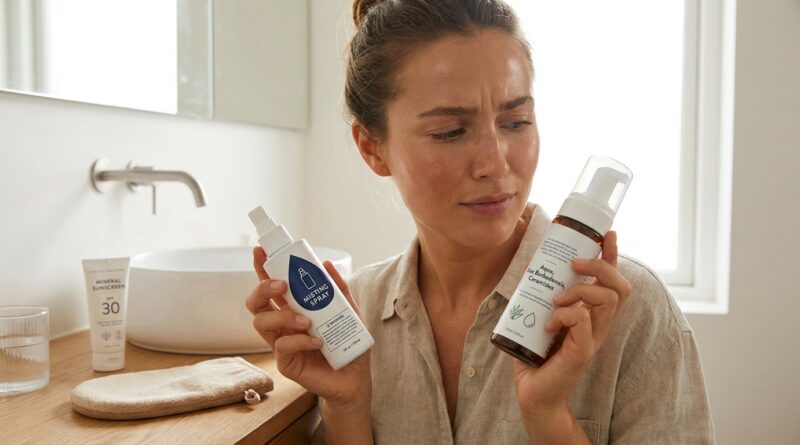
New ‘Scan-Your-Tan’ Rule: How To Read Sunless Tanning Labels So Your Skin (And Lungs) Stay Safe
Self-tanner labels can feel like they were written to hide the part you actually care about. That is maddening when you have sensitive skin, asthma, eczema, or simply do not want to walk into a spray booth and hope for the best. “Clean,” “natural,” and “express” sound reassuring, but they do not tell you what may irritate your skin, dry you out, or end up in the air you breathe. The simplest way to shop smarter is this. Scan your tan before you buy or book. Check the active tanning ingredient, check the fragrance line, and check the format. If it sprays into the air, your lungs matter. If it sits on your face all night, your skin barrier matters. Once you know where to look, you can spot safer picks fast at Ulta, Walmart, or your local salon, and avoid a lot of next-day regret.
⚡ In a Hurry? Key Takeaways
- The best quick rule for sunless tanning safety ingredients is “scan three things”: DHA, fragrance, and spray risk.
- If you have sensitive skin or asthma, skip heavily fragranced aerosols and ask salons about ventilation, nose filters, and face application options.
- “Clean” and “express” are marketing terms, not safety promises. The ingredient list still tells the real story.
The new “Scan-Your-Tan” rule
Here is the plain-English version.
Before you buy a self-tanner or step into a spray tan booth, scan these three points:
1. Find the tanning active
Most sunless tanners use DHA, short for dihydroxyacetone. That is the ingredient that reacts with the top layer of dead skin to create the tan look. It is the first thing to look for because it tells you this is a real self-tanner, not just a wash-off bronzer.
DHA itself is common, but the amount and the formula around it matter. If your skin gets dry, tight, itchy, or patchy after tanning, a gentler formula may help. If you want to dig deeper on lower-strength options, this guide on New ‘DHA-Dose-Safe’ Rule: How To Pick Low-Dose Self‑Tanners That Love Your Skin Barrier Back is worth a read.
2. Check the fragrance situation
If “fragrance” or “parfum” shows up high on the ingredient list, pause. Fragrance is one of the biggest troublemakers for people with sensitive skin. It can also be rough if strong scents trigger headaches or breathing irritation.
Unscented is often a safer bet than “fresh linen,” “tropical coconut,” or anything trying very hard to smell expensive.
3. Check the format, because lungs count too
This is the part many people miss. A mousse, lotion, or drops mostly stay where you put them. A mist, aerosol, or spray booth creates airborne particles. If you have asthma, allergies, or a sensitive throat, that changes the safety picture fast.
Sunless tanning safety ingredients are not only about what touches your skin. They are also about what you may inhale.
What “clean” and “express” really mean on a label
These words sound useful. They often are not.
“Clean”
There is no single universal rule that makes a self-tanner “clean.” One brand may mean no parabens. Another may mean vegan. Another may simply mean pretty packaging with a beige color palette.
Do not treat “clean” as proof of safety. Treat it as an invitation to read the actual ingredient list.
“Express”
“Express” usually means you can rinse sooner, often in 1 to 4 hours, while the tan continues developing later. That may be convenient before an event, but it does not automatically mean it is milder.
Some express products can still be strongly fragranced or loaded with extra cosmetic bronzers that may bother reactive skin.
The label-reading checklist that actually helps in a store
When you are standing in an aisle with ten similar bottles, use this quick filter:
Green flags
Look for lotions, creams, mousses, or drops if you want better control and less airborne exposure. Look for shorter ingredient lists if your skin is reactive. Look for fragrance-free or low-fragrance formulas. Look for added humectants and barrier-friendly ingredients like glycerin, aloe, hyaluronic acid, or squalane.
Yellow flags
Botanical extracts are not always gentle just because they sound natural. Citrus oils, heavy essential oils, and certain plant extracts can sting or trigger redness in some people. “Natural” is not the same thing as non-irritating.
Red flags
Strong fragrance near the top of the list. Aerosol formats if you are sensitive to inhalation. No ingredient transparency online or in-store. A salon that gets weirdly vague when you ask what solution they use.
If you get spray tans at a salon, ask these questions
You do not need to sound like a chemist. Just ask like a normal person protecting your health.
Ask what solution they use
If they cannot tell you the brand or let you see the label, that is not a great sign.
Ask about fragrance-free or sensitive-skin options
Many salons carry more than one formula. You may have to ask directly.
Ask how they reduce overspray
Good ventilation matters. So do nose filters, eye protection, and clear instructions to hold your breath during face spraying if needed.
Ask about face alternatives
If breathing issues are a concern, you can often skip booth face spraying and use face tanning drops or a lotion at home instead.
Why your skin barrier should be part of the conversation
A lot of bad self-tanner experiences are not true allergies. They are irritated, over-exfoliated, dried-out skin barriers waving a white flag.
If you scrubbed hard, shaved, used acids, retinoids, or benzoyl peroxide, then slapped on a heavily fragranced tanner, your skin may react even if the product is popular. That is why prep matters just as much as the bottle.
Gentle exfoliation, plain moisturizer on dry zones, and a patch test can save you a surprising amount of misery.
Patch testing without making it a whole production
You do not need a lab coat. Apply a small amount behind your ear, along your jaw, or on your inner arm. Wait 24 hours. Check for itching, burning, rash, or unusual dryness.
This is extra important for face tanning products and any product with fragrance or essential oils.
What matters most for people with asthma or scent sensitivity
This is where the format matters more than the marketing.
If a product becomes airborne, there is more chance it can irritate breathing. That does not mean every spray tan is dangerous for every person. It does mean you should be more careful with aerosols, home spray cans, and poorly ventilated booths if you already know your lungs are sensitive.
For many people, a lotion, mousse, or tanning drops mixed into moisturizer is the simpler and safer pick.
At a Glance: Comparison
| Feature/Aspect | Details | Verdict |
|---|---|---|
| Tanning active | DHA is the main ingredient to identify. Lower-dose or gentler formulas may be easier on dry, reactive skin. | Worth checking first |
| Fragrance | “Fragrance” or “parfum” high on the label can be a problem for sensitive skin, headaches, or scent triggers. | Less is usually better |
| Product format | Lotions and mousses stay on skin better. Sprays, aerosols, and booths create more inhalation concern. | Choose based on skin and lung sensitivity |
Conclusion
You do not need a chemistry degree to shop smarter. You just need a simple rule that cuts through the nonsense. Scan your tan for the active ingredient, scan for fragrance, and scan for spray risk. That is the practical way to judge sunless tanning safety ingredients in the real world, whether you are standing in Ulta, scrolling Walmart, or booking a last-minute booth before a wedding. Right now, there is a flood of “clean” and “express” products, but very few people are being shown how to read the fine print in a way that protects their skin and lungs. Start using this rule and you will likely end up with fewer flare-ups, fewer breathing issues, and far fewer “why did I do this?” mornings after tanning.