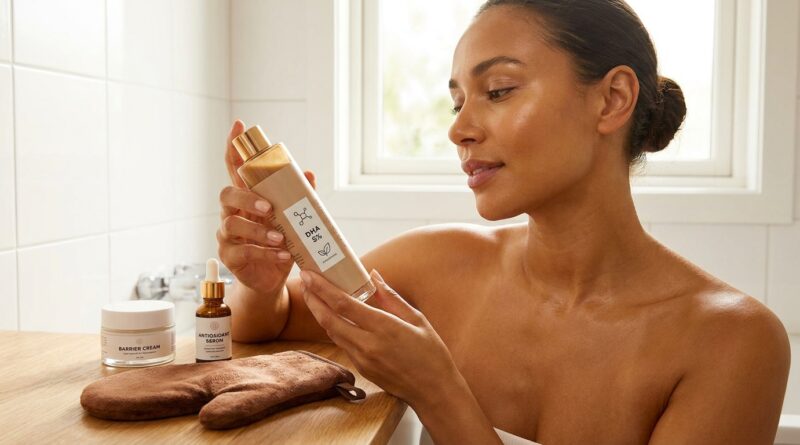
New ‘DHA-Dose-Safe’ Rule: How To Pick Low-Dose Self‑Tanners That Love Your Skin Barrier Back
If you love the look of self-tanner but also spend real money protecting your skin barrier, this new round of DHA questions can feel annoying fast. One minute you are comparing olive tones and dry-down times. The next, you are reading dermatology reviews about absorption, irritation, and whether frequent tanning might be rougher on your skin than you thought. That worry is fair. Most people are not asking if self-tanner works. They are asking what a safe DHA percentage in self tanner looks like when you use it every week, or even more often. The short answer is this. Lower-dose formulas, thoughtful spacing, and good barrier support usually make more sense than chasing the darkest result in one go. You do not need to panic or toss every bottle you own. But this is a smart moment to read labels more carefully, slow down your routine a bit, and pick formulas that respect your skin instead of just staining it.
⚡ In a Hurry? Key Takeaways
- A safe DHA percentage in self tanner is generally on the lower to moderate side for regular use, often around 3% to 8% rather than the highest-strength formulas.
- If you tan weekly, choose lighter builds, leave more days between full-body applications, and moisturize well before and after.
- The goal is not just color. It is reducing barrier stress, especially if you are pregnant, sensitive, eczema-prone, or already using acids and retinoids.
Why people are suddenly paying attention to DHA dose
DHA, short for dihydroxyacetone, is the active ingredient that gives most self-tanners their color. It reacts with amino acids in the top layer of skin to create that bronzed look. For years, most shoppers focused on streaking, smell, and how dark the tan got.
Now the conversation is changing. Newer dermatology reviews in 2026 are putting more attention on dose, frequency, and what happens when you apply these products over and over on skin that is already dry, exfoliated, inflamed, or over-treated.
That does not mean DHA is suddenly “bad.” It means the old way of shopping by shade alone is starting to look incomplete.
So what is a safe DHA percentage in self tanner?
There is not one magic number that is officially perfect for every person. Skin is too individual for that. But in practical terms, lower and moderate DHA percentages are usually the safer starting point for routine use.
A simple rule of thumb
For many people, this rough guide helps:
- 3% to 5% DHA: A lighter, more gradual result. Often a smart pick for sensitive or dry skin, face tanning, or frequent use.
- 5% to 8% DHA: Medium territory. Good for many body formulas if you are not applying constantly.
- 8% to 12% and up: Darker, faster payoff, but more potential for dryness, patchiness, and overdoing it if used too often.
That is why the safest answer for most regular users is not “buy the strongest mousse.” It is “pick the lowest percentage that still gives you the look you want.”
Why lower-dose often makes more sense
High-DHA formulas can be tempting because they promise one-and-done color. But stronger formulas can be less forgiving on dry spots, rough texture, and a compromised barrier. They may also push people into a cycle of stripping, reapplying, and correcting patches. That cycle can be tougher on skin than a gentler build.
What the new “DHA-dose-safe” idea really means
This is less about a government-style rule and more about a smarter consumer standard. Think of it like this. If two products give you a nice glow, the one with a lower DHA load, fewer irritating extras, and better skin-support ingredients is often the better long-term pick.
That matters even more if you:
- Tan every week
- Use exfoliating acids
- Use retinoids
- Have eczema, rosacea, or sensitive skin
- Are pregnant and trying to keep exposure as low and simple as possible
How DHA can affect the skin barrier
DHA works on the outermost layer of skin, which is good news because that is where the color reaction is supposed to happen. But the process is still a chemical reaction happening on skin that may already be stressed.
Some formulas can leave skin feeling tight, dry, itchy, or more reactive. That is not always the DHA alone. It can also be the full formula around it, including alcohol, fragrance, essential oils, harsh preservatives, and the prep routine people do beforehand.
Common barrier stressors around self-tanning
- Scrubbing too hard before application
- Using acids right before tanning
- Applying on already irritated skin
- Choosing very high-DHA products too often
- Skipping moisturizer because you are afraid of messing up the tan
In other words, your mousse may not be the only problem. Sometimes the whole routine is.
How to choose a lower-risk self-tanner
1. Look for a modest DHA percentage
If the brand lists DHA, start lower than your instincts tell you to. A gradual tan or a medium formula can be easier on the skin and easier to maintain.
2. Pick formulas with barrier-friendly extras
Look for ingredients like glycerin, aloe, panthenol, squalane, ceramides, or hyaluronic acid. These do not make a product automatically perfect, but they can help offset dryness.
3. Be careful with heavy fragrance
A lot of tanners try to hide the classic smell with perfume. If your skin is reactive, that cover scent can be more of a problem than the DHA smell itself.
4. Avoid piling actives around tanning day
AHAs, BHAs, retinoids, benzoyl peroxide, and strong vitamin C formulas can all make skin more reactive if used too close to tanning time. Give your skin a quieter day.
5. Patch test, especially on the body
People patch test facial skincare all the time, but forget body products. Try a small area first, especially if you have sensitive skin or are switching to a stronger formula.
If you are also using online tools or bots to help sort through ingredients, read New ‘AI Tan-Safety Check’ Rule: How To Tell If Your Skincare Advice Bot Is Actually Safe For Your Sunless Glow. It is a useful reminder that fast advice is not always careful advice.
Best application spacing if you care about skin health
If your question is “How often is safe enough?” the honest answer is that less frequent full-body application is usually kinder to your barrier.
A practical schedule
- Gradual tanners: Every few days may be fine for many people if skin stays comfortable.
- Classic mousse or lotion: Once weekly is a reasonable rhythm for many users.
- Dark formulas: Better spaced out more, with real recovery time in between.
If your skin starts feeling stingy, flaky, or extra itchy, that is your sign to back off. Color can wait. A damaged barrier usually gets worse if you keep pushing through it.
Pregnancy-safe thinking without the panic
Pregnancy-safe fact sheets are one big reason DHA is back in the spotlight. Most experts still put topical self-tanner in the “use with caution, ask your clinician, avoid unnecessary exposure” bucket rather than the “absolutely never” bucket. But they also tend to prefer simple formulas, lower exposure, and avoiding sprays or anything that could be inhaled.
If you are pregnant or trying to conceive, a sensible plan is:
- Choose a lotion or cream over a spray
- Use the lowest effective DHA strength
- Tan less often
- Do not apply on broken or irritated skin
- Ask your OB-GYN or dermatologist if you are unsure
That is not fear mongering. It is just smart caution.
How to buffer your skin before and after tanning
Before tanning
Skip the harsh scrub session. Use a gentle washcloth or mild exfoliation the day before if you need it. Then moisturize dry zones like elbows, knees, ankles, and wrists.
After tanning
Once the tan has developed and your rinse window has passed, get back to barrier care. A bland moisturizer helps. So can formulas with ceramides, cholesterol, fatty acids, glycerin, and squalane.
What about antioxidants?
They can be a nice support step. Products with vitamin E, green tea, or other soothing antioxidants may help support skin that is dealing with environmental stress. Just do not stack on a bunch of strong active serums right on tanning day.
Red flags that your self-tanner is too much for your skin
- Your skin feels tight for days after use
- You are itchy or red after every application
- Your tan grabs hard to dry patches no matter what
- You need to exfoliate aggressively to remove it
- Your skin barrier products sting after tanning
If any of those sound familiar, your answer may be lower DHA, better prep, less frequent use, or a totally different formula type.
At a Glance: Comparison
| Feature/Aspect | Details | Verdict |
|---|---|---|
| Low vs high DHA percentage | Lower percentages usually build more gradually and are easier on dry, sensitive, or frequently tanned skin. | Lower to mid-range is the safer everyday bet. |
| Application frequency | Daily or near-daily full-strength tanning can increase dryness and barrier stress. | Space out full-body tans and use gradual top-ups if needed. |
| Barrier support ingredients | Ceramides, glycerin, panthenol, squalane, and bland moisturizers can help reduce that tight, over-processed feeling. | A tanning product should work with your skincare, not fight it. |
Conclusion
The big shift right now is simple. We are finally talking about self-tanner in terms of dose and skin health, not just color payoff. That is a good thing. New 2026 dermatology data and pregnancy-safe fact sheets are making people look harder at DHA absorption, routine frequency, and whether a darker formula is really worth the extra stress on the skin barrier. If you have been wondering what “safe enough” means, start with a lower DHA percentage, give your skin more breathing room between applications, and support it with moisturizers and soothing ingredients. You do not have to quit tanning to be careful. You just need a smarter routine. And honestly, that kind of balanced, real-life approach is what more beauty coverage should have been giving people all along.