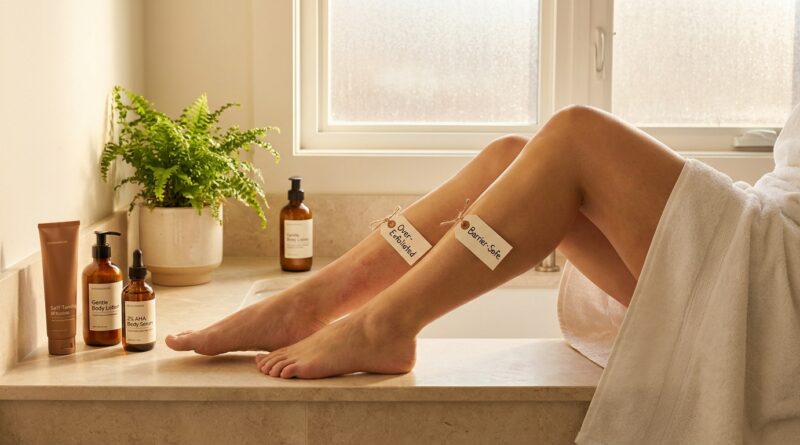
New ‘Barrier-Safe Tan Prep’ Rule: Why You Must Stop Over-Exfoliating Before Self‑Tanner In 2026
If your self-tanner has started clinging to ankles, stinging on freshly shaved legs, or fading in odd little islands, you are not imagining it. A lot of people are overdoing prep right now. TikTok pushed facial exfoliation habits onto the body, then body acids, peel pads, and “glass skin” routines followed. The old advice was simple. Scrub everything. Shave. Tan. In 2026, that can backfire badly. When your skin barrier is irritated, self-tanner does not sit nicely on top. It grabs unevenly, fades patchy, and can leave skin feeling hot, itchy, or dry. The new barrier-safe tan prep rule is much simpler than the internet makes it sound. Exfoliate lightly, not aggressively. Keep strong acids away from tanning day. Focus on smooth, calm skin instead of squeaky-clean skin. That one shift can give you a more even glow and save you from blaming a perfectly good mousse for prep mistakes.
⚡ In a Hurry? Key Takeaways
- To exfoliate before self tanner without damaging skin barrier, use gentle physical exfoliation or a soft washcloth 24 hours before tanning, not a harsh scrub or strong acid peel right before application.
- Skip high-strength AHAs, BHAs, retinoids, and body peel serums on tan day, and avoid shaving immediately before you apply tanner.
- Calm, intact skin holds self-tanner more evenly, stings less, and usually gives you a longer-lasting result.
Why the old “scrub hard before tanning” advice is outdated
For years, people were told to exfoliate like crazy before self-tanner. That made some sense when most people were using simple body scrubs and thick lotions. But body care changed.
Now we have acid body washes, glycolic pads, lactic acid lotions, salicylic sprays, retinol body serums, and at-home peel masks meant for arms and legs. Used too close to tanning, they can thin out the top layer of skin just enough to cause trouble.
Your skin barrier is the outer shield that helps keep moisture in and irritation out. When you over-exfoliate, that shield gets cranky. Then self-tanner goes on top of uneven, dry, inflamed skin. That is when you get the classic mess. Dark knees. Speckled ankles. Itchy shins. Strange fading after two showers.
What “barrier-safe tan prep” actually means
Barrier-safe prep means your goal is not to strip the skin. Your goal is to make it smooth enough for even color while keeping it calm and comfortable.
Think of it like painting a wall. You do not attack the wall with a power sander right before paint. You lightly smooth the rough spots, make sure the surface is clean, and leave it stable enough for an even finish.
The new rule in one sentence
Exfoliate less, earlier, and more gently than you think.
How to exfoliate before self tanner without damaging skin barrier
Here is the routine that makes the most sense for most people.
1. Exfoliate 24 hours before tanning
This gives your skin time to settle down. If you exfoliate right before applying tanner, especially with acids or a gritty scrub, you increase the chance of stinging and patchiness.
2. Choose gentle physical exfoliation first
A soft washcloth, exfoliating mitt with a light hand, or mild scrub with rounded particles is usually enough. You are not trying to make the skin red. You are just lifting loose flakes.
3. Focus on rough zones only
Pay extra attention to ankles, knees, elbows, wrists, and any dry patches. Those areas tend to grab color. The rest of the body often needs much less exfoliation than people think.
4. Stop strong actives before tanning
If you use glycolic acid, lactic acid, salicylic acid, retinol, or a peel serum on your body, pause them before tanning. For many people, 24 to 48 hours is safer. If your skin is sensitive, give it longer.
5. Moisturize, but do it at the right time
Use a simple, fragrance-light moisturizer after exfoliating to help the skin barrier recover. On tanning day, keep thick lotion off the whole body unless your tanner specifically says otherwise. You can use a tiny amount only on dry grabby spots like ankles, knees, elbows, and knuckles.
6. Shave earlier, not right before
Shaving is exfoliation too. If you shave right before tanning, skin can feel raw and the tanner can settle into follicles. Try shaving at least 12 to 24 hours beforehand if your skin tends to react.
What to stop doing immediately
If your tan prep includes any of these, it may be time to rethink it:
- Using a body peel the same day as self-tanner
- Scrubbing until the skin feels squeaky or looks pink
- Layering acid body lotion and then tanning a few hours later
- Dry brushing aggressively over already dry skin
- Shaving, exfoliating, and tanning all in one rushed shower session
None of that makes your tan better. It just makes your skin more reactive.
Signs you have over-exfoliated before self-tanner
Not sure if this is your issue? Watch for these clues:
- Stinging when the mousse or mist goes on
- Tight, shiny, or itchy skin afterward
- Patchy development around the ankles and knees
- Tanner settling into pores or tiny dots
- Color fading in random spots after one or two showers
- Dry flakes showing up more after the tan develops
If that sounds familiar, your prep may be the problem, not the product.
A better prep routine for 2026
Because body actives are everywhere now, the smartest move is to build a simple tan week plan.
Two days before tanning
Stop using strong exfoliating acids or retinoid body products.
One day before tanning
Take a lukewarm shower. Gently exfoliate with a soft mitt or washcloth. Shave if needed. Apply a basic moisturizer afterward.
The day of tanning
Make sure skin is clean, dry, and calm. No fresh shaving. No acid products. No heavy body oils. Add a tiny bit of moisturizer only to extra-dry joints and hands if needed.
The day after tanning
Keep the skin hydrated with a plain moisturizer. Skip exfoliation and strong actives so the color can settle and last.
Why this matters beyond looks
There is also a comfort and safety side to this. A damaged barrier is more likely to feel irritated by fragrances, guide color, preservatives, and even plain water after a shower. That can make tanning feel much harsher than it should.
And while social feeds are full of “tanmaxxing” advice, not all of it is good for your skin. If you have noticed the online pressure getting weirdly intense, it is worth reading New ‘Tanmaxxing Myth’ Rule: The Viral “Base Burn” Trend That’s Pushing Gen Z Back To Real Sun Instead Of Safer Sunless Glow. It is a helpful reminder that more aggressive does not mean better, whether we are talking about UV tanning or prep routines.
Common questions people ask
Can I use glycolic acid before self-tanner?
You can, but not right before. Strong acids can make tanning go uneven and may irritate the skin. For most people, it is smarter to stop 24 to 48 hours ahead.
Do I need to exfoliate every time I self-tan?
Not heavily. If you are topping up an even fade, very gentle smoothing may be enough. Full scrubbing every single time can wear down the barrier.
What if I already have dry patches?
Do not attack them with more scrub. Use gentle exfoliation once, then moisturize consistently for a day or two. Tanning over angry dry skin usually makes it more obvious.
Is physical or chemical exfoliation better before self-tanner?
For most people, gentle physical exfoliation is safer right before tanning. Chemical exfoliation can still be part of your body routine, just not too close to application.
At a Glance: Comparison
| Feature/Aspect | Details | Verdict |
|---|---|---|
| Exfoliation timing | Best done 24 hours before tanning, not right before application | Earlier is safer and usually gives a smoother result |
| Type of exfoliation | Soft washcloth, gentle mitt, or mild scrub beats strong peels and acid-heavy body serums | Go gentle to protect the skin barrier |
| Prep goal | Calm, smooth, hydrated skin instead of stripped, squeaky-clean skin | Barrier-first prep helps color last longer and fade better |
Conclusion
The big shift for 2026 is this. Self-tan prep is no longer about removing as much skin as possible before you apply mousse. It is about protecting the skin barrier so the tan has a smooth, steady surface to develop on. That matters now because chemical exfoliants and high-strength body peels have moved from face care into body care, and almost nobody explained how that changes tanning prep. If your routine has been leaving you with rashes, streaks, or weird fading, you are probably not bad at self-tanning. You are just following outdated prep advice. A lighter, barrier-first routine means fewer problems, more even color, and a glow that actually lasts. That is the calm middle ground people need while social feeds keep pushing aggressive peels and tanmaxxing at the same time.