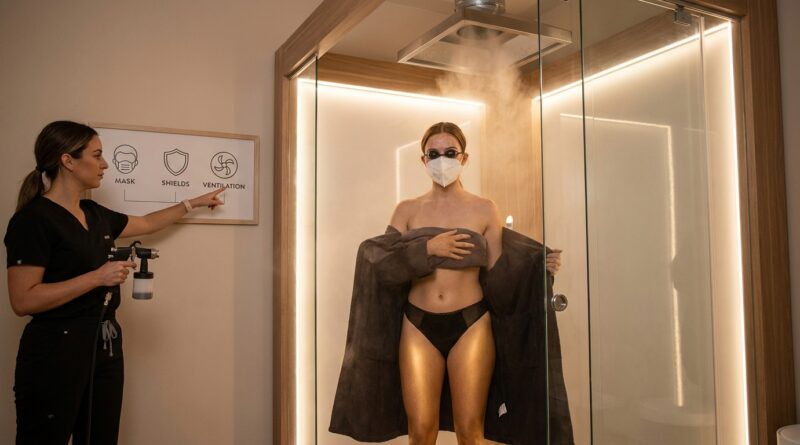
New ‘Spray-Tan Lung Safe’ Rule: The Fresh 2026 Science On DHA Inhalation And How To Protect Your Lungs In The Booth
Spray tans are supposed to make life easier, not give you a new thing to worry about while you’re standing half naked in a fog machine. If you have ever held your breath in the booth and wondered, “Am I breathing this stuff into my lungs?” you are not overreacting. That question is getting more attention in 2026 because newer reviews, ingredient sheets, and salon safety advice are finally treating DHA inhalation like a real issue instead of a tiny footnote. The short version is simple. DHA is still generally seen as safer than tanning in UV beds or the sun, but breathing spray mist is not the goal, and the lung safety data is not strong enough to shrug off. The safest move is to cut down inhalation as much as possible with good salon ventilation, nose protection, careful timing, and by switching to creams or lotions if you have asthma, sensitive airways, or just hate the booth mist.
⚡ In a Hurry? Key Takeaways
- Spray tan DHA inhalation safety in 2026 comes down to this: DHA on skin is one thing, but breathing the mist is still a question mark and worth avoiding.
- Use nose filters or a mask when possible, keep lips closed, hold your breath during face passes, and ask about booth ventilation before you tan.
- If you have asthma, chronic cough, allergies, or sensitive lungs, a lotion, mousse, or mitt-applied self tanner is usually the lower-risk option.
What changed in 2026?
For years, the beauty message was pretty blunt. Spray tans are safer than UV tanning. That part is still true. But that older message skipped an important detail. Safer than UV does not automatically mean risk-free in every form.
What is new in 2026 is not some giant headline saying spray tans are dangerous. It is more that the science and safety language have gotten less casual. Reviews of the research, workplace hazard documents, and salon guidance are putting more focus on inhalation, meaning what happens when tiny droplets of DHA-based spray get into the nose, throat, and lungs.
The reason people are paying attention now is that there is a gap in the evidence. We know DHA reacts with the outer layer of skin to create the tanned look. That is the intended use. We do not have the same comfort level for repeated inhalation, especially in people who spray tan often, work around the product, or already have touchy airways.
What exactly is DHA, and why is inhalation the issue?
DHA stands for dihydroxyacetone. It is the active ingredient in most sunless tanning products. On skin, it reacts with amino acids in the top dead layer and creates that brown color over several hours.
That skin reaction is why self tanner works. But your lungs are not dead outer skin. They are delicate, moist tissue designed for gas exchange. Very different job. So when people ask about spray tan DHA inhalation safety in 2026, the real issue is not whether DHA can tan skin. It is whether aerosolized droplets should be breathed at all.
The cautious answer is no. Not because every spray tan booth is a health disaster, but because inhaling any cosmetic mist on purpose makes little sense if you can reduce it.
What the current science really says
The reassuring part
There is still no solid real-world evidence showing that occasional spray tanning causes clear, predictable lung disease in healthy people. That matters. We should not overstate the risk.
Also, compared with UV tanning beds, spray tanning avoids the well-known skin cancer risk from ultraviolet exposure. That is a huge benefit and still part of the picture.
The not-so-reassuring part
The inhalation data is limited. Some lab and toxicology discussions raise concern about breathing DHA droplets, especially because inhaled particles can reach beyond the nose and throat depending on droplet size, booth setup, and how the spray is applied.
That does not mean “panic.” It means “reduce exposure.” If the evidence is incomplete and the lungs are not the target organ, basic common sense says do not breathe more of the mist than you have to.
Why salons and safety sheets matter more now
Many of the newer safety sheets are more direct about avoiding inhalation, eye exposure, and mucous membrane contact. That is not unusual for cosmetic chemicals. But it is a clue. When the product guidance itself says to avoid breathing it in, consumers should listen.
Who should be extra careful?
Some people can probably shrug off an occasional tiny exposure better than others. But a few groups should be much more cautious:
- People with asthma
- Anyone with COPD or chronic bronchitis
- People with frequent allergies or airway sensitivity
- Salon workers exposed repeatedly
- Anyone who gets coughing, chest tightness, or throat irritation during or after a spray tan
If you are pregnant and trying to sort out sunless tanning questions more broadly, this guide on New ‘Pregnancy-Safe Glow’ Rule: What Today’s Sunless Tanner Science Really Says About Bumps, Babies And DHA is worth reading too, since breathing concerns often come up right alongside ingredient concerns.
How to protect your lungs in the booth tonight
This is the part most people actually need. Not a chemistry lecture. A plan.
1. Ask the salon one blunt question
Before you book, ask, “What do you provide to reduce inhalation?” A good salon should not act confused.
Look for answers like:
- Nose filters or nose plugs
- Lip balm and eye protection
- Strong booth ventilation or extraction
- Clear instructions for breath holding during face spraying
- A well-maintained booth that does not stay visibly foggy between clients
If they brush it off with “Oh, it’s totally harmless,” that is not very reassuring.
2. Use nose protection if offered
This is one of the simplest, smartest moves. Tiny nasal filters, plugs, or even a properly used mask during parts of the process can cut down what goes straight into your airway.
Some salons offer these automatically. Some only do if you ask.
3. Keep your mouth closed
Sounds obvious. People still forget. Especially when the air feels cold or you are following rapid instructions from the tech. Closed mouth. Tongue relaxed. Try not to chat while they spray.
4. Hold your breath during the face pass
This is probably the biggest single moment of exposure. When the face is being sprayed, take a breath beforehand, close your lips, and hold still until the pass is done. Then turn away slightly before breathing again if you can.
5. Position matters
If you are in a booth, follow the body positioning exactly. It is not just for even color. Good positioning can help reduce direct spraying into the face and upper chest.
If it is a technician-applied spray tan, ask them to spray downward and avoid blowing product straight toward your nose and mouth where possible.
6. Wait a beat before taking a deep breath
After a heavy spray pass, especially around the face and chest, do not immediately inhale sharply. Give the mist a second to settle or be pulled away by ventilation.
7. Skip the booth if your lungs are already irritated
If you have a cold, wheezing, an allergy flare, or that dry cough that makes every scent feel aggressive, this is a bad day for aerosolized tanning mist. Reschedule or use a lotion at home.
Booth spray vs technician spray vs at-home lotion
Booth spray
Fast and convenient. Also the easiest way to end up standing in a cloud of fine mist. Good ventilation becomes really important here.
Technician spray
This can be better or worse depending on the setup and the skill of the person applying it. A careful tech in a ventilated room may control overspray better than an automatic booth. A rushed setup can do the opposite.
Lotions, mousses, and tanning drops
These are often the best choice if your main concern is inhalation. You are putting product on the skin directly rather than turning it into a breathable mist. They take more effort, yes. But from a lung-exposure point of view, they are the cleaner option.
What to ask your spray tan tech
If you feel awkward asking questions, use these exact lines:
- “Do you have nose filters or any breathing protection?”
- “Can you avoid spraying directly into my face?”
- “I have asthma. What do you recommend to reduce inhalation?”
- “How strong is the ventilation in this room or booth?”
- “Would you suggest lotion tanning instead if I am sensitive to mist?”
A good tech will not roll their eyes. They will answer clearly and help you work around the issue.
Red flags that mean you should walk away
- The booth or room looks hazy from the last client
- No ventilation is visible or mentioned
- The salon provides no nose, eye, or lip protection
- You are told to ignore coughing or throat irritation
- The tech sprays your face from too close or too directly
If your gut says the setup feels sloppy, trust that feeling.
When at-home self tanner makes more sense
At-home products are not perfect. They can streak. They can smell weird. They can absolutely turn your ankles into an art project. But they remove the big inhalation question that comes with aerosol booths.
At-home lotion, mousse, or tanning drops are a smart switch if:
- You have asthma or sensitive lungs
- You spray tan often
- You hate the booth fog
- You have had throat irritation or coughing after tanning
- You are trying to lower exposure wherever you can
What if you already breathed some in?
Most people who get a little mist exposure are not heading for a medical emergency. If you feel fine, it will usually pass without drama.
But pay attention to symptoms that are not normal, like:
- Persistent coughing
- Wheezing
- Chest tightness
- Shortness of breath
- Burning throat that does not settle down
If that happens, especially if you have asthma, contact a medical professional. If you are having significant breathing trouble, get urgent care right away.
At a Glance: Comparison
| Feature/Aspect | Details | Verdict |
|---|---|---|
| DHA on skin | Intended use of sunless tanner. Better understood than inhalation exposure. | Generally accepted when used as directed |
| DHA inhalation in spray booths | Limited long-term data. Newer reviews and safety sheets support reducing exposure. | Avoid when possible |
| At-home lotion or mousse | No booth mist, more control, slower application, less inhalation concern. | Best pick for sensitive lungs |
Conclusion
The big 2026 update is not that spray tans suddenly became the bad guy. It is that people finally want a more honest answer about breathing the mist, and that is fair. Spray tanning is still a very different risk picture from UV tanning, but newer fact sheets and research reviews make one thing clear. It is smart to keep DHA out of your lungs as much as you can. That means asking better questions at the salon, using nose protection, timing your breaths during face passes, paying attention to ventilation, and switching to lotions or mousses if your lungs are sensitive. The real value here is practical. You do not need a toxicology degree. You just need a simple plan for how to keep spray tan out of your lungs tonight.