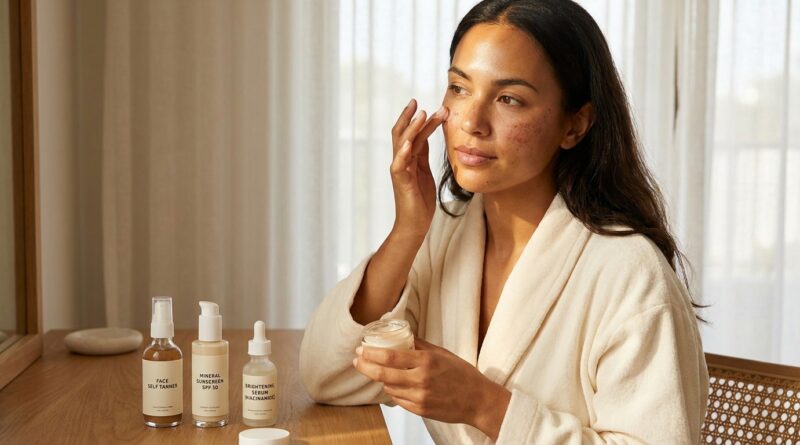
New ‘Melasma-Safe Tan’ Rule: How To Stop Self Tanner From Supercharging Dark Patches On Your Face
You are not imagining it. You finally get your self tanner smooth and even, then your melasma, post-acne marks, or random patches on your face go much darker than everything around them. It is frustrating, and honestly, a little unfair. A sunless glow is supposed to make skin look more even, not spotlight every bit of stubborn pigment. The good news is that you do not have to give up self tanner completely. The new melasma-safe approach is simple. Treat the darker areas differently from the rest of your face. That means less product on high-pigment spots, more barrier protection where patches tend to grab color, and a slower build instead of one heavy application. If you want a self tanner melasma safe routine, the goal is not maximum color in one night. It is controlled color that blends with your skin instead of supercharging the patches you are already trying to calm down.
⚡ In a Hurry? Key Takeaways
- Yes, you can self tan with melasma, but the safest rule is to buffer dark patches and use less tanner on your face than on your body.
- Apply a thin layer of bland moisturizer or barrier cream over melasma, old acne marks, and the upper lip before self tanner so those spots do not grab extra color.
- Self tanner does not treat pigment, and some formulas can irritate sensitive skin, so patch test first and keep using daily sunscreen to prevent flare-ups.
The new melasma-safe tan rule
The rule is this. Do not apply self tanner evenly to unevenly pigmented skin.
That sounds backward at first, but it is the whole trick. Melasma and post-inflammatory marks often absorb color differently. Self tanner can cling to those areas and make them look deeper, warmer, and more obvious. So instead of treating your whole face like one blank canvas, you spot-adjust.
Think of it like painting over a wall with old stains. If you use the same amount everywhere, the stains still show through. If you prep the stained areas first, the finish comes out much more balanced.
Why self tanner can darken melasma patches
Self tanner works by coloring the top layer of dead skin cells. Melasma is different. It is a pigment issue driven by a mix of things like hormones, UV, visible light, heat, inflammation, and skin sensitivity. When those darker areas already have more pigment, adding a tanning reaction on top can make the contrast pop.
That is why people often say, “My face tanner looked fine everywhere except my mustache area, cheek patches, or forehead.” Those are classic melasma zones.
It is also why formula matters. Fragrance, essential oils, exfoliating acids, and other extras can irritate reactive skin. And irritation can mean more pigment trouble later. If you are trying to avoid that cycle, it is worth reading Are ‘Clean’ Self‑Tanners Really Safer? New Research On Hidden Irritants In Sunless Tanning.
Your step-by-step self tanner melasma safe routine
1. Start with a calm skin day
Do not self tan your face right after strong exfoliation, retinoids, waxing, threading, or a peel. Skin that is hot, irritated, or freshly scrubbed is more likely to react badly and develop uneven color.
If your melasma is already flaring, red, or itchy, skip the tan that day.
2. Wash, then moisturize lightly
Clean skin is good. Dry, stripped skin is not. Use a gentle cleanser and pat dry. Then apply a light, plain moisturizer to the whole face. Wait a few minutes.
This gives you a smoother base and slows down the “instant grab” that often happens on drier, darker patches.
3. Buffer the hotspots
This is the part most people miss. Before self tanner, dab a tiny bit more moisturizer, balm, or barrier cream directly over:
- melasma patches
- old acne marks
- upper lip darkness
- sides of the nose
- between the brows
- any flaky spot that always turns orange or brown too fast
You do not want a thick white layer. Just enough slip to slightly block the product from overdeveloping there.
4. Use less product than you think
Face tanning usually goes wrong because of too much product, not too little. Put a small amount on a tanning mitt, makeup sponge, or clean fingers. Apply the lightest layer first to the whole face, avoiding the buffered areas until the end.
Then use whatever is left over on the mitt to gently pass over the darker zones. Not a full second coat. Just residue.
That one move can make a huge difference.
5. Blend down, not just across
Blend into the hairline, ears, and down the neck. A lighter face tan can still look natural if the transition is smooth. You do not need your face to match the deepest tone on your body. You need it to look believable.
6. Build slowly over 2 to 3 sessions
If you usually go from pale to very bronzed in one application, this is where to change course. With melasma-prone skin, gradual color is safer than one dramatic pass.
Use a lighter formula, tanning drops mixed with moisturizer, or a very small amount of mousse every other day until you hit the shade you want.
7. Rinse and reassess in daylight
After development time, rinse if your product calls for it. Then check your skin in natural light, not just the bathroom mirror. If dark patches still look deeper than the rest of your face, do not add more tanner. Correct the surrounding areas later with makeup, bronzer, or another gradual layer elsewhere.
What to avoid if you have melasma
Heavy exfoliation before tanning
People often exfoliate hard to “even things out.” On melasma-prone skin, that can backfire. Too much rubbing can trigger irritation and make pigment look worse over time.
Heat while the tan develops
Heat is a known trigger for a lot of melasma sufferers. Hot yoga, steam, long hot showers, or cooking over a hot stove right after applying face tanner is not ideal. Try to stay cool while it develops.
Using body tanner on a reactive face
Some body formulas are fine on the face. Some are not. If your skin is sensitive, acne-prone, or pigment-prone, a lighter face-friendly formula is usually the smarter choice.
Trying to cover melasma by going darker
This is the trap. The darker the overall tan, the more likely your patches are to keep pace and go darker too. A subtle glow is usually more forgiving than a deep bronze.
Best product habits for melasma-prone skin
You do not need a perfect product. You need a predictable one.
- Patch test on the jaw or side of the face first
- Choose simpler formulas with fewer irritants
- Pick gradual tanners or tanning drops for more control
- Avoid strong fragrance if your skin is reactive
- Keep your routine steady for a few days before and after tanning
If a product stings, makes you red, or leaves patches looking muddy every time, believe your skin and move on.
How to keep your tan without feeding the pigment cycle
This part matters just as much as application. Self tanner gives color, but it does not protect against the things that keep melasma active.
Wear sunscreen every single day
If you only keep one rule, make it this one. Broad-spectrum sunscreen is not optional with melasma. UV exposure can keep patches active, and visible light can be a problem for some people too.
Keep inflammation low
Do not scrub the tan off. Do not pile on harsh acids because the color looks uneven. Gentle cleansing and simple moisturizing will keep your skin barrier happier.
Use makeup as a finisher, not more tanner
If one patch still peeks through, a skin tint or color corrector is usually a better fix than adding another coat of face tanner on top.
When to talk to a dermatologist
If your dark patches are getting worse, changing shape, or showing up even when you are careful with sun and heat, check in with a dermatologist. Melasma can be stubborn, and treatment often works best with a full plan, not just one product swap.
A dermatologist can also help you tell the difference between melasma, post-acne marks, irritation, and other causes of discoloration. That matters, because what helps one can aggravate another.
At a Glance: Comparison
| Feature/Aspect | Details | Verdict |
|---|---|---|
| Application method | Light layer on the full face, then only leftover product over melasma and dark marks after buffering with moisturizer | Best for a more even result |
| Product strength | Gradual tanner or drops let you build color slowly instead of forcing deep color in one session | Safer choice for melasma-prone skin |
| Aftercare | Daily sunscreen, gentle skincare, and avoiding heat and irritation while the tan develops | Important to keep pigment from flaring |
Conclusion
You do not have to pick between a healthy-looking glow and keeping your pigment under control. The smarter move is a self tanner melasma safe routine that respects how your skin actually behaves. Less product on darker areas. More buffering. Slower build. Daily sunscreen. Derms and patients are talking more openly now about how hormones, heat, UV, and even sunless tanning choices can affect melasma in real life. That matters, because it gives people a safer path than chasing “evenness” with actual sun exposure. And honestly, that is the goal. Not filter-perfect skin. Just a routine that works with your face instead of fighting it.