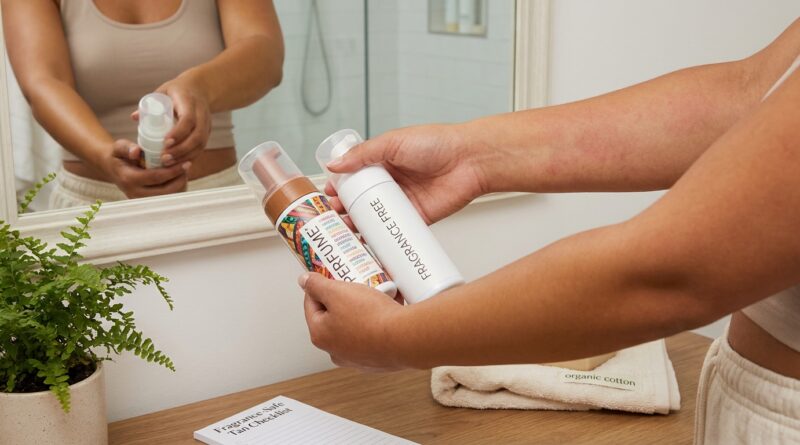
New ‘Fragrance‑Safe Tan’ Rule: How To Pick Self‑Tanners That Won’t Hijack Sensitive Skin Or Melasma
Your self-tanner is supposed to fake a vacation, not start a skin drama two days before family photos. If your tan has ever stung going on, turned blotchy around your upper lip, or seemed to make dark patches look worse, you are not being picky. Dermatologists are increasingly pointing to fragrance, not just DHA, as the sneaky troublemaker in many self-tanners. That matters a lot if you have reactive skin, eczema, rosacea, or melasma, because irritation can kick off more pigment and leave you with exactly the opposite of the smooth, even glow you wanted. The good news is you do not have to give up self-tan altogether. You just need to shop a little differently. If you want a self tanner safe for sensitive skin and melasma, the new rule is simple. Start with low-fragrance or fragrance-free formulas, patch test first, and treat your skin barrier like it matters, because it does.
⚡ In a Hurry? Key Takeaways
- A self tanner safe for sensitive skin and melasma is usually fragrance-free or very low fragrance, with a short ingredient list and soothing support ingredients.
- Patch test on the jawline or inner arm for 2 to 3 days before full use, and avoid applying over irritated, freshly exfoliated, or over-treated skin.
- Self-tan is still a better cosmetic option than UV tanning, but if a formula burns, itches, or darkens patches, stop using it and switch formulas.
Why this “fragrance-safe” rule is getting attention
For years, people blamed DHA for every bad self-tan reaction. DHA is the active that reacts with the top layer of skin to create color. It can be irritating for some people, sure. But newer dermatology discussions and a lot of real-world trial and error are pointing at another problem. Fragrance blends.
That one word, “fragrance” or “parfum,” can hide dozens of scent chemicals. Some are there to make the product smell nice. Some are there to cover the classic self-tanner smell. If your skin is already touchy, that scented mix can be enough to sting, itch, or inflame the barrier.
And once skin is irritated, pigment-prone skin can respond by getting darker in patches. That is especially frustrating with melasma, where even mild inflammation can leave a mark.
What sensitive and melasma-prone skin actually needs
If you are shopping for a self tanner safe for sensitive skin and melasma, think less about marketing words on the front of the bottle and more about the ingredient list on the back.
Look for these green flags
These do not guarantee perfection, but they usually point you in a safer direction:
- Fragrance-free, or at least no added parfum high on the ingredient list
- Shorter ingredient lists
- Creams, lotions, or drops made for face and sensitive skin
- Barrier-friendly ingredients like glycerin, squalane, hyaluronic acid, panthenol, or aloe
- Lower DHA percentages if you are very reactive
Watch for these red flags
- “Parfum” or “fragrance” near the top of the list
- Strong essential oils, especially citrus oils, peppermint, eucalyptus, or lots of botanicals
- Heavy color guides with lots of extra dyes if you are easily irritated
- Products marketed more around scent than skin comfort
- Tingling on application, which is often marketed like it is normal when it really is a warning sign for some people
Why melasma makes this extra tricky
Melasma is stubborn. It does not always need a huge trigger to flare. Heat, light, hormones, and irritation can all play a part. So when a self-tanner causes even mild inflammation, your skin may answer with uneven darkening, especially around the upper lip, cheeks, and forehead.
That does not mean all self-tanners are off-limits. It means your margin for error is smaller. Fragrance-heavy mousses that work fine on your legs may be a bad idea on your face.
If pregnancy or breastfeeding is part of your current skin decision-making too, this guide pairs well with New ‘Pregnancy-Safe Tan’ Rule: How To Keep Your Glow While Every Label Suddenly Looks Scary, which covers another moment when labels suddenly feel a lot more loaded.
How to choose a safer self-tanner step by step
1. Start with fragrance-free if you can
This is the easiest filter and often the most helpful one. “Unscented” is not always the same as fragrance-free, because some unscented products still use masking fragrance. Check the ingredient list.
2. Pick a lotion or serum over a heavily perfumed mousse
Mousses are popular because they dry fast and go on dark. They are also more likely to lean hard on scent and cosmetic extras. Sensitive skin often does better with simpler formats.
3. Use face-specific formulas for the face
Body tanner on the face is where a lot of people get into trouble. Face formulas tend to be lighter, less fragranced, and easier to control. That matters if you are trying to avoid patching around melasma-prone zones.
4. Patch test like you mean it
Do not swipe a dot on once and call it good. Apply a small amount on the jawline, side of the neck, or inner arm. Repeat for 2 to 3 days. You are checking for delayed irritation, not just instant burning.
5. Do not apply over angry skin
If your skin is already dry, over-exfoliated, sunburned, or reacting to acids or retinoids, wait. Self-tan on top of a damaged barrier is much more likely to sting and grab unevenly.
6. Buffer your barrier first
A bland moisturizer a few hours before tanning can help, especially on reactive skin. Just do not slather on thick ointments right before self-tan or you may block even application.
A simple checklist before you buy
Use this when you are standing in the aisle or staring at a product page:
- Is it fragrance-free, or does it avoid parfum high on the INCI list?
- Is it made for sensitive skin or for facial use?
- Does it skip strong essential oils?
- Does it include humectants or soothing ingredients?
- Is the color buildable instead of super dark in one pass?
- Do reviews mention stinging, hives, or patchiness on reactive skin?
Application habits that lower the risk of patchiness and flares
The formula matters. So does the way you use it.
Exfoliate gently, not aggressively
Skip harsh scrubs and strong acids right before tanning, especially on the face. A soft washcloth or very mild exfoliation the day before is usually enough.
Keep hot showers and steam in check
Heat can aggravate melasma and reactive skin. Apply self-tanner on cool, dry skin.
Use less product on pigment-prone areas
Upper lip, around the nose, and between the brows are common catch points. A thin layer is safer than trying to force a dramatic result in one go.
Build slowly
One light application is easier to correct than one heavy one. Gradual tan formulas are often a smart pick for sensitive skin because they let you stop before irritation or over-darkening becomes obvious.
When to stop using a product immediately
Do not try to tough it out if you notice:
- Burning or sharp stinging
- Itchy welts or hives
- Red, hot patches
- Peeling or tight shiny skin afterward
- Darkening of melasma patches after repeated use
If that happens, wash it off if possible, go back to a bland moisturizer, and give your skin a break. If the reaction is strong or keeps happening, it is worth checking in with a dermatologist.
At a Glance: Comparison
| Feature/Aspect | Details | Verdict |
|---|---|---|
| Fragrance level | Fragrance-free or very low added scent is usually better for reactive skin and melasma-prone areas. | Best place to start |
| Formula type | Lotions, serums, and gradual tans often have a gentler feel than strongly scented mousses with lots of extras. | Usually safer for sensitive users |
| Application strategy | Patch test, apply on calm skin, and build color slowly to reduce irritation and uneven pigment. | Most important habit |
Conclusion
If self-tanner has ever left your skin angry instead of glowing, there is a good chance fragrance played a bigger role than you were told. That is why the new “fragrance-safe tan” rule matters. New dermatology reviews and real-world threads are finally connecting the dots between fragrance-heavy formulas, barrier irritation, and patchy or darker pigment in sensitive and melasma-prone skin. The upside is simple. You do not have to choose between a UV-free glow and skin peace. With a clear checklist, fragrance-free or low-fragrance formulas, and a real patch test, you can keep the cosmetic bronze dermatologists prefer over tanning beds and sunbathing, without quietly trading it for stinging, hives, or worsening dark patches right before the photos you actually care about.