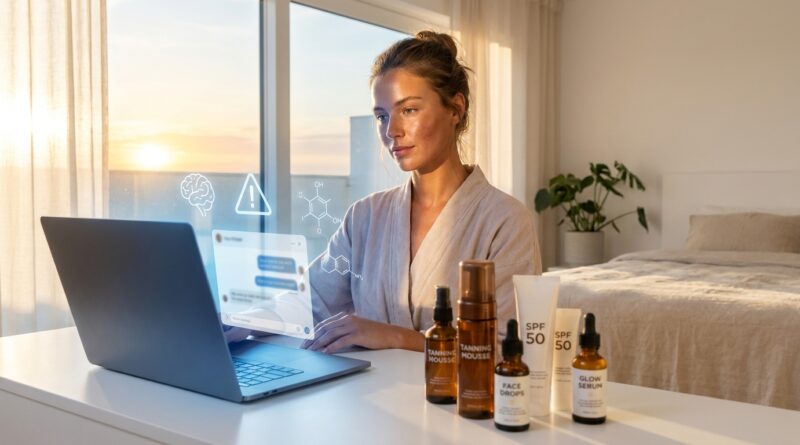
New ‘AI Tan-Safety Check’ Rule: How To Tell If Your Skincare Advice Bot Is Actually Safe For Your Sunless Glow
You ask a chatbot one quick question about self tanner, and suddenly it is giving you a full skincare routine like it knows your skin better than you do. That sounds convenient. It is also where things can go sideways fast. A new 2026 benchmarking study found that many AI bots sound confident while getting key details wrong on cosmetic chemistry, layering order, irritation risk, and even SPF use. That matters if you are mixing tanning drops with exfoliating acids, retinoids, barrier creams, or sunscreen. One bad suggestion can leave you with streaks, peeling, stinging skin, or worse, a false sense that you are protected in the sun. If you love a good glow but do not want to gamble with your skin barrier, the goal is not to avoid AI completely. It is to learn a quick tan-safety check so you can spot shaky advice before it touches your face or body.
⚡ In a Hurry? Key Takeaways
- AI skincare advice for self tanning safety is not safe by default. Treat it like a draft, not a final answer.
- Do a 60-second check for three things: active ingredients, product order, and any claim that self tanner changes SPF needs.
- If a bot ignores irritation, patch testing, sensitive skin conditions, or sun protection, do not follow that routine.
Why this new rule matters right now
More people are asking AI how to use bronzing mists, tanning waters, drops, and gradual lotions than are asking a dermatologist or licensed esthetician. That is understandable. AI is fast, free, and available at 11 p.m. when you are trying to get ready for a weekend trip.
The catch is simple. Fast answers are not the same as safe answers.
The new study making the rounds in 2026 tested large language models on beauty and skin-health questions. The weak spots were pretty consistent. Bots often missed how strong an ingredient really was, glossed over irritation warnings, mixed up the right order for layering products, and sometimes gave muddy advice around SPF. For self tanning, those are not small mistakes. They are the whole game.
What AI gets wrong about self tanning most often
1. It treats all “actives” like they are mild
A bot might tell you it is fine to use tanning drops with glycolic acid, salicylic acid, benzoyl peroxide, or a retinoid in the same routine. Sometimes that is technically possible. Often it is a bad idea, especially if you are using stronger formulas or already have dry, reactive skin.
Too much exfoliation can make self tanner grab unevenly. Retinoids can increase irritation and flaking. Benzoyl peroxide can throw off a routine and dry skin out fast. If the AI does not ask about product strength, frequency, or your skin history, it is guessing.
2. It confuses color with protection
This one is a big red flag. A sunless tan does not protect you from UV damage. It may make your skin look deeper in tone, but it does not replace sunscreen, hats, shade, or common sense.
If a chatbot even hints that a darker-looking glow changes your SPF needs, stop right there. That advice is unsafe.
3. It skips over barrier damage
People often think of self tanner as cosmetic only. But the routine around it matters. Over-cleansing, scrubbing too hard, stacking acids, and then adding tanning products can push a skin barrier from “a little dry” to red, itchy, and angry overnight.
Good advice should mention hydration, fragrance sensitivity, patch testing, and what to do if your skin burns or stings. Bad advice jumps straight to the glow.
4. It gives one-size-fits-all routines
Your face is not your legs. Your neck is not your elbows. And sensitive skin, eczema-prone skin, acne treatment routines, and pigment conditions all need extra care.
For example, if you are trying to even out tone on more delicate skin, this guide on New ‘Vitiligo-Cover Glow’ Rule: How To Use Sunless Tanner To Even Out Patches Without Harming Fragile Skin is a much better model than a generic chatbot answer, because it respects the fact that fragile skin needs a gentler plan.
The 60-second AI tan-safety check
Before you follow any bot-made routine, run through this quick filter.
Check 1: Did it ask what products you are already using?
If not, that is your first warning sign. Safe self tanning advice depends on whether you are using retinoids, exfoliating acids, acne treatments, prescription creams, or heavy barrier balms.
No context means low-trust advice.
Check 2: Did it clearly separate self tanner from sunscreen?
This should never be blurry. Self tanner adds color. Sunscreen protects from UV. They are not interchangeable, and one does not “boost” the other.
If the bot says to mix SPF directly into self tanner and hope for the best, be careful. That can affect application consistency and may lead to underapplying sunscreen.
Check 3: Did it mention patch testing?
Any decent recommendation should tell you to patch test a new tanner, especially if it contains fragrance, essential oils, strong DHA levels, or extra bronzers.
No patch test advice usually means the answer was built for speed, not safety.
Check 4: Did it explain the order of layers in plain English?
A safe answer should be simple. For most routines, that means using fewer variables, letting skincare dry down properly, and not piling irritating actives under a tanning product.
If the instructions are confusing, contradictory, or packed with too many steps, skip them.
Check 5: Did it flag obvious red-alert symptoms?
Look for words like burning, swelling, rash, oozing, severe itching, or sudden worsening of sensitivity. If those are missing, the bot may not be taking skin health seriously enough.
What safer AI skincare advice looks like
You do not need a chatbot to be perfect. You need it to stay in its lane.
Safer advice usually sounds like this:
- It asks whether the tanner is for face or body.
- It asks whether you use acids, retinoids, acne meds, or prescription products.
- It tells you not to count self tanner as sun protection.
- It suggests patch testing.
- It avoids strong claims when product percentages are unknown.
- It tells you to pause and ask a professional if you have very sensitive, inflamed, or medically treated skin.
That is the tone you want. Calm. Specific. Not flashy.
Three bot claims you should not trust without checking
“You can use all your usual actives with tanning drops.”
Maybe. Maybe not. It depends on the active, the strength, the area of skin, and how often you use it. This needs more detail than most bots provide.
“A tan look helps prevent burns.”
No. Color from DHA is not UV protection.
“Mixing everything together saves time and works the same.”
Sometimes mixing products changes how evenly they apply. It can also make it harder to know what caused irritation if your skin reacts. Simpler is usually safer.
How to use AI without letting it wreck your routine
Think of AI as a brainstorming tool. Not your final skin coach.
It is fine to ask for ideas like:
- “Can you help me build a simple self tanning schedule?”
- “What ingredients in this label might irritate sensitive skin?”
- “What questions should I ask before mixing tanning drops with my night routine?”
Then do one more step. Cross-check the answer against the product label, brand instructions, and a trusted human source if the routine involves strong actives, facial tanning, or a skin condition.
If a routine sounds too clever, too packed, or too convenient, that is usually the moment to slow down.
At a Glance: Comparison
| Feature/Aspect | Details | Verdict |
|---|---|---|
| Ingredient awareness | Good advice asks about acids, retinoids, acne treatments, fragrance, and skin sensitivity before suggesting a tanning routine. | If the bot skips this, do not trust the plan. |
| SPF accuracy | Self tanner gives color only. Sunscreen gives UV protection. They are separate jobs. | Any confusion here is a hard no. |
| Layering order | Safe routines keep steps simple, avoid overloading actives, and mention patch testing and irritation risk. | Clear and cautious beats complicated every time. |
Conclusion
AI skincare advice for self tanning safety can be useful, but only if you treat it like a rough draft that needs a human reality check. That matters right now because AI-written routines are already shaping how people mix self tanners with acids, retinoids, and SPF, while fresh 2026 research shows these systems still miss the small details that keep skin calm and protected. The good news is you do not need a chemistry degree to stay safer. You just need a quick habit: check the actives, check the layer order, and check for any nonsense around SPF. That 60-second pause can help you avoid barrier damage, patchy color, and risky UV shortcuts. And that is exactly where I Love Tanning can help most, by being the human filter that keeps new tech trends useful without letting them mess with your glow.