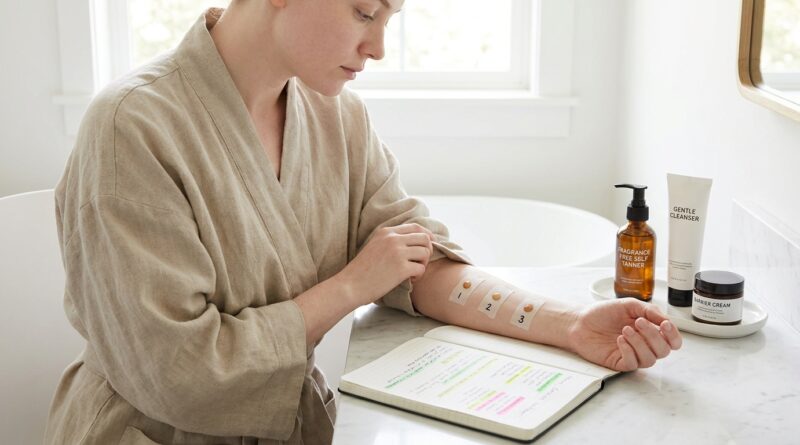
New ‘Allergy-Safe Tan’ Rule: How To Patch-Test Self Tanner Like A Derm So Your Glow Never Ends In Hives
You do everything right. You pick the “gentle” self tanner, skip the heavily scented one, and still wake up itchy, blotchy, or covered in tiny hives. It is maddening. And because most tanning advice only talks about getting an even glow, a bad skin reaction can leave you feeling like you somehow used the product wrong. Often, you did not. The problem is that “clean,” “fragrance free,” and “sensitive skin” on a bottle do not guarantee your skin will like what is inside.
If you have reactive, eczema-prone, or mystery-sensitive skin, a simple self tanner allergy patch test sensitive skin routine can save you from a full-body disaster. The good news is you do not need a lab coat or a dermatologist’s office to do it well. You just need the right spot, enough time, and a little patience. Think of it as a tiny dress rehearsal for your tan. If your skin objects, it does so in one small area, not all over your legs the night before a trip.
⚡ In a Hurry? Key Takeaways
- Patch test every new self tanner for 24 to 48 hours before full use, even if it says “fragrance free” or “for sensitive skin.”
- Apply a small amount to the inner arm or behind the knee, leave it on as directed, and watch for itching, redness, bumps, burning, or hives.
- If you react, stop using it right away and do not try to “push through.” A minor patch test rash is far better than a full-body flare.
Why self tanners are suddenly bothering more people
Self tanners are doing more than they used to. Many formulas now mix DHA, erythrulose, instant bronzers, plant extracts, preservatives, essential oils, shimmer, and masking fragrance to cover that classic tanning smell. That can mean more chances for sensitive skin to say no.
And here is the annoying part. The ingredient causing the reaction is not always the tanning active itself. For some people it is fragrance. For others it is a preservative, a botanical extract, or the temporary color guide. “Natural” ingredients can irritate skin too.
So if one self tanner made you miserable, that does not always mean all self tanners are off the table. It means your skin needs a safer way to screen them first.
What a real patch test should look like
A proper patch test is not a quick dab on your wrist for ten minutes. That only tells you so much. A better home test copies how the product will actually sit on your skin.
The best spots to test
Pick one small, discreet area where skin is fairly sensitive but easy to monitor. Good options include:
- Inner forearm
- Inside of the elbow
- Behind the knee
- Side of the neck or behind the ear for facial tanning drops, but only if your skin is not highly reactive there
If you have eczema, do not test on an active flare. Use calm, unbroken skin.
How much to apply
Use the amount you would normally spread over a small patch, about the size of a coin. Do not dilute it. Do not wash it off early unless the directions say to rinse after a certain time.
How long to wait
Give it 24 to 48 hours. That part matters. Some reactions show up fast, with burning or hives in minutes. Others build slowly and do not appear until the next day.
The clinic-style home routine that makes sense
Here is a simple method that is easy to repeat with any new bottle.
Step 1: Start with boring skin
No scrubs. No retinol. No shaving right before. No acids. You want your skin as calm and plain as possible so you are testing the tanner, not a skin barrier that is already annoyed.
Step 2: Test one product at a time
Do not test a self tanner the same day you switch body lotion, try a new body wash, and use a fragranced scrub. If your skin reacts, you will have no clue what caused it.
Step 3: Apply and leave it alone
Put the self tanner on your test spot. Let it dry. Wear loose clothing over it. Then ignore it, apart from checking for symptoms.
Step 4: Watch for more than color
You are not judging the shade yet. You are looking for warning signs like:
- Itching
- Stinging or burning
- Redness that spreads
- Raised bumps
- Dry, angry patches
- Hives
- Swelling
Step 5: Recheck at 48 hours
If the area still looks calm after two days, your odds are much better. Not perfect, but much better. Then you can move to a larger test area like part of your thigh before doing your whole body.
What counts as a fail
A patch test fails if your skin gets itchy, hot, raised, bumpy, swollen, or clearly more irritated than normal. Mild temporary warmth right after application can happen for some people, but it should fade quickly, not turn into a rash.
If you get hives, strong burning, facial swelling, or any trouble breathing, stop using the product and get medical help right away. That is not a “see if it gets better” moment.
Why “fragrance free” and “clean” can still go wrong
This trips up a lot of people. “Fragrance free” usually means no added fragrance, but a formula can still contain plant extracts or raw ingredients with their own scent. “Clean” is even fuzzier. It is more of a marketing word than a medical one.
That is why patch testing beats label trust every time. Your skin does not care what the front of the bottle promises. It reacts to the actual mix inside.
Common culprits in self tanners
You may not be able to identify the exact trigger on your own, but these are frequent troublemakers:
- Added fragrance or essential oils
- Preservatives
- Botanical extracts
- Color guides and bronzers
- DHA or erythrulose, less commonly, but it happens
- Alcohol-heavy formulas that sting damaged skin
If one mousse bothers you, a simpler lotion, serum, or clear formula might be easier for your skin. The only safe way to know is to test each one.
Extra tips for eczema-prone or very reactive skin
If your skin gets upset easily, stack the odds in your favor.
Pick simpler formulas
Fewer ingredients usually means fewer chances for irritation. Avoid products loaded with perfume, shimmer, and trendy plant extras if your skin has a history of reacting.
Do not test right after shaving or exfoliating
Freshly shaved skin can sting even with products you normally tolerate. Give your skin a day if you can.
Moisturize your skin barrier first, but not right before the test
In the days leading up to testing, keep your skin healthy with a plain, fragrance-free moisturizer. On test day, apply the tanner to clean, dry skin unless the product directions say otherwise.
Try a larger second-stage test
If the first patch is fine, test on a bigger hidden area before going all in. That catches issues that only show up when more skin is covered.
If labels are making you nervous, you are not overreacting
A lot of people feel spooked after one bad reaction. That is reasonable. Once your skin has blown up from a product, every new bottle can feel like a gamble. If your questions are also about pregnancy or breastfeeding safety, this guide on New ‘Pregnancy-Safe Tan’ Rule: How To Keep Your Glow While Every Label Suddenly Looks Scary is a helpful next read.
When to see a dermatologist or allergist
Home patch testing is useful, but it has limits. Get expert help if:
- You react to multiple self tanners
- You get hives instead of just mild irritation
- Your rash lasts more than a few days
- You have facial swelling or widespread eczema flares
- You want formal allergy testing for fragrances, preservatives, or other common triggers
A dermatologist may help you figure out whether you are dealing with irritation, a true allergic contact reaction, or a skin barrier problem that is making everything burn.
At a Glance: Comparison
| Feature/Aspect | Details | Verdict |
|---|---|---|
| Quick wrist dab | Fast, but often too short and too small to reveal delayed reactions | Better than nothing, but not reliable enough for sensitive skin |
| 24 to 48 hour inner-arm patch test | Tests the product more realistically and catches delayed itching, redness, and bumps | Best first step for most people |
| Small hidden area full-use test | Good second step after a clear patch test, especially for eczema-prone skin | Smart extra layer of safety before full-body tanning |
Conclusion
If self tanner has ever left you red, itchy, or covered in hives, you are not being dramatic, and you are definitely not alone. Allergy and sensitivity to self tanners is a quietly growing issue as formulas add more bronzers, fragrances, and preservatives while most glow advice keeps talking about shade and streaks. A simple, clinic-style patch test ritual at home gives you a much better shot at finding a product your skin can live with. That means fewer vacation-ruining rashes, fewer wasted bottles, and a lot more confidence if your skin is reactive but you still want that sunless glow.