New ‘DHA‑Allergy Safe List’ Rule: How To Find A Fake Tan That Won’t Break You Out In 2026
Your skin is not being dramatic. If a self tanner you used for years suddenly starts causing itching, burning, little bumps or full-on hives, that is maddening. It is also becoming more common. A lot of people are now using stronger skincare like retinoids, exfoliating acids, acne treatments and prescription creams, then putting fake tan right on top. That can turn a once-fine formula into a problem fast. Add in long ingredient lists, hidden fragrance blends and “clean beauty” labels that do not actually mean allergy-safe, and it gets confusing in a hurry. The good news is you do not need to give up your glow. You just need a better way to spot a formula that is less likely to upset reactive skin, plus a smart patch-test routine that catches trouble before it ends up all over your body.
⚡ In a Hurry? Key Takeaways
- “Hypoallergenic” is not a guarantee. The safest bet is a short ingredient list with no added fragrance, fewer plant extracts and fewer unnecessary actives.
- Patch test every new self tanner for 2 to 3 days on a small area before full-body use, especially if you use retinoids, acids, benzoyl peroxide or prescription creams.
- DHA itself can be irritating for some people, but many reactions are actually caused by fragrance, preservatives, bronzers or barrier-damaged skin.
Why people are suddenly reacting to fake tan
This is the part nobody tells you. Skin tolerance changes.
You might have used one mousse for years with zero issues. Then your skincare changed. Maybe you started tretinoin. Maybe you added glycolic acid pads. Maybe your barrier got cranky after over-exfoliating, winter weather, shaving, eczema, or a rash you never fully noticed.
Now the same tanner lands on skin that is more open, more inflamed and more likely to sting.
That does not always mean you have a true allergy. Sometimes it is irritation. Sometimes it is contact dermatitis. Sometimes it is a real allergic reaction to one ingredient that built up over time. The symptoms can look similar, which is why reading the label and patch testing matter so much.
What the “DHA-allergy safe list” idea should really mean in 2026
Let’s clear up one thing. There is no universal official “safe list” stamp that guarantees a self tanner will never cause a reaction. Brands can still use soft, comforting terms that sound safer than they really are.
For sensitive skin, a practical DHA allergy safe self tanner for sensitive skin 2026 checklist should look like this:
- Fragrance-free, not just “lightly scented”
- No essential oils if you are reactive
- Fewer botanical extracts
- No added exfoliating acids in the tan formula
- No color guide packed with lots of extra dyes if those bother you
- Shorter ingredient list when possible
- Clear preservative disclosure
- Patch-test instructions from the brand
That is the real-world version of “safe.” Not perfect. Just lower risk.
The ingredients most likely to cause problems
1. DHA
DHA, or dihydroxyacetone, is the ingredient that reacts with the top layer of your skin to create the tan color. It is the star of the whole show. It can also be irritating for some people, especially on broken, freshly shaved or over-exfoliated skin.
A true DHA allergy is possible, but it is not the only explanation when a tan goes wrong. Plenty of people blame DHA when the bigger trigger is something else in the bottle.
2. Fragrance
This is a huge one. “Fragrance” or “parfum” can stand in for a mix of chemicals, and brands do not always spell out every part of that mix. If your skin is touchy, fragrance is often the first thing worth avoiding.
If this sounds familiar, read New ‘Fragrance-Safe Tan’ Rule: How To Avoid Hidden Allergens In Your Self‑Tanner In 2026. It does a good job of showing why a tan can feel fine one month and suddenly set your skin off the next.
3. Preservatives
Preservatives keep your self tanner from turning into a science experiment. They are necessary, but some people react to certain ones more than others. Ingredients like phenoxyethanol and some formaldehyde-releasing preservatives can be irritating for very sensitive skin, though reactions vary a lot person to person.
4. Essential oils and plant extracts
Tea tree, citrus oils, lavender, eucalyptus, peppermint. They sound gentle because they come from plants. Sensitive skin often disagrees.
The same goes for long lists of fruit extracts, flower extracts and “skin-loving botanicals.” More ingredients means more chances for one of them to annoy your skin.
5. Added actives
Some formulas now include acids, vitamin C, retinol-like ingredients or “brightening complexes.” That may sound fancy, but if your skin is already reactive, a simpler formula is usually the safer move.
How to tell allergy from irritation
You do not have to diagnose yourself like a dermatologist on social media, but a few clues help.
Signs of irritation
- Stinging or burning right after application
- Dry, tight, angry-looking skin
- Patchy redness where your barrier is weak
- Worse after shaving, exfoliating or using retinoids
Signs of possible allergy
- Itchy rash
- Hives
- Swelling
- Reaction that gets worse over hours instead of fading
- Repeated flares with the same product or ingredient type
If you get facial swelling, trouble breathing, widespread hives or anything severe, skip the beauty troubleshooting and get medical help right away.
How to shop for a safer self tanner
Look for what is missing, not just what is advertised
Front-of-bottle claims are marketing. The ingredient list is the real résumé.
Good signs:
- Fragrance-free
- Minimal essential oils
- No strong added actives
- Short ingredient list
- Clear directions and patch-test advice
Proceed carefully with:
- “Clean”
- “Natural”
- “Non-toxic”
- “Botanical”
- “Sensitive” without details
Those words are not useless, but they are not proof.
Choose simpler formats when your skin is flaring
If you are in the middle of a sensitivity spell, go for the least complicated option. A basic lotion or water-based self tan with fewer cosmetic extras may be easier to tolerate than a heavily scented mousse with bronzer, shimmer and skincare actives mixed in.
Be careful with sprays
Sprays are convenient, but they create airborne particles. If you are sensitive, that can irritate your nose, eyes or lungs, especially in a small bathroom with poor ventilation. If you already know your skin is reactive, a lotion or gel may be a calmer choice.
How to patch test without wasting a week
This is the step most people skip. Then they end up marinating their whole body in regret.
Do this instead
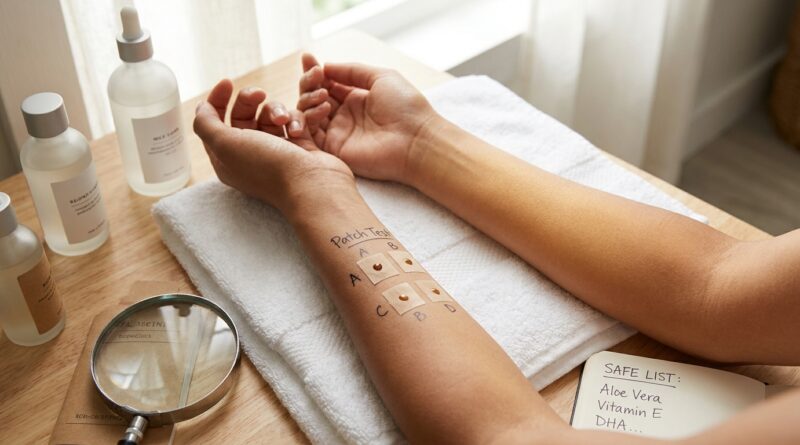
- Pick a small area like behind the knee, along the jawline if you tan your face, or inner forearm if that area does not usually react.
- Apply the self tanner exactly as you would normally use it.
- Wait 24 hours.
- If all looks fine, apply again to the same small spot.
- Watch for 48 to 72 hours for itching, burning, bumps, rash or swelling.
Why repeat it? Because some allergic reactions do not show up immediately. One test swipe is better than nothing, but two to three days is smarter.
What to avoid before applying self tanner
If you want the best shot at avoiding a flare, do not apply self tanner right after:
- Shaving
- Using retinoids
- Using AHAs or BHAs
- Benzoyl peroxide treatments
- Prescription acne creams
- Strong scrubs
- Waxing
Give your skin a little breathing room first. Calm skin is less reactive skin.
If your “holy grail” suddenly starts burning
Do not assume the brand changed the formula. Sometimes they did. Sometimes your skin changed instead.
Check these things:
- Did you start a new skincare product?
- Did you shave or exfoliate more aggressively?
- Is your skin barrier already irritated?
- Did the product get old or start smelling different?
- Did the brand quietly add fragrance or extracts?
If you still have the old bottle and a new one, compare ingredient lists side by side. Even small changes matter when your skin is sensitive.
What to do if you react
First, rinse it off if the reaction starts quickly and feels active, especially if there is burning or stinging.
Then keep it simple:
- Use a bland, fragrance-free moisturizer
- Stop strong actives for a few days unless your doctor told you otherwise
- Do not “scrub it off” aggressively
- Take photos so you can track what happened
- Write down the product name and ingredient list
If the rash is intense, spreading, blistering or keeps coming back, see a dermatologist. Patch testing at a doctor’s office can save you a lot of guessing.
At a Glance: Comparison
| Feature/Aspect | Details | Verdict |
|---|---|---|
| Fragrance-free formula | No added parfum or masking scent. Usually a better pick for reactive skin. | Best place to start |
| “Clean” or botanical formula | May still contain essential oils, extracts and long blends that trigger sensitivity. | Read the label carefully |
| Using self tanner with strong skincare | Retinoids, acids and acne treatments can weaken the barrier and increase burning or rash risk. | Pause actives and patch test first |
Conclusion
If your skin keeps freaking out over fake tan, you are not imagining it and you are not alone. Reactions really are getting more common as people layer self tanner over stronger skincare, barrier-repair products and prescription treatments, while brands keep selling “clean” or “hypoallergenic” formulas that can still hide fragrance blends, preservatives and plant extracts. The safest path in 2026 is simple. Choose a formula with fewer extras, learn which ingredients tend to trigger your skin, ignore vague marketing claims and patch test every single new bottle before going all in. That gives you the best chance of fewer painful flares, fewer wasted purchases and a much easier way to keep your glow while you figure out what your skin will actually tolerate.