New ‘Retinol-Tan Reset’ Rule: How To Use Anti-Aging Actives Without Stripping Your Sunless Glow In 2026
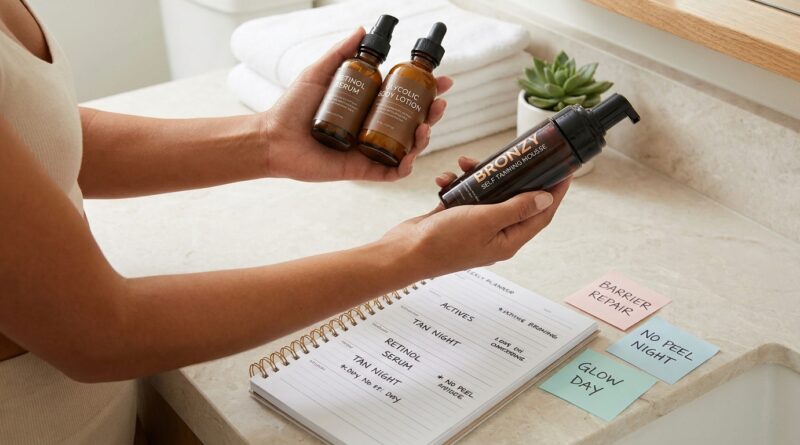
You are not imagining it. You finally get a smooth, believable self tan, then one night of retinol, a glycolic body wash, or your acne treatment rolls through and your color looks patchy by morning. That is frustrating, especially when the bottle promised a week of glow. The good news is this usually is not bad tanning technique. It is a timing problem. If you have been wondering, can I use retinol and glycolic acid with self tanner, the answer is yes, but not all at once and not in the same way on every part of your body. Actives that speed up skin turnover can fade DHA color faster, grab onto dry spots, and stir up irritation if your barrier is already stressed. The fix is to separate your tan days from your strong active days, keep skin hydrated, and be extra careful with prescription products.
⚡ In a Hurry? Key Takeaways
- You can use retinol and glycolic acid with self tanner, but they will fade a tan faster if used too close to application.
- Leave a buffer. Apply self tanner on a night when you are not using retinoids, acids, or strong acne treatments, then wait before restarting them.
- If you use prescription acne meds or your skin stings easily, protecting your skin barrier matters more than squeezing out one extra tan day.
Why your tan disappears so fast
Self tanner works by coloring the top layer of dead skin cells. Retinol, glycolic acid, salicylic acid, benzoyl peroxide, and prescription acne treatments can speed up how quickly that top layer sheds. So when your skincare gets more serious, your tan often gets shorter.
That is the whole “Retinol-Tan Reset” idea in plain English. You do not need to choose between anti-aging skincare and a sunless glow. You just need a routine where they are not fighting each other.
So, can I use retinol and glycolic acid with self tanner?
Yes. You can. But you probably should not use them right before or right after tanning.
Retinol and self tanner
Retinol and stronger retinoids can make a tan fade unevenly, especially around the mouth, chin, neck, chest, knees, and hands. On the face, they can also make self-tan drops look blotchy if your skin is dry or peeling.
Best approach. Skip retinol the night before tanning, the night you tan, and usually the night after. Then restart slowly depending on how your skin looks.
Glycolic acid and self tanner
Glycolic acid is even more obvious because it exfoliates. That means it can remove self-tan color quickly and leave you with lighter patches where the product hits hardest.
Best approach. Use glycolic acid as part of your prep a day or two before tanning, not as an aftercare step while you are trying to hold onto color.
Acne meds and self tanner
Prescription retinoids, benzoyl peroxide, clindamycin combos, and medicated body washes can all mess with your tan. Some fade color. Some dry out skin so badly that fresh self tanner grabs in odd places. Some, like benzoyl peroxide, can also bleach fabrics, so be careful with towels and sheets.
If your acne treatment is doctor-prescribed, your skin health comes first. A nice tan is never worth a raw, angry barrier.
The new rule for 2026: separate “reset nights” from “tan nights”
Think of your week in two lanes.
Lane 1: Reset nights
These are the nights for retinol, glycolic acid, and stronger acne treatments. Their job is to smooth, clear, and renew skin.
Lane 2: Tan nights
These are for self tanner, a plain moisturizer, and not much else. Their job is to lay down even color and keep the skin barrier calm.
When people stack everything at once, that is when the trouble starts. A little planning saves money, time, and a lot of patch-fixing.
A realistic routine that actually works
48 to 24 hours before self tanner
Exfoliate gently if you need to. This is the time for glycolic body wash or a mild scrub, not right after tanning. Shave or remove hair early enough that your skin is calm by tan time.
If you are using facial retinol, consider taking one night off before applying face tan drops or mousse.
The day of tanning
Keep it simple. Clean, dry skin. No strong acids. No retinoids. No heavy oily lotions right before application unless you are using a tiny amount only on dry zones like elbows, knees, ankles, and hands.
If you use an express formula, timing matters even more because those products can already be a little less forgiving. If that sounds familiar, read New ‘Express-Tan Safety’ Rule: What 1-Hour Self-Tanners Are Really Doing To Your Skin In 2026.
The first 24 hours after tanning
Do not go straight back to your strongest actives. Let the color develop and let your skin settle. Use a bland moisturizer. Avoid long hot showers, rough washcloths, and anything that stings.
Days 2 to 4
You can usually restart some actives carefully, but be strategic. If your face fades faster than your body, that is normal. Many people use retinol on the face more often, and they cleanse more thoroughly there too.
On the body, consider using glycolic or retinol only on areas you are not actively trying to keep deeply tanned, or cut back the frequency until your tan fades naturally.
Best ways to stop patchiness
Moisturize like it matters, because it does
Dry skin sheds unevenly. That makes self tanner look patchy whether you use actives or not. A plain, fragrance-light moisturizer can help your tan wear off more evenly.
Do not treat every body part the same
Your chest may tolerate a face retinoid poorly. Your legs may hold color well. Your elbows and knees are always drama queens. Adjust by area.
Be careful with “active” body washes
A glycolic or salicylic wash used daily in the shower can quietly erase your tan faster than you expect. If your glow keeps vanishing, that bottle may be the reason.
Use tan maintenance, not tan punishment
If your color dips, top up with a gradual tanning lotion instead of piling on more acid to “smooth things out.” Exfoliating a patchy tan in the middle of the week often makes it worse.
What about the face?
The face is the trickiest area because it gets the most skincare. If you are serious about retinol, tretinoin, or acne treatment, accept that facial self tan may not last as long as body tan. That is normal.
A better plan is to use less face tanner more often, rather than one heavy application. Tan drops mixed into moisturizer can be easier to control than trying to force a week-long result while using strong actives.
When to press pause
Stop and simplify if your skin is burning, peeling, itchy, or suddenly extra reactive. A patchy tan is annoying. A damaged skin barrier is worse.
Also be cautious if you recently started prescription tretinoin, adapalene, tazarotene, benzoyl peroxide, or a strong acid routine. New users often overdo it without meaning to. Let your skin settle before chasing perfect color.
At a Glance: Comparison
| Feature/Aspect | Details | Verdict |
|---|---|---|
| Retinol with self tanner | Can be used in the same overall routine, but fades tan faster and may cause patchiness if used too close to tan application. | Use on separate nights when possible. |
| Glycolic acid with self tanner | Great for pre-tan exfoliation, bad for preserving fresh DHA color after application. | Best before tan day, not after. |
| Prescription acne treatments | More likely to trigger dryness, irritation, and uneven fading, especially on the face, chest, and back. | Prioritize skin barrier and follow your prescriber’s guidance. |
Conclusion
You do not have to choose between better skin and a believable glow. Right now a lot of people are upgrading to serious skincare actives like retinoids, glycolic acid, and prescription acne treatments while also moving away from UV tanning and toward safer sunless options. That is a smart shift for long-term skin health. It just needs better timing. When formulas that speed up cell turnover hit freshly tanned skin, they can erase color, stir up redness, and make tan cling to dry spots. A simple routine that separates active nights from tan nights helps you protect your skin barrier, avoid unnecessary irritation, and actually get the wear time you paid for from your mousse, drops, or spray tan. The goal is not perfection. It is skin that feels good and color that fades like it is supposed to, not all at once in two blotchy showers.