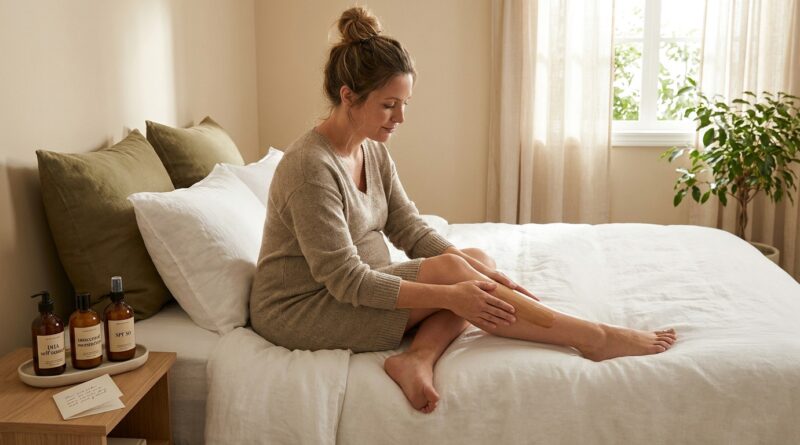
New ‘Sunless Pregnancy Glow’ Rule: How To Use Self‑Tanner Safely When You’re Expecting In 2026
Pregnancy has a special way of turning ordinary shopping into a mini panic attack. One minute you are reaching for your usual self-tanner, and the next you are squinting at “DHA,” “bronzing drops,” and “spray mist” like they are written in code. If you are asking, “Is self tanner safe during pregnancy 2026?” you are not overthinking it. You are being careful, and that is fair. The good news is that most experts still treat topical self-tanner as lower risk than UV tanning, because it colors the top layer of skin rather than using sun or tanning beds. The main caution points are inhaling spray mist, using products on broken or irritated skin, and ignoring your own doctor’s advice if you have a high-risk pregnancy or skin condition. So yes, for many expecting parents, self-tanner can still be on the table. You just want to use it in the safest, least messy way possible.
⚡ In a Hurry? Key Takeaways
- Yes, self-tanner is generally considered lower risk than sunbathing or tanning beds during pregnancy, especially lotions, creams, and mousses used on intact skin.
- If you are expecting, skip inhaling spray mist, patch test first, and choose well-ventilated application with gloves or a mitt.
- The biggest practical concerns are DHA inhalation, extra-sensitive pregnancy skin, and ingredient anxiety, not a proven major risk from normal topical use.
So, is self tanner safe during pregnancy in 2026?
For most people, the short answer is yes, with some common-sense safety steps.
The ingredient people worry about most is DHA, short for dihydroxyacetone. That is the sugar-derived ingredient that reacts with dead skin cells on the surface of your skin to create the tan look. Based on the evidence we have, DHA mainly works on the outermost layer of skin, which is why many doctors and health organizations have generally viewed topical self-tanners as a lower-risk option than UV exposure.
That said, “lower risk” does not mean “do whatever.” Pregnancy is a time to be pickier. If a product creates a fine mist you can breathe in, or if your skin is irritated, freshly shaved, or broken, it makes sense to be more cautious.
Why people are suddenly nervous about DHA, drops, and spray booths
Honestly, because the internet is bad at nuance.
One post says all self-tanner is toxic. Another says everything is fine. Then product labels are vague, and most advice ends with “ask your doctor.” Helpful in theory, not so helpful at bedtime when you are holding a bottle.
What helps is breaking the issue into three separate questions:
1. Topical DHA on skin
This is the version in lotions, mousses, gels, and many tanning drops. It is generally considered the least concerning form because it sits and reacts on the skin’s surface.
2. Spray tanning and booths
These raise more concern because of inhalation. Even if the formula itself is similar, breathing in aerosolized DHA is not the same as rubbing a lotion on your legs.
3. Extra ingredients
Fragrance, essential oils, actives, preservatives, and botanical extracts can be just as important as the tanning ingredient, especially when pregnancy makes your skin more reactive.
The safest way to use self-tanner while pregnant
If you want the glow with the least stress, creams, lotions, and mousses are usually the easiest starting point.
Choose the format carefully
Look for products you apply with your hands or a mitt rather than a cloud of mist. Tanning drops can also be a reasonable option if you mix them into a basic moisturizer and apply them carefully, but do not treat “drops” as automatically safer just because the bottle looks cute and clinical.
Patch test first
Pregnancy can make your skin act like a stranger. A product you have used for years can suddenly sting, itch, or turn patchy. Test a small area and wait 24 hours if you can.
Do not apply on broken or irritated skin
Skip self-tanner over rashes, eczema flares, cuts, or skin you just aggressively exfoliated. Also be careful right after shaving if your skin tends to get inflamed.
Use it in a ventilated room
Open a window. Turn on the fan. This matters most if the product has a strong scent or any spray component.
Wash your hands, or use a mitt
That is partly for streaks, partly for limiting unnecessary contact. It is not about panic. It is just a cleaner, easier routine.
What about spray tans during pregnancy?
This is where the answer gets more cautious.
Many pregnant people still get spray tans, but the concern is inhalation and accidental exposure to eyes, nose, and mouth. If you are standing in a booth or being sprayed professionally, there is a real chance you will breathe in some mist unless strong precautions are used.
If you do choose a spray tan, reduce the exposure as much as possible:
- Ask for good ventilation.
- Use nose filters if offered.
- Keep lips closed during spraying.
- Wear eye protection if available.
- Avoid extra passes near the face.
Still, if your goal is the most pregnancy-cautious route, a mousse or lotion at home is usually the simpler choice.
Are tanning drops safe in pregnancy?
Usually, they fall into the same general category as other topical self-tanners. What matters is what is in them and how you use them.
Tanning drops often contain DHA, plus skincare ingredients. That can be fine, but it also means you should check the full formula, not just the front label. If the drops include strong acids, retinoids, or heavily fragranced essential oils, that changes the conversation.
Use a plain moisturizer as your mixer, apply lightly, and avoid getting mist or product near your mouth or nose. If you want a more detailed label-reading guide, this piece is worth bookmarking: New ‘Pregnancy-Safe Tan’ Rule: How To Keep Your Glow While Every Label Suddenly Looks Scary.
Ingredients that deserve a second look
DHA gets all the attention, but it is not the only thing on the bottle.
Fragrance
Not always unsafe, but it can be a problem if you are suddenly sensitive to smells or prone to irritation.
Essential oils
Some people prefer them. Some pregnant people cannot tolerate them at all. “Natural” does not always mean gentle.
Retinoids or strong actives
These are more likely to show up in face products or glow serums than in classic body tanners. Check carefully.
High-alcohol formulas
These can be drying and make already-sensitive skin feel worse.
If you are in the first trimester, does the advice change?
This is when many people get extra cautious, and that is understandable.
The basic safety logic stays the same. Topical self-tanner is generally treated as lower risk than UV tanning. But if using it will make you spiral with worry, it is also okay to wait. Sometimes the best beauty choice in pregnancy is the one that lets you sleep at night.
If you have had complications, severe skin reactions, or your care team has told you to simplify products, follow that advice first.
What should you avoid completely?
A few things are easier to call.
- Tanning beds. These use UV exposure and are not the safer substitute.
- Sunbathing for the sake of a tan. Pregnancy can increase heat sensitivity and worsen melasma.
- Spraying your face directly with a mist self-tanner in a closed bathroom.
- Using any product that burns, itches, or causes a rash just because you already paid for it.
A calm, practical routine that works
Best low-stress option
Use a fragrance-light mousse or lotion on your body, in a ventilated room, with a mitt, after a patch test.
For your face
Go lighter than usual. Pregnancy skin can grab color unevenly. If you use drops, start with fewer than you think you need.
For special events
If you want a professional spray tan, ask questions first. Ventilation, protective barriers, and how they handle the face area matter.
When you should ask your doctor
Not because the internet gave up, but because your situation may genuinely need personal advice.
- You have asthma or breathing issues and are considering a spray tan.
- You have eczema, psoriasis, melasma, or frequent skin reactions.
- You are using prescription skincare.
- You have a high-risk pregnancy and have been told to minimize non-essential exposures.
At a Glance: Comparison
| Feature/Aspect | Details | Verdict |
|---|---|---|
| Topical self-tanner lotion or mousse | DHA applied directly to skin, little to no airborne mist, easiest to control at home | Best pregnancy-cautious option for most people |
| Spray tan booth or salon spray | Same general tanning concept, but more chance of inhaling mist or getting product in eyes, nose, or mouth | More caution needed, reduce inhalation if you choose it |
| Tanning drops | Often DHA plus extra skincare ingredients, easy to overapply if formula is concentrated | Usually fine if formula is simple and used carefully |
Conclusion
If you have been bouncing between scary posts and vague answers, here is the steady middle ground. For most expecting parents, self-tanner is generally seen as a safer choice than tanning beds or intentional sun tanning, especially when you stick to lotions, creams, mousses, or carefully used drops on healthy skin. The parts that deserve extra caution are spray inhalation, strong extra ingredients, and your own skin’s new pregnancy-era drama. That is why this question keeps exploding in forums in 2026. People want a real answer, not a lecture. With a few smart steps, you can make a calm, informed choice that fits your comfort level. And if you want a more label-focused guide, the linked pregnancy-safe tan article above is a helpful next read to share in your group chat, bump group, or late-night search spiral.