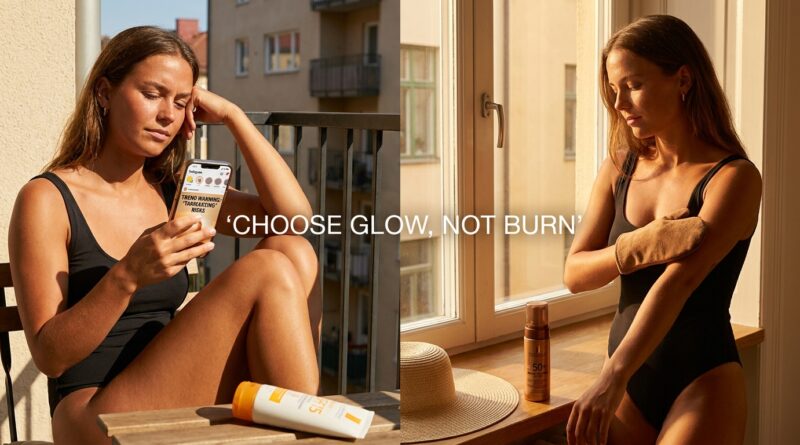
New ‘Tanmaxxing Myth’ Rule: The Viral “Base Burn” Trend That’s Pushing Gen Z Back To Real Sun Instead Of Safer Sunless Glow
If your TikTok feed has turned tanning into a full-time debate, you are not imagining it. One video says sunscreen blocks your glow. The next says you need a “base burn” before vacation. Then someone else claims self tanner is somehow just as bad as actual sun. It is confusing, and when the topic is skin cancer, premature aging, and burning your face on purpose, confusing is the last thing anyone needs. Here’s the simple truth. The viral tanmaxxing base burn trend vs sunless tanning safety debate is not a close call. A “base burn” is still skin damage. A tan from UV exposure is still your skin reacting to injury. Sunless tanning products, while not perfect for every skin type or every situation, do not work by damaging your skin with ultraviolet radiation. If you want the bronzed look without gambling with your future skin, there is a safer lane here.
⚡ In a Hurry? Key Takeaways
- The “base burn” idea is a myth. Burning or tanning unprotected does not protect your skin. It damages it.
- If you want color, use self tanner or a spray tan, then still wear broad-spectrum SPF 30 or higher outdoors.
- Sunless tanning has its own cautions, like patch testing and avoiding inhaling spray mist, but it is much safer than intentional UV tanning.
What “tanmaxxing” is really telling people to do
“Tanmaxxing” is the social media version of chasing the deepest tan possible, as fast as possible. In practice, that often means less sunscreen, more direct midday sun, longer tanning sessions, or the old “I need a little burn first so the tan sticks” logic.
That last part is where things get especially messy. The phrase “base burn” sounds almost clinical, like it is a normal prep step. It is not. A burn is not a beauty hack. It is skin damage.
Dermatologists have been clear on this for years. There is no healthy burn. There is no safe tan from UV exposure. And there is no magic starter tan that suddenly makes future sun exposure okay.
The “base burn” myth, in plain English
Why people think it works
The belief goes like this. If you get a little pink or lightly tan at the start of summer, your skin builds up protection and then you can tan more easily later without burning.
It sounds believable because skin does darken after UV exposure. But that darker color is not proof that your skin is stronger. It is proof that your skin has gone into defense mode after being hit by UV radiation.
What is actually happening in your skin
When UV rays hit your skin, they damage DNA in skin cells. Your body responds by making more melanin, the pigment that darkens skin, to try to reduce further harm. That is what a tan is. A stress response.
If you burn, that damage is even more obvious. But even if you do not turn lobster red, UV tanning still adds up over time. Fine lines, dark spots, rough texture, collagen loss, and increased skin cancer risk are all part of that story.
Does a “base tan” give any protection?
Very little, and not enough to matter in the real world. Experts often compare a base tan to wearing a sunscreen with a very low SPF, nowhere near what is recommended. It is not a substitute for sunscreen. It is not a free pass for extra sun. And if you had to get UV damage to get it, that trade was already bad.
Sunless tanning is not the same thing as sun tanning
This is where TikTok often mashes together totally different things. A self tanner, a spray tan, and laying out in direct sun are not three versions of the same risk.
Most self tanners use DHA, short for dihydroxyacetone. It reacts with proteins in the very top layer of your skin to create a temporary darker look. That color sits on the surface and fades as dead skin cells shed. It does not mean your skin has more melanin. It does not mean you are protected from the sun.
But that also means it is not tanning you through UV damage. That is the big distinction people miss in the tanmaxxing base burn trend vs sunless tanning safety conversation.
Are self tanners and spray tans perfectly risk-free?
No product is perfect for everyone, and it is fair to ask questions. But “not perfect” and “as dangerous as intentional UV exposure” are not the same thing.
What to watch for with self tanner
You can have irritation, breakouts, or allergic reactions from fragrances, preservatives, or other formula ingredients. If you have sensitive skin, patch test first. If you are acne-prone, use facial formulas made for the face instead of putting body mousse everywhere.
What to watch for with spray tans
The main concern is not UV damage. It is avoiding inhalation or getting product in your eyes or mouth during the spray process. Good salons usually offer nose filters, lip balm, and eye protection. If you are using a home spray setup, make sure the space is ventilated and avoid breathing in the mist.
Important reminder
A spray tan or self tanner does not replace sunscreen. People sometimes feel “done” after they get color, then skip SPF because they already look tan. That is how accidental burns happen fast.
Why this trend is especially risky for Gen Z
Gen Z grew up with better skin care advice than a lot of older generations did. Daily SPF, barrier repair, retinoids, acne-safe products, all of that became normal conversation. So it is frustrating to watch some of that progress get undercut by trendy “sun rules” that are basically old myths in new packaging.
There is also a beauty pressure angle here. Bronze skin is still sold as healthy, toned, expensive-looking, vacation-ready. Social platforms reward fast visual results, not long-term skin health. A creator can show “day one pale, day three golden” and rack up views. What they cannot show as easily is the DNA damage, collagen breakdown, or future biopsy.
That does not mean wanting a tan is shallow. It means the aesthetic is real, and people want options that let them enjoy it without doing something reckless.
How to get the bronzed look without following bad advice
Option 1: Self tanner at home
Pick a formula that matches your routine. Mousses tend to develop deeper color. Drops can mix into moisturizer. Lotions are often easier for beginners and fade more evenly.
Prep helps a lot. Exfoliate gently, moisturize dry spots like elbows and knees, and use a mitt if the formula calls for one. If you only care about looking a little warmer, go lighter than your first instinct. The most believable tan is usually one shade less dramatic than the one social media pushes.
Option 2: Professional spray tan
This is great if you want a more even result for an event or trip. Ask the salon what solution they use, how long the color takes to develop, and what aftercare they recommend. Wear loose clothes after the appointment and do not book it right before a sweaty workout.
Option 3: Bronzing makeup or body makeup
Underrated. If you only want weekend color, body bronzer, bronzing drops, or wash-off leg makeup can give the effect without committing for a week.
What safe sun behavior actually looks like
If you are outside, especially during peak UV hours, this is the boring advice that works:
- Use broad-spectrum SPF 30 or higher.
- Reapply every two hours, and after swimming or sweating.
- Wear a hat, sunglasses, and cover-ups when you can.
- Use extra care around water, sand, and concrete, which reflect sunlight.
- Check the UV index, not just the temperature. Cool days can still bring serious UV exposure.
That might not sound glamorous, but neither does trying to reverse years of sun damage later.
What to say when someone insists “I tan, I don’t burn”
This is one of the most common defenses of intentional tanning. The problem is that tanning itself still means UV injury. Burning is worse, yes. But “I only tan” is not the same as “my skin is safe.”
Another thing people miss is that darker skin tones can still get sun damage and skin cancer. The risk pattern is different, but nobody is immune to UV harm.
A practical rule for sorting TikTok advice from real advice
If the tip asks you to ignore sunscreen, earn your protection through a burn, or treat visible skin damage like a shortcut, it is bad advice.
If the tip gives you cosmetic color without telling you to damage your skin first, it is probably in the safer category, as long as you use the product correctly.
You do not have to choose between wanting to look glowy and wanting to be smart. The internet loves false choices. Your skin does not.
At a Glance: Comparison
| Feature/Aspect | Details | Verdict |
|---|---|---|
| Base burn trend | Encourages intentional UV exposure or burning to “build” a tan | Myth. Not safe. |
| Sunless tanning | Uses cosmetic color on the skin’s surface without UV tanning | Safer option, with basic product precautions |
| Sunscreen role | Helps protect against UV damage, whether you are pale, tan, or spray tanned | Non-negotiable for outdoor time |
Conclusion
The biggest thing to remember is this. A bronzed look and safe skin are not opposites. Viral trends can make it feel like you have to pick one, but you do not. Right now, some of the loudest videos online are pushing people, especially Gen Z, toward intentional burning or unprotected tanning right in the middle of skin cancer season. That is not harmless beauty advice. It is risky misinformation with a filter on it. A grounded, beauty-first approach means calling the base burn myth what it is, while also giving people realistic ways to get the glow they want. If you love looking tan, go sunless, keep wearing SPF, and let your future skin benefit from the choice your current self made.