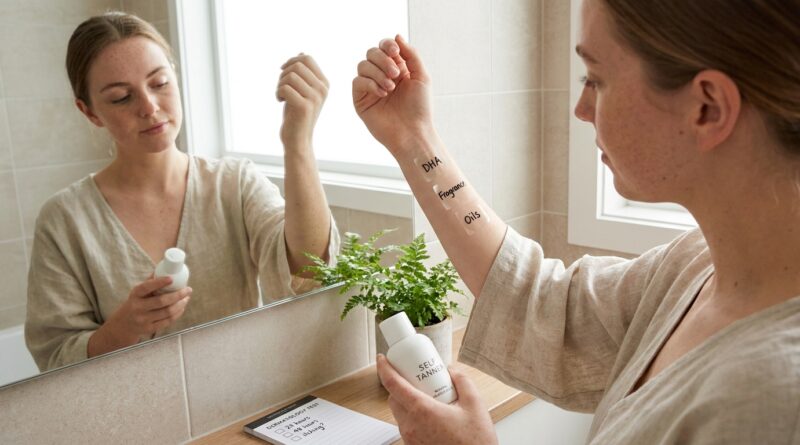
New ‘Allergy-Safe Glow’ Rule: How To Patch-Test Self Tanner Like Derms Do In 2026
Nothing is more annoying than using the same self tanner you have used for months, then suddenly ending up with itching, burning, hives or a weird rash you cannot explain. It feels unfair, especially if you switched to sunless tanning because your skin is sensitive, eczema-prone or allergy-prone in the first place. That is why the new “allergy-safe glow” rule matters. If you want to know how to patch test self tanner for allergies, the short answer is this: test the exact product on a small area of clean skin for at least 24 to 48 hours before using it head to toe, and check both the ingredient list and the delayed skin reaction. A quick swipe on your wrist for ten minutes is not enough. You need to test like a dermatologist would. That means the right spot, the right timing, and a little patience before you chase that glow.
⚡ In a Hurry? Key Takeaways
- Patch test self tanner on a small hidden area, then wait 24 to 48 hours before full use.
- Test the exact formula you plan to use, including face tanner, mousse, mist or drops, because one “fragrance free” product can still react differently than another.
- If you have eczema, nut allergies, fragrance sensitivity or a history of hives, stop at the first sign of burning, swelling or spreading redness and ask a dermatologist if needed.
Why trusted self tanners are suddenly causing problems
Skin reactions are not always about one “bad” ingredient. Sometimes your skin barrier is weaker than usual. Sometimes a brand changes its formula. Sometimes your immune system decides it no longer likes something that used to be fine.
That is why more people are reacting to products they once trusted. Self tanners now come with more active ingredients, more botanical extracts, more scent-masking agents and more “skin care” add-ons. Some are helpful. Some are not. The mix can make it harder to spot what your skin is reacting to.
And yes, even “clean,” “sensitive skin,” “fragrance free” or “natural” formulas can still trigger trouble.
How to patch test self tanner for allergies, step by step
1. Test the exact product you plan to use
This is the biggest mistake people make. They patch test one self tanner, then assume another mousse from the same brand is also safe. Not necessarily.
Different shades, finishes and application styles often use different fragrance blends, preservatives, oils or bronzers. Test the specific bottle going on your skin.
2. Pick the right patch-test spot
Use a small area that is easy to monitor but easy to hide. Good choices include:
- Inner forearm
- Behind the ear for facial formulas
- Along the jawline for face tanner
- Inner elbow or side of the neck if your skin usually reacts there first
- Inner thigh for body tanner if you want a more “body-like” test area
If you are testing a face product, do not only test it on your arm. Facial skin can react very differently.
3. Start with clean, dry skin
Wash the area with a gentle cleanser. Do not exfoliate right before testing. Do not apply retinol, acids, benzoyl peroxide, steroid cream or heavy moisturizer to that spot first unless the product directions specifically say otherwise.
You want a clean baseline, not skin that is already irritated.
4. Apply a small amount and leave it on
Use the product exactly the way you would normally use it. If it is a mousse, apply a dab. If it is a mist, use one spray on the test zone. If it is tanning drops, mix them the way you plan to use them.
Then leave it alone. Do not wash it off early unless the directions say to rinse after a set time.
5. Wait longer than you think
This is where the 2026 “allergy-safe glow” rule is more strict. Watch for reactions at these points:
- Within 30 minutes: stinging, burning, intense itch, swelling
- At 8 to 12 hours: redness, heat, rash, tiny bumps
- At 24 hours: delayed irritation, dryness, eczema flare
- At 48 hours: full allergic-style reaction, hives or rash spread
If you are highly sensitive, give it the full 48 hours. Quick patch testing is better than nothing, but delayed reactions are common.
6. Check more than color
Do not judge the test only by whether the tan looks streaky or orange. You are looking for:
- Itchiness
- Burning
- Warmth
- Raised bumps
- Dry scaly patches
- Swelling
- Rash that spreads outside the test area
If any of those happen, stop there. Do not “see if your body likes it better.”
Where to patch test if you have sensitive skin, eczema or facial redness
If your face is the problem area, be extra careful. Facial skin is thinner, more reactive and more likely to be using active skin care at the same time.
For face tanner, test behind the ear first, then on a tiny section of the jawline if the first test is calm after 24 hours. Wait another 24 hours before applying all over.
If you have eczema, avoid patch testing on a broken, raw or actively flaring patch. That only tells you the product hurts damaged skin, which you already know. Test nearby healthy skin instead.
If you want an even more detailed walkthrough, New ‘Patch-Test Glow’ Rule: How To Safely Test Self Tanner On Sensitive Skin Before You Commit Head‑To‑Toe is a smart companion read.
Ingredient red flags to circle before you buy
You do not need a chemistry degree. Just know the usual suspects.
Fragrance and parfum
Fragrance is still one of the most common triggers for sensitive skin. “Unscented” can still include masking ingredients. “Fragrance free” is usually the safer bet, but still patch test it.
Essential oils and plant extracts
Tea tree, citrus oils, lavender, eucalyptus and peppermint can bother reactive skin. Natural does not always mean gentle.
Nut oils
If you have a tree nut allergy, look carefully for almond oil, argan oil, macadamia oil or kukui nut oil. Not every person with a nut allergy reacts on skin contact, but it is not something to guess about casually.
Preservatives
Some people react to preservatives more than the tanning ingredient itself. Watch for methylisothiazolinone and related preservatives if you have reacted to cosmetics before.
DHA and erythrulose
These are the tanning agents that create color. DHA is still the most common. Erythrulose is often added for a slower, softer fade. Most people tolerate them well, but either can still irritate very sensitive skin, especially when paired with fragrance or alcohol.
Alcohol-heavy mists
Fast-drying sprays can feel elegant, but high alcohol content may sting compromised skin or trigger facial dryness.
What counts as a failed patch test
A failed patch test is not just dramatic hives. It also includes smaller warning signs that tell you your skin is not happy.
- Burning that lasts more than a few minutes
- Persistent itching
- Redness that gets darker instead of fading
- Tiny pimples or bumps
- Dry cracked skin
- A rash outside the area you applied
- Eye irritation or breathing symptoms from a spray or mist
If you get swelling, wheezing, lip tingling or widespread hives, stop using the product and get medical help right away.
Common mistakes that make patch tests useless
Testing for only 10 minutes
That catches immediate stinging, not delayed allergy or irritation.
Testing on skin that is different from where you will use it
Your arm is not your face. Your thigh is not your neck.
Trying several new products at once
If you test a scrub, a barrier cream and a self tanner together, you will not know which one caused the problem.
Ignoring recent skin stress
If you just shaved, waxed, exfoliated, used retinoids or had a facial, your skin may react more strongly than usual. Wait until it calms down.
Best practice checklist before full-body tanning
- Read the ingredient list before buying
- Avoid known triggers such as fragrance or nut oils if those bother you
- Patch test the exact formula
- Wait 24 to 48 hours
- Test face products on facial-adjacent skin
- Do not test on broken or flaring skin
- Do not use active exfoliants or retinoids right before the test
- Take a photo of the test area so you can compare changes later
- Only go full-body if the test area stays calm
At a Glance: Comparison
| Feature/Aspect | Details | Verdict |
|---|---|---|
| Patch-test timing | Best practice is 24 to 48 hours, not a quick same-day check | Longer wait is safer |
| Test location | Use a small hidden area that matches where the product will be used, like jawline for face tanner | Match the body area whenever possible |
| Ingredient screening | Look for fragrance, essential oils, nut oils, harsh preservatives and alcohol-heavy formulas | Important extra step, especially for sensitive skin |
Conclusion
Self tanner should not feel like a gamble. And right now, that matters more than ever. Allergic reactions to self tanner are quietly climbing as more people with sensitive skin, tree nut allergies and eczema-prone faces turn to sunless tanning as their “safe” alternative to UV. The good news is that you do not need to panic or give up your glow. You just need a better system. If you know how to patch test self tanner for allergies, where to test it, how long to wait and which ingredient red flags to spot on the label, you can try DHA and erythrulose formulas, fragrance free mists and nut free mousses with a lot more confidence. Slow down, test smart, and let your skin vote before you commit head to toe.