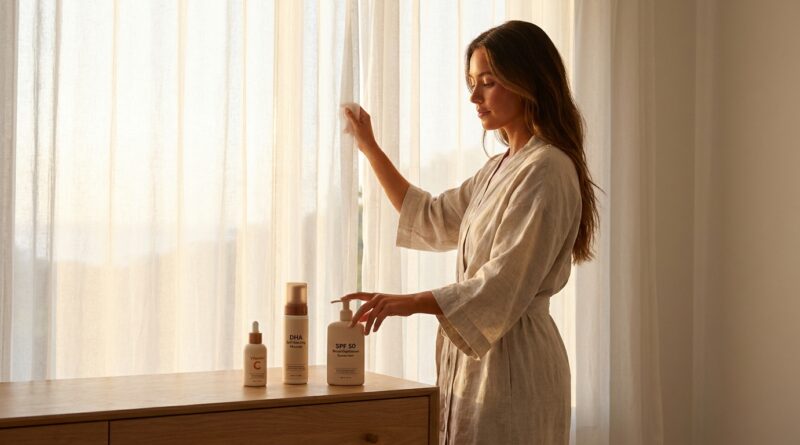
New ‘24‑Hour DHA Shield’ Rule: The Critical Sunless Tan Safety Window No One Is Respecting In 2026
You put on self-tanner before bed, wake up glowing, and it feels like you have done something smart for your skin. No baking in the sun. No tanning bed. Problem solved. That part is true. But here is the frustrating catch most people never hear about. A fresh DHA tan is not the same thing as sun protection, and the first 24 hours after application may actually be the window when you need to be more careful outside, not less. That surprises a lot of people because beauty marketing rarely says it out loud. If you have been wondering, is self tanner safe in the first 24 hours, the honest answer is yes, with a few important rules. Self-tanner is still one of the safest ways to get color. You just do not want to treat that brand-new glow like a shield when it is really just color sitting on the top layer of your skin.
⚡ In a Hurry? Key Takeaways
- Yes, self-tanner is generally safe in the first 24 hours, but it does not protect you from UV and may be a time to be extra cautious in the sun.
- For the first day after applying DHA self-tanner, use sunscreen, limit direct midday sun, and wear protective clothing if you will be outside.
- The good news is that self-tanner is still far safer than tanning in the sun or a tanning bed. You just need a smarter first-day routine.
What the new 24-hour concern is really about
Most self-tanners use DHA, short for dihydroxyacetone. It reacts with amino acids in the top layer of your skin to create that bronzed look. It is not dyeing your living skin cells, and it is not building melanin the way the sun does. That is why a fake tan can look great without giving you an actual tan.
So where does the concern come from?
Recent reviews and renewed expert discussion in 2026 are once again pointing to an old but important issue. Right after DHA is applied, there may be short-term free-radical formation when treated skin is exposed to UV. In plain English, that means fresh self-tanner plus sunlight may create a brief period where your skin is not getting extra protection and could even be under a little more stress.
This does not mean self-tanner is dangerous and you should throw it out. It means timing matters.
Is self tanner safe in the first 24 hours?
Yes, for most healthy adults, self-tanner is still considered safe to use in the first 24 hours. But safe does not mean carefree.
The smartest way to think about it is this. The product itself is usually fine when used as directed. The risky part is assuming your new bronze color works like armor in the sun. It does not.
What self-tanner does do
It gives your skin temporary color without UV damage. That is why dermatologists and skin experts still see sunless tanning as a much better option than sun tanning.
What self-tanner does not do
It does not replace sunscreen. It does not stop sunburn. It does not give you a free pass to spend the next afternoon outside with no hat and no SPF.
The new 24-hour DHA Shield rule
If you want the simple version, here it is.
For the first 24 hours after applying a DHA self-tanner, act like your skin needs extra backup.
Rule 1: Do not count your tan as SPF
This is the biggest mistake. A fake tan may make your skin look darker, but that color does not mean meaningful UV protection. If your product also contains sunscreen, check whether it is broad-spectrum and whether that sunscreen protection is still active after development time, sweating, or washing. In most cases, you still need your normal separate sunscreen.
Rule 2: Be picky about sun exposure that first day
If you can avoid long outdoor stretches, especially during peak midday hours, do it. Walking to your car is one thing. Lying by the pool because you “already look tan” is another.
Rule 3: Wear sunscreen like it actually matters, because it does
Use a broad-spectrum SPF 30 or higher on exposed skin. Reapply if you are outdoors, sweating, or spending time near water. If you are worried sunscreen will mess up your tan, let the self-tanner fully develop first, then use gentle formulas and pat products on if needed.
Rule 4: Add physical protection
A hat, sunglasses, sleeves, and shade do a lot of heavy lifting. This is especially useful in that first-day window when you want your color to settle and your skin to stay calm.
Rule 5: Skip harsh extras
The first 24 hours are not a great time for aggressive exfoliants, retinoids, scrubs, or anything else that can irritate skin that is already dealing with a chemical reaction on the surface. Keep the routine boring. Boring is good here.
Why this catches so many people off guard
Because self-tanner feels healthy compared with lying in the sun. And to be fair, it usually is. But people mentally connect “bronzed” with “protected.” That is the mix-up.
Your skin can look vacation-ready while still being fully vulnerable to UV. In fact, the first day may be the moment when you want the most common sense.
Who should be extra careful
Some people should take this 24-hour window more seriously than others.
People with very fair or sun-sensitive skin
If you burn quickly, your fresh self-tan changes nothing about that basic fact. You are still you, just browner-looking.
People using acids, retinoids, or acne treatments
If your skincare routine already makes your skin more reactive, combining that with fresh DHA and unprotected UV is not a great idea.
Anyone planning beach, pool, sports, or hiking time
If you know you are headed into serious sun, do your self-tanning on a day when you can keep things low key afterward, not the night before a six-hour outdoor event.
Pregnant readers
If that is your situation, the advice can feel especially confusing. We have a more specific guide here: New ‘Pregnancy-Safe Glow’ Rule: How To Use Self-Tanner When You’re Expecting In 2026.
A practical first-day routine that actually works
Here is a simple plan for people who want the glow without the guesswork.
The night you apply
Use self-tanner on clean, dry skin. Follow the product directions. Wash your hands well after applying. Let it dry fully before getting dressed or going to bed.
The next morning
Rinse if your product instructions say to. Moisturize gently. Then, if you are going outside, apply broad-spectrum sunscreen to exposed skin.
That same day
Keep direct sun exposure modest if possible. Choose shade when you can. Wear a hat if you will be out for more than a quick errand. Reapply sunscreen just like you would any other day.
That evening
By this point, you are usually beyond the most discussed caution window. Still, your fake tan is never a substitute for UV protection, so keep the sunscreen habit going.
Common myths worth clearing up
“If I look tan, I will not burn as fast.”
Not from self-tanner alone. The color is cosmetic, not protective.
“Self-tanner and sunscreen do the same job.”
They do not. One adds color. The other helps block UV.
“If there is any concern at all, I should stop using DHA.”
That is probably an overreaction for most people. The better move is to keep using self-tanner if you like it, but be smarter during the first 24 hours.
“The first-day issue means self-tanner is worse than real tanning.”
No. Real UV tanning still causes well-known skin damage. Self-tanner remains the much safer path to a bronzed look.
At a Glance: Comparison
| Feature/Aspect | Details | Verdict |
|---|---|---|
| UV protection | DHA self-tanner creates color but does not give reliable sun protection. | Use separate sunscreen every time. |
| First 24 hours after application | This is the window getting the most attention in 2026 because of concern about short-term free-radical activity with UV exposure. | Be more careful outside, not less. |
| Overall safety compared with tanning | Sunless tanning avoids direct UV exposure used to darken skin. | Still the safer way to get color. |
Conclusion
The big takeaway is reassuring. Self-tanner is still one of the best ways to get a bronzed look without the heavy damage that comes from tanning in the sun. But the first day after applying DHA is not the time to get lazy. New reviews on DHA in 2026 are drawing attention to a blind spot many beauty sites still skip over. Freshly applied self-tanner may come with short-term concerns around free-radical formation and UV sensitivity, especially if you head straight into strong sunlight with no plan. The fix is simple. Treat the first 24 hours like a caution window. Use sunscreen. Wear a hat. Pick shade. Keep your routine gentle. That way, you can keep using the sunless products you love while updating your habits to match the latest science, cutting down on hidden skin damage and feeling more confident about both your glow and your skin health.