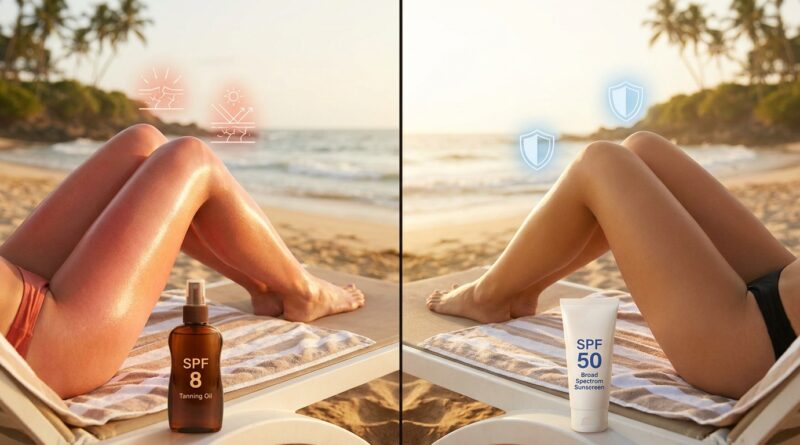
New ‘TikTok Tanning Oil Trap’ Rule: Why SPF Tanning Oils Are Sabotaging Your Sunless Glow And Your Skin
If you use self tanner or get spray tans, this trend is easy to fall for. A glossy “SPF tanning oil” looks like the best of both worlds. More glow, some protection, less guilt. That is exactly why dermatologists are getting louder about it in 2026. The short version is simple. SPF tanning oils can give people a false sense of safety, especially if they already look bronzed from self tanner. You see color on your skin, feel a little protected, and stay outside longer. That is where the trouble starts. Self tanner does not protect you from UV. A shiny oil does not mean better coverage. And low-SPF oil is often a weak safety net if you are using it to tan on purpose. If you have been wondering, are spf tanning oils safe if you use self tanner, the honest answer is only in a limited way, and not for tanning longer.
⚡ In a Hurry? Key Takeaways
- SPF tanning oils are not a safe way to tan longer, even if you already use self tanner or have a spray tan.
- If you want to protect your glow, use a broad-spectrum SPF 30 or higher lotion and limit direct sun instead of relying on glossy low-SPF oils.
- Self tanner adds color, not UV protection. A bronzed look can trick you into missing early signs of sun damage and staying out too long.
Why this TikTok habit is a problem
The social pitch sounds harmless. Use a little tanning oil with SPF, get a deeper tan, and avoid burning. But that is not how skin safety works.
SPF is not a permission slip to bake longer. It is a tool to reduce damage when you use enough of it, reapply it correctly, and pair it with shade, clothing, and common sense.
Tanning oils complicate that message. Many are shiny, thin, and designed to make skin look beachy and bronzed. That cosmetic effect can make people feel protected when they are not protected enough.
And if you already have self tanner on, the confusion gets worse. You look tan before you even step outside, so it becomes much harder to judge how much sun your skin is actually getting.
So, are SPF tanning oils safe if you use self tanner?
Not as a tanning strategy. That is the key distinction.
If an oil truly has broad-spectrum SPF and you apply enough of it, it can offer some sun protection. But using it because you want to tan faster or tan deeper is the unsafe part. The goal itself means you are trying to collect UV exposure.
Self tanner does not cancel that risk. It just dyes the top layer of skin. It does not act like sunscreen. It does not stop UVA rays, which are heavily linked to photoaging and also play a role in skin cancer. It does not stop UVB rays, which are the big burn-causers.
So if your plan is, “I already look bronzed, and this SPF oil will cover me while I tan a little more,” you are stacking false confidence on top of low protection.
What makes SPF oils especially tricky
There are a few reasons dermatologists dislike this trend.
First, many people do not apply enough. Sunscreen only reaches its labeled SPF when used generously. Thin oils are often spread too lightly.
Second, oils can wear off unevenly with sweating, swimming, rubbing, and towel drying.
Third, low SPF numbers can sound better than they perform in real life. SPF 6, 8, or 15 is not much backup if you are intentionally staying in direct sun.
Fourth, the glow itself is misleading. Shiny skin looks healthy on camera. UV damage does not show up right away.
The big myth: “If I do not burn, I am fine”
This is one of the oldest tanning myths around, and social media gave it a new outfit.
You do not need to burn to damage your skin. Tanning is itself a sign that your skin is responding to injury. That includes the slow, sneaky UVA exposure that drives wrinkles, dark spots, rough texture, and loss of firmness over time.
If that is already on your mind, it is worth reading New ‘Self‑Tanner Age-Proofing’ Rule: How To Get A Bronze Glow Without Quietly Speeding Up Wrinkles. It connects the dots between wanting color and not wanting your skin to pay for it later.
Why self tanner users are extra vulnerable to this mistake
If you use self tanner, you are often trying to avoid sun damage in the first place. That is the smart move. But a few things can still trip you up.
Your skin already looks tan
That sounds obvious, but it matters. A fake tan can make redness, early irritation, and uneven sun exposure harder to notice quickly.
You may want to “top up” the color naturally
A lot of people use self tanner as a base, then think a little real sun will make it look more believable. Unfortunately, real UV exposure does not politely enhance your self tanner. It adds risk, and it may leave you blotchy as your tan fades unevenly.
You may choose the wrong sunscreen texture
People often worry that thick sunscreen will ruin their glow, streak their tan, or feel heavy. So they reach for a glossy oil instead. The result can be less actual protection, not more.
What dermatologists want people to do instead
The no-nonsense answer is this. Separate your tanning look from your sun protection plan.
Use self tanner for color
That gives you the bronze look without needing UV.
Use real sunscreen for protection
Pick a broad-spectrum SPF 30 or higher. Lotion, cream, gel, or milk textures are often easier to apply evenly than oil.
Reapply like it matters, because it does
Every two hours in the sun is the standard rule. Sooner if you swim or sweat.
Stop using SPF as a tanning aid
If the product is part of a plan to get darker in direct sun, the plan is the problem.
What to look for on the label
If you like body products that leave some glow, read the packaging carefully.
Good signs
Broad-spectrum protection, SPF 30 or higher, water resistance if you will be outside, and clear usage directions.
Bad signs
Very low SPF, vague “sun-kissed” marketing, or products that seem more focused on shimmer and bronzy finish than actual protection.
Also, do not mix sunscreen with body oil or self tanner in your hand to make your own hybrid. That can dilute coverage and make protection uneven.
Can you protect a spray tan or self tan without ruining it?
Yes. You just need the right approach.
Choose a sunscreen that dries down well and does not leave you greasy. Many modern body SPFs are much better than the old chalky stuff people remember. Let your self tanner fully develop before heavy sweating or swimming. Pat skin dry instead of rubbing. And use hats, cover-ups, and shade when you can.
Those steps protect both your color and your skin better than chasing a “safe tan” with oil.
What about tanning beds and tan-maxxing?
They are part of the same problem. The idea behind tan-maxxing is to push for more color, faster. The body does not care whether that UV came from a beach day or a tanning bed. Damage is damage.
Tanning beds are not a workaround for people who “tan easily” or who already use self tanner. They add more exposure, not more safety.
A simple rule to remember
If a product makes you feel safer staying in the sun longer, pause and ask one question. Is this actually high-quality sun protection, or is it just making tanning feel more acceptable?
That little question can save you from a lot of bad skin decisions.
At a Glance: Comparison
| Feature/Aspect | Details | Verdict |
|---|---|---|
| Self tanner | Adds surface color but does not protect against UVA or UVB rays. | Safe for cosmetic glow, not sun protection. |
| Low-SPF tanning oil | May offer limited protection if applied correctly, but often encourages longer sun exposure and uneven coverage. | Not a smart choice if your goal is safer tanning. |
| Broad-spectrum SPF 30+ lotion | More reliable everyday protection when applied generously and reapplied on schedule. | Best option to protect skin and maintain your glow. |
Conclusion
If you love looking bronzed, you do not have to give that up. You just need to stop letting social media sell you the fantasy that shiny skin equals safe skin. Dermatologists are warning in 2026 that people are treating SPF like a vibe instead of a safety tool, especially in tanning oils and hybrid glow products. That is leading many sunless tanner users to stay out longer in risky UV because they think a bronzy finish means protection. It does not. The better move is simple. Keep self tanner for the color. Use broad-spectrum sunscreen for the job it is actually made to do. Skip tanning beds, be skeptical of tan-maxxing trends, and do not let a glossy oil talk you into extra UV exposure. You can absolutely keep your glow while cutting down damage, starting today.