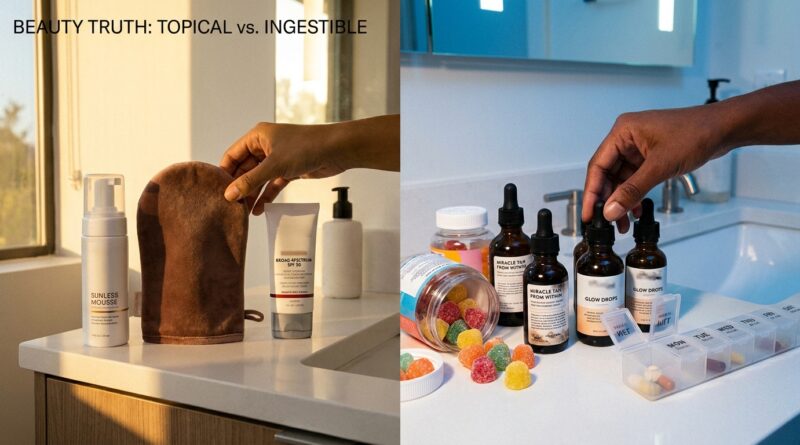
New ‘Edible Tan Scam’ Rule: Why Drinkable Tanning Drops Are The 2026 Glow Trend You Should Skip
You are not imagining it. Suddenly your feed is packed with “edible tanning drops,” tan gummies, and inside-out glow hacks that promise bronzed skin without the sun, the streaks, or the hassle of mousse. I get why that sounds tempting. If you love a tan, the idea of sipping your way to one feels like the ultimate shortcut. But if that little voice in your head is asking, are edible tanning drops safe, it is asking the right question. Right now, the big problem is simple. The marketing is moving faster than the proof. These products are often sold with bold before-and-after claims, while the actual evidence that they can safely darken skin tone is thin to nonexistent. Some formulas rely on heavy carotenoid dosing, vague “proprietary blends,” or wellness language that sounds science-y without answering the questions that matter most, like safety, side effects, and whether they work at all.
⚡ In a Hurry? Key Takeaways
- Edible tanning drops are not a proven or clearly safe way to darken your skin, and many claims look far ahead of the evidence.
- If you want a safer glow, stick with tested sunless tanners and patch test before full use.
- “Natural” or “drinkable” does not mean harmless, especially when products use high-dose carotenoids or fuzzy ingredient claims.
So, are edible tanning drops safe?
Short answer. Not enough to trust them as your new tanning routine.
That does not mean every gummy or drop is instantly dangerous. It means there is not good evidence showing these products can safely and reliably tan your skin the way TikTok suggests. That is a big difference.
Most drinkable tanning products are sold as supplements, not as approved tanning treatments. That matters because supplements usually reach shoppers with less oversight than a medicine would need. A label can look polished and still leave out the kind of hard proof you would want before taking something every day for cosmetic reasons.
Why these products are blowing up
The pitch is almost perfect for social media. No UV damage. No orange palms. No waiting around naked for lotion to dry. Just add a few drops to water or chew a gummy and “glow from within.”
It sounds cleaner and easier than self-tanner. It also sounds safer than sunbathing. That is exactly why people are curious.
The problem is that “easier” and “safer” are marketing words unless somebody can back them up with solid data.
What is usually inside edible tanning drops?
Formulas vary, but many of them center on carotenoids. Think beta-carotene, lycopene, astaxanthin, or canthaxanthin-like ingredients in some cases. Carotenoids are pigments found naturally in foods like carrots, tomatoes, and peppers.
Here is where the marketing gets slippery. Yes, some carotenoids can affect skin tone slightly when consumed in large amounts over time. But that is not the same as producing a natural-looking tan. It can shift skin toward yellow, orange, or deeper warm tones, sometimes unevenly, and not always in a flattering way.
Important distinction
A tan from sun exposure happens because your skin makes more melanin in response to UV. A fake tan from DHA mousse stains the top layer of skin. A drinkable supplement does neither in the same direct, predictable way.
So when brands imply these products “stimulate a tan” or give you a beachy bronze, be careful. That wording can make a small pigment effect sound like a real tan transformation.
The safety questions most viral posts skip
1. High doses are not the same as a healthy diet
Getting carotenoids from food is one thing. Taking concentrated doses daily in a supplement is another. Once brands push beyond normal dietary levels, you want real safety data, not just glowing reviews.
2. Your liver still has to process what you swallow
Supplements are not magic. If you are taking a product every day, especially one with multiple active ingredients, your body has to handle it. People with liver issues, those taking medicines, or anyone stacking several wellness products should be extra cautious.
3. Some “tanning pills” have a messy history
This category has long had red flags. In past years, certain pigment-based tanning pills and similar products were tied to safety concerns and were not considered approved tanning solutions. That history alone should make you slow down when a new drinkable version suddenly appears with glossy branding.
4. Side effects are not always dramatic, but that does not make them trivial
A product does not need to send someone to the ER to be a bad idea. Nausea, stomach upset, headaches, odd skin discoloration, eye concerns with some pigment compounds, or interactions with other supplements can all matter. Cosmetic products should have a high safety bar because nobody needs to risk their health for a maybe-tan.
What regulators are worried about
The main issue is misleading claims. Brands and influencers can make these products sound established when the proof is shaky. If a company suggests its drops can safely tan your skin, mimic melanin, or replace topical self-tanner, it should be able to show strong evidence.
That is where many of these products fall apart. You often get testimonials instead of trials. Before-and-afters instead of meaningful studies. Wellness wording instead of plain-English safety facts.
If your gut says the whole thing feels a little too convenient, trust that instinct.
Do edible tanning drops actually work?
For a true tan look, probably not in the way most people expect.
At best, some users may notice a subtle warm cast over time, especially from carotenoid buildup. At worst, they spend a lot of money for no visible change, or end up with a tone that looks more sallow than sun-kissed.
That is why the phrase “very expensive placebo” is not unfair here. Many people are paying premium beauty prices for results that are vague, delayed, inconsistent, or simply imagined because the product was sold so confidently.
Why self-tanner is still the more sensible option
If your goal is a bronzed look without UV damage, topical sunless tanner is still the practical choice. You can control the shade. You can see where it goes. You can stop using it if your skin does not like it. And most importantly, it does not ask your body to process a cosmetic trend from the inside out.
If you have been feeling confused by all the newer tanning hacks out there, this guide on New ‘Peptide-Free Glow’ Rule: How To Choose Safe Sunless Tanners When Viral Tanning Drugs Are Everywhere is a good next read. It breaks down how to spot the difference between a smart glow product and a risky fad.
How to spot a sketchy drinkable tan product
Watch for these red flags
Be wary if a brand does any of the following:
- Promises “sun-kissed skin” without explaining how the ingredient works
- Uses words like “doctor formulated” but gives no studies
- Hides key amounts inside a proprietary blend
- Acts like supplements are safer than topical tanners by default
- Relies on influencer codes and testimonials instead of evidence
- Suggests daily use without clear long-term safety information
That does not prove a product is harmful. It does tell you the brand may be selling aspiration first and facts second.
If you still want to try one, at least do this first
I would skip them. But if you are still tempted, do not treat them like harmless candy.
Safety-first checklist
- Read the full ingredient label, not just the front of the bottle
- Check the dose of carotenoids and compare it with normal dietary intake
- Avoid stacking with other beauty or wellness supplements unless your doctor says it is fine
- Talk to a healthcare professional if you have liver issues, eye issues, take medications, or are pregnant or breastfeeding
- Stop immediately if you notice side effects or unusual skin changes
And please do not use a drinkable tan product as an excuse to skip sunscreen. If a brand even hints at that, close the tab.
What to do instead for a safer glow
You do not need to become a guinea pig to look bronzed.
Better options
- Use a gradual self-tanning lotion for an easy, low-stress glow
- Pick a mousse or serum with clear instructions and patch test first
- Use bronzing drops made for the outside of your skin, not the inside of your body
- Prep dry areas so your tan looks more even and natural
These options may not sound as futuristic as “edible glow drops,” but they are a lot more honest.
At a Glance: Comparison
| Feature/Aspect | Details | Verdict |
|---|---|---|
| Evidence | Limited proof that drinkable tanning drops can safely create a true tan effect | Weak |
| Safety | Questions remain around high-dose ingredients, side effects, interactions, and long-term use | Proceed with caution, better yet skip |
| Best alternative | Topical sunless tanners give more predictable results without asking your body to process a cosmetic supplement | Much better option |
Conclusion
If you came here wondering are edible tanning drops safe, the most honest answer is this. They are not proven enough, predictable enough, or reassuring enough to earn a place in a smart tanning routine. That matters right now because drinkable tan supplements are popping up everywhere, while regulators are already side-eyeing the claims and the evidence gap. People are being sold a dreamy shortcut that sounds easier and “safer than self tanner,” but the basic questions still hang in the air. Do they work. What do they do to your liver. What happens with long-term high-dose carotenoid use. Why are brands so quick to market them when the proof is so thin. Our take is simple. Love the glow, not the gamble. You do not need to test every viral wellness gimmick on your own body to keep up. A good topical self-tanner and a little skepticism are still the safer beauty move.