New ‘Sensitive-Skin Safe Tan’ Rule: How To Fake Tan With Eczema, Dermatitis Or Rosacea In 2026 Without Wrecking Your Barrier
If fake tan keeps turning your eczema, dermatitis or rosacea into a hot, itchy mess, you are not imagining it. A lot of standard mousses and sprays are packed with fragrance, drying alcohol, essential oils and color guides that cling to rough patches and sting the second they hit a damaged barrier. That is why a product can look fine on your friend and feel like a chemical prank on your skin. The new sensitive-skin safe tan rule for 2026 is simple. Treat fake tan like skincare first, color second. That means tanning only when your skin is calm, patch testing like your barrier depends on it, and picking formulas made for reactive skin instead of the darkest, fastest-developing option on the shelf. You can absolutely get a believable glow with self tanner for eczema and sensitive skin. You just need a slower, smarter routine that respects dry patches, active flare zones and your skin’s limits.
⚡ In a Hurry? Key Takeaways
- Yes, you can use self tanner for eczema and sensitive skin, but only when the skin barrier is calm and the formula is low-irritant.
- Patch test for 2 to 3 days, moisturize dry zones first, and avoid tanning directly over broken, inflamed or weeping skin.
- The safest glow is usually gradual, fragrance-free and light in depth. Chasing a dark tan fast is what often triggers trouble.
Why regular self tanner often goes wrong on reactive skin
Self tanner itself is not always the villain. The bigger problem is the rest of the formula.
Many popular tans contain perfume, high levels of alcohol, botanical extracts, strong preservatives or bronzing dyes that can irritate eczema-prone or rosacea-prone skin. Add that to a weakened barrier, and suddenly your “golden glow” routine becomes stinging, redness and flakes that hold onto pigment.
That is also why fake tan can look extra patchy on dermatitis. Dry or thickened areas soak up more color. Inflamed skin can also react more strongly to rubbing, mitt friction and rinsing.
The 2026 sensitive-skin safe tan rule
The new rule is not about one miracle bottle. It is about timing, prep and ingredient discipline.
Tan only on a calm-skin day
If your skin is actively burning, cracking, weeping, freshly shaved raw or mid-flare, skip it. No glow is worth setting off a week of itching.
A good test is this. If your normal moisturizer stings when you apply it, your skin is not ready for self tanner.
Pick the gentlest format
For most people with eczema or sensitive skin, gradual tanning lotions, simple tanning drops mixed into moisturizer, or fragrance-free cream formulas are easier to tolerate than fast-develop mousses or spray tans heavy in alcohol.
Dark, rapid formulas are often more intense, more drying and less forgiving on rough areas.
Use less product than you think
You do not need a thick layer. A thin, even coat lowers the chance of both irritation and patchiness.
How to choose a self tanner for eczema and sensitive skin
Read the ingredient list like you are screening houseguests. The fewer troublemakers, the better.
Look for these signs
- Fragrance-free or no added perfume
- Alcohol-free, or at least not loaded with drying alcohols near the top of the list
- Cream, lotion or serum texture rather than airy foam
- Shorter ingredient list
- Added humectants like glycerin or hyaluronic acid
- Barrier-friendly support such as ceramides, squalane or oat
Be cautious with these
- Heavy fragrance
- Essential oils
- Menthol or cooling agents
- High alcohol content
- Strong exfoliating acids in the same product
- Very dark guide colors if your skin is prone to clinging and patching
If your skin is highly reactive, boring is good. Fancy scent, shimmer and “tropical glow” extras are often exactly what your barrier does not want.
Patch testing is not optional here
This is the step most people skip, then regret.
How to patch test properly
Apply a small amount behind the ear, on the side of the neck, or on a small area of the inner arm if that area is not flaring. Then watch it for 24 to 72 hours.
You are checking for more than obvious rash. Look for:
- Stinging that lasts more than a few minutes
- Heat or swelling
- Red bumps
- Delayed itching overnight
- Extra dryness the next day
If the patch test is iffy, do not try to “power through” with a full-body application.
Prep matters more than the tan itself
Reactive skin usually hates aggressive prep. The old advice to scrub everything until silky smooth is terrible for a damaged barrier.
What to do instead
Take a lukewarm shower. Use a gentle, non-foaming cleanser if needed. Pat dry. Then lightly moisturize the areas that tend to drink up color, like elbows, knees, ankles, wrists and knuckles.
Do not exfoliate hard. If you need to smooth obvious flakes, use a soft washcloth very gently, or skip tanning until the skin is calmer.
If you want more help with this side of the routine, New ‘Hydration-First Glow’ Rule: How To Stop Self Tanner From Wrecking Your Skin Barrier In 2026 is worth a read. The basic idea is the same. Hydrated skin usually tans more evenly and protests less.
How to apply fake tan without upsetting eczema or rosacea
For body eczema or dermatitis
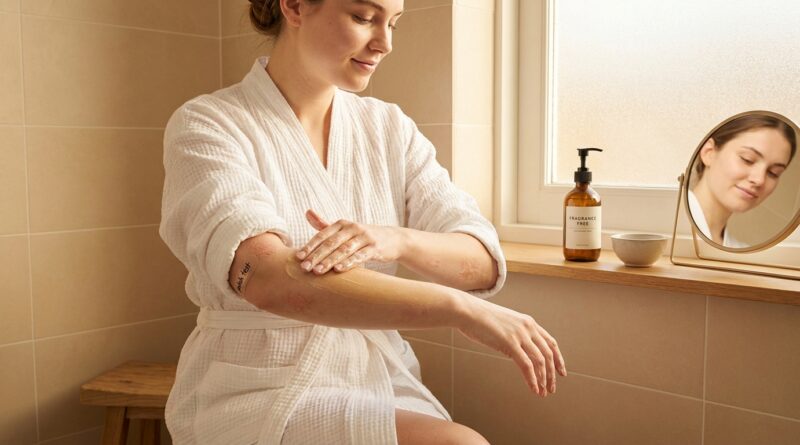
Apply with a soft mitt using light pressure. Do not buff aggressively. Think “spread sunscreen,” not “polish furniture.”
Avoid open cuts, cracked areas, fresh scratch marks and actively inflamed patches. It is completely fine to leave those spots untanned and blend around them.
For rosacea-prone skin on the face
Face tanning is trickier. Many people with rosacea do better with one or two drops of tanning serum mixed into a bland moisturizer, used on a night when the skin feels stable.
Skip harsh cleansing brushes, hot water and strong actives that same day. If your face flushes easily, less is more.
For hands and feet
These are common problem spots because dry skin grabs color. Put a tiny amount of moisturizer on knuckles, around nails, heels and toe joints before applying tan.
What to avoid on tanning day
- Shaving right before application if your skin gets razor burn
- Hot showers
- Retinoids, strong acids or benzoyl peroxide on the same area
- Fragrant body oils under the tan
- Layering multiple tanning products at once
- Using fake tan to “cover” an active flare
Aftercare that keeps the glow and protects your barrier
The tan is only half the story. What you do over the next few days decides whether it fades nicely or takes your skin with it.
Keep moisture steady
Use a plain, fragrance-free moisturizer once or twice a day. This helps the tan wear off more evenly and reduces the roughness that makes color go patchy.
Do not scrub it off
If the tan starts looking uneven, resist the urge to attack it with exfoliating gloves. That is a fast track to a flare. Gentle soaking, patient moisturizing and time are safer.
Watch for delayed reactions
Some people do fine the first night and flare on day two. If the area becomes very itchy, hot or rashy, stop using the product and focus on bland barrier care.
When you should skip self tanner completely
There are times when the right answer is simply not now.
- Active eczema flare with cracks or weeping
- Recent rosacea flare with burning and persistent heat
- Skin infection, including impetigo or fungal rash
- After a bad reaction to a similar product
- Right after a peel, laser treatment or sunburn
If you are under treatment from a dermatologist and your skin is unstable, ask before adding a tanner. Especially if you have needed repeated steroid cycles. It is better to wait than reset your progress.
A simple beginner routine for sensitive skin
Night before
Moisturize well. No harsh exfoliation.
Tanning day
Lukewarm shower. Pat dry. Moisturize elbows, knees, ankles and dry spots lightly. Apply a gradual or fragrance-free tanner in a thin layer. Avoid broken skin.
Next morning
Rinse if the product directions say to. Use a bland moisturizer after. No scrubbing.
Following days
Moisturize daily. Reapply only when the skin still feels calm.
At a Glance: Comparison
| Feature/Aspect | Details | Verdict |
|---|---|---|
| Best formula type | Gradual lotion, simple cream or tanning drops mixed with a gentle moisturizer | Best starting point for reactive skin |
| Ingredients to avoid | Fragrance, essential oils, heavy alcohol, strong actives and intense guide colors on very dry skin | Higher risk of stinging, dryness and patchiness |
| When to tan | Only when eczema, dermatitis or rosacea is calm and skin is not cracked, raw or hot | Safest rule to prevent flare ups |
Conclusion
There is a reason so many people are venting online about fake tan and flare ups right now. The usual beauty advice often assumes everybody has sturdy, calm skin, and that is just not true. If you have eczema, dermatitis or rosacea, the goal is not to force your skin to behave like someone else’s. It is to work with the barrier you have today. A careful routine, a calmer formula and realistic expectations can help you get a sunless glow without setting off days of burning and regret. That matters, because protecting your long-term skin health is more important than a fast tan, and avoiding unnecessary steroid cycles is a win all by itself. You are not too sensitive. Your skin is giving useful feedback. Listen to it, go slowly, and you can still enjoy a confidence-boosting glow that actually fits a sensitive-skin life.