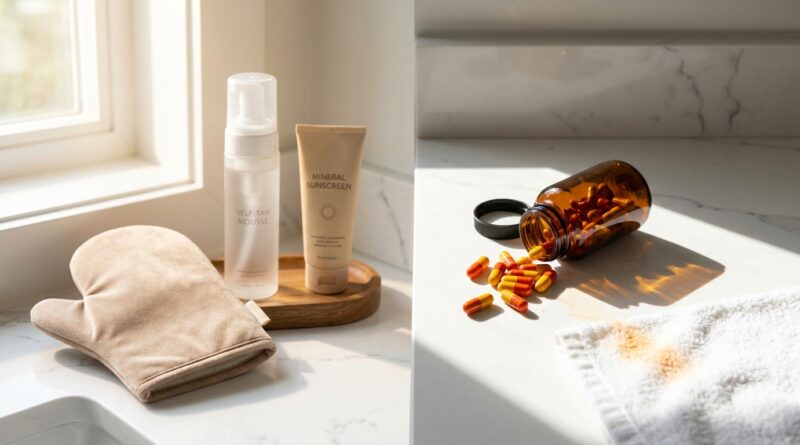
New ‘Tanning Pills Red Flag’ Rule: Why Oral Sunless Tanners Are The One Glow Shortcut You Should Never Touch
You are not overreacting if “tanning pills” sound a little suspicious. A capsule that promises a bronzed glow without UV, streaks, or salon time is exactly the kind of shortcut that catches people when they are tired of lotions and tempted by a quick fix. That is why this new red flag matters. If you are wondering, are tanning pills safe, the short answer is no. These products are often sold through social ads, marketplace listings, and discount sites that make them look harmless, even chic. But many oral sunless tanners are not approved cosmetic products at all. Some contain high-dose colorants or carotenoid-like ingredients that can build up in the body, affect skin tone in uneven ways, and in some cases raise real health concerns. The glow may sound easy. The risk is not worth it.
⚡ In a Hurry? Key Takeaways
- Are tanning pills safe? No. Oral tanning pills are not a safe swap for self-tanner or sunscreen.
- Skip any capsule sold as a “UV-free tan” or “melanin booster,” especially from social ads or unknown shops.
- Safer ways to get the look are topical self-tanners, professional spray tans, and good sunscreen for outdoor days.
Why this rule matters right now
These pills are creeping back into the beauty conversation because they solve a very real annoyance. People want color without sun damage, without transfer, and without spending 20 minutes applying mousse with a mitt.
So when a brand says, “Just take one capsule a day for a golden tan,” it sounds almost too convenient to ignore.
That is the problem.
Many of these products sit in a weird gray area. They may not be regulated like approved cosmetics. They may not be checked like medicines. And they are often shipped directly to buyers through online stores that are hard to trace once something goes wrong.
So, are tanning pills safe?
No. Not in the way most shoppers assume.
When people ask are tanning pills safe, they usually mean, “Are these a normal beauty product with the same kind of risk as self-tanner?” The answer is no. Self-tanner works on the surface of your skin. Tanning pills work from inside your body, and that changes the safety picture completely.
Some oral tanning products have been linked to ingredients that can build up in tissues over time. Instead of giving a natural-looking tan, they can create an odd orange, brown, or uneven tone. More worrying, some ingredients have been associated with changes in eye pigment and deposits in organs.
That is a very different situation from putting bronzing mousse on your legs before dinner.
What is usually inside these products?
High-dose colorants or carotenoid-type ingredients
Some pills use color-producing compounds that circulate through the body and settle in the skin. That sounds simple in marketing copy, but the body is not an airbrush machine. Ingredients do not always land where a brand implies they will.
“Melanin support” blends
Some capsules use vague language like “supports natural tanning” or “boosts melanin.” That should make you cautious fast. These claims are often poorly explained, lightly tested, or designed to sound science-y without saying much at all.
Unknown extras
If the label includes a long list of herbs, pigments, and proprietary blends, that is not reassuring. It means you may not know the real dose, the exact source, or how the product was made.
The biggest red flags to watch for
If you see any of these, close the tab.
1. It promises a tan without mentioning regulation or approvals
If a product is making strong body-altering claims but gives you almost no clear safety information, that is a problem.
2. It is sold mainly through social media ads
A polished Instagram video is not proof that something is safe. A lot of these products rely on impulse buys, not careful shopping.
3. The ingredient list is vague
“Proprietary glow complex” is marketing, not transparency.
4. The seller claims it is safer than sun exposure and self-tanner
That is a big claim. Safer than UV exposure is one thing in theory. Safer than a topical self-tanner is much harder to justify.
5. There are no real warnings, or the warnings are tiny
If a supplement can change your body’s pigment, you deserve plain-English information up front.
Why oral tanning is so different from regular self-tanner
This is where a lot of people get tripped up.
Topical self-tanners usually use DHA to darken the outermost layer of dead skin cells. It is surface-level. It fades as your skin naturally sheds.
Oral tanning pills do not stay on the surface. They are digested, absorbed, and distributed through the body. That means the possible effects are broader, harder to predict, and harder to stop quickly if something feels off.
That alone should tell you these are not just “self-tanner in pill form.”
What health agencies have worried about
Different countries have raised alarms about certain tanning pills over the years, especially products containing canthaxanthin and similar colorants in high amounts. Concerns have included abnormal skin discoloration, eye issues, and the way these substances can accumulate in the body.
You do not need to memorize every ingredient name to protect yourself. The practical takeaway is easier than that. If a pill promises to change your skin color from the inside, treat it like a major red flag, not a casual beauty buy.
What to do instead if you want a safer glow
Use a topical self-tanner
Mousses, lotions, drops, and mists may take a bit more effort, but they do not ask your liver, eyes, and internal tissues to join the beauty routine.
Book a spray tan for events
If you want even color with less hassle, a good spray tan is still one of the easiest options.
Protect your glow outdoors
If you wear self-tanner and spend time outside, sunscreen still matters. In fact, it matters more than ever. If you want help sorting out newer sunscreen options, this guide on New ‘Bemotrizinol Tan-Shield’ Rule: The First Sunscreen Upgrade In 20 Years That Makes Your Sunless Glow Actually Safer Outside is worth a read.
A quick shopping rule you can actually remember
Here is the simplest filter.
If a product changes your color by sitting on your skin, that is one category.
If a product changes your color by moving through your body, that is a completely different category, and one you should be much more skeptical about.
Beauty shortcuts are fine. Mystery capsules are not.
At a Glance: Comparison
| Feature/Aspect | Details | Verdict |
|---|---|---|
| Oral tanning pills | Often sold online with unclear regulation, vague labels, and ingredients that work inside the body | Avoid |
| Topical self-tanner | Works on the outer skin layer, widely used, easier to patch test and stop using if needed | Safer choice |
| Spray tan plus sunscreen | Gives fast color without UV, and sunscreen helps protect skin during outdoor time | Best low-risk glow plan |
Conclusion
The big takeaway is simple. There has been a real rise in unregulated oral tanning pills sold through social feeds and low-cost online shops, and they can look far more normal than they really are. Many people do not realize these capsules may contain drug-level colorants or carotenoid-type ingredients that build up in the body, affect pigment in unhealthy ways, and have already sparked health warnings in multiple places. So if you came here asking are tanning pills safe, the answer is a firm no. Skip the capsule. Keep the glow. Stick with sunless options that stay on your skin, not in your organs. That way you can still get the bronzed look you want without gambling with your long-term health.