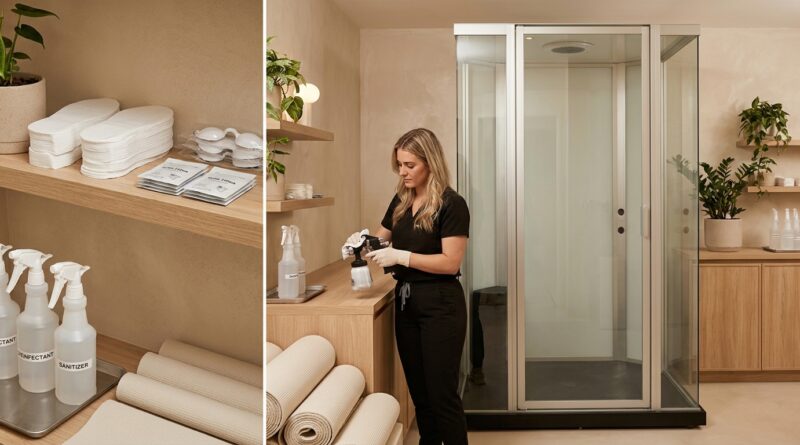
New ‘Salon Hygiene Tan’ Rule: How To Check If Your Spray Tan Studio Is Actually Clean Before You Strip Down
You should not have to play detective in a spray tan booth, especially when you are already half dressed and trying not to smudge your prep. That is the awkward truth behind the sunless tanning boom right now. More people are skipping UV beds, which is great, but not every salon or mobile artist is keeping the same pace on hygiene. A booth can look neat and still be dirty in all the places that matter, like spray guns, filters, floors, nose plugs, sticky feet, and shared barrier cream tools. The good news is you do not need a lab test or a beauty license to spot the difference. You just need a simple spray tan salon hygiene checklist, a few polite questions, and permission to walk away if something feels off. Clean salons are usually happy to explain their process. The sketchy ones tend to get vague fast.
⚡ In a Hurry? Key Takeaways
- A clean spray tan studio should disinfect high-touch surfaces, spray equipment, booth floors, and shared items between every client, not just wipe away visible overspray.
- Ask direct questions before you book, like how they clean the gun, when filters are changed, and whether disposable items are truly single-use.
- If a salon smells musty, has sticky floors, clogged vents, reused accessories, or staff who dodge hygiene questions, trust your gut and leave.
Why this matters more in 2026
Spray tanning is still the safer color option compared with UV tanning. But “safer” only covers the sun exposure part. It does not automatically mean the room, tools, and shared accessories are being cleaned the right way.
That is why the new 2026 salon and spa hygiene frameworks matter. They push more attention onto infection control, equipment cleaning, air handling, and documentation. For clients, this is actually helpful. It gives you a clearer standard to expect instead of just hoping your salon is careful.
If you also want to think about what you are breathing in while you tan, read The New ‘Safer Spray Tan’ Checklist: What Your Salon Isn’t Telling You About DHA, Ventilation And Protective Gear. Hygiene and ventilation go together.
Your client-side spray tan salon hygiene checklist
1. Look at the floor first
This sounds simple because it is. A booth floor tells on a salon fast.
If the floor is sticky, slick, heavily stained, or has hair and lint in the corners, that is not just cosmetic. It suggests the salon may be doing surface-level cleanup instead of proper disinfecting between clients. Warm, damp spaces with body residue and product buildup are not where you want bare feet.
Green flag. The floor looks freshly cleaned, dry or drying, and free of debris.
Red flag. The staff says, “It always looks like that.”
2. Check the spray gun and hose area
You do not need to inspect the machine like an engineer. Just pay attention.
A properly maintained spray gun should not look crusted with old solution around the nozzle, trigger, or cup. Dried residue means product is sitting there between appointments. That can affect both hygiene and how evenly your tan goes on.
It is perfectly fair to ask, “Do you disinfect the spray gun between every client, and how?” A good tech will answer clearly. They may explain which parts are disinfected, which are flushed, and what gets deep-cleaned daily.
3. Ask about shared accessories
This is where many people get caught off guard. The salon may offer sticky feet, hair caps, nose filters, disposable underwear, barrier cream, blending brushes, and towels. Some of these should be single-use. Some should be disinfected properly if reused. Some should never look questionable in the first place.
Ask these questions without apology:
- Are nose plugs and sticky feet single-use?
- How do you handle barrier cream application tools?
- Are towels fresh for every client?
- Are blending mitts or brushes washed and disinfected between clients?
If the answer is fuzzy, assume the process is too.
4. Look at vents, filters, and airflow
A clean salon should not feel like a sealed box with floating overspray hanging in the air from the last five clients. Booths and spray rooms need working extraction and regular filter changes.
You do not need to ask for maintenance logs, though some places may proudly show them. Just ask, “How often do you change booth filters or clean the extraction system?” That one question reveals a lot. A pro usually answers right away. A less careful operator may say, “Whenever it needs it.”
That is not a schedule. That is a gamble.
5. Watch what happens between clients
If you arrive early, great. You get the best evidence.
Watch the reset process after the previous client leaves. Does the tech change gloves? Remove disposables? Spray and wait the required contact time for disinfectant? Replace linens? Clean touch points like door handles, rails, and foot mats?
A quick wipe and immediate next client is not enough. Many disinfectants need to sit wet on a surface for a set amount of time to actually work.
Questions to ask without sounding awkward
You do not need to turn into a courtroom lawyer. Keep it light and direct.
Before booking
- What is your cleaning process between spray tan appointments?
- Do you disinfect the spray gun and booth after each client?
- Are sticky feet, nose filters, and caps single-use?
- How often are your booth filters changed or cleaned?
When you arrive
- Can I use a fresh towel and disposables, please?
- Has this booth been cleaned since the last appointment?
- What should I avoid touching after I step in?
That is not rude. That is normal body-care common sense.
What a clean salon usually looks like
Clean salons tend to have patterns. You can feel the difference almost right away.
- Clear, confident answers about disinfection
- Visible cleaning supplies and organized stations
- Fresh disposables opened for you
- No mystery towels piled in a corner
- No heavy mildew or stale-product smell
- Time blocked between appointments for cleanup
- Staff who wear gloves when needed and change them
There is also a vibe factor here. The best studios do not act annoyed when you ask about cleanliness. They are usually proud of it.
Red flags that should make you leave
Some signs are subtle. Some are not.
- Sticky or dirty booth floors
- Visible residue on the spray gun or nozzle
- Reused disposables or open communal bins of accessories
- Towels that do not look freshly laundered
- Clogged vents or dusty extraction fans
- Staff who cannot explain their cleaning steps
- No gap at all between appointments
- A rushed “we just wipe it down” response
If your skin is freshly shaved, exfoliated, or has tiny nicks, you want to be extra careful. That is not the time to ignore warning signs.
Mobile spray tan artists need the same standards
Do not give mobile appointments a free pass just because they are convenient.
A mobile artist should still bring clean equipment, disposable barriers, fresh towels, and a clear disinfection routine. Ask how they clean the gun, tent, extraction unit, and any shared accessories between house calls. If they seem offended by the question, that tells you something too.
Good mobile artist signs
- Gear packed in clean, organized cases
- Fresh disposables opened on site
- A portable floor barrier or clean mat
- A straightforward answer about sanitizing equipment after each client
Hygiene is not just about infection
It is also about tan quality.
Old residue in the gun can mess with the spray pattern. Dirty filters can affect airflow. Product buildup on floors and rails can transfer onto your feet or hands. Reused tools can leave streaks, uneven blending, or mystery irritation you end up blaming on the solution.
So yes, cleanliness protects your skin. It also helps you get the result you actually paid for.
At a Glance: Comparison
| Feature/Aspect | Details | Verdict |
|---|---|---|
| Booth and floor cleanliness | Drying disinfectant, no sticky residue, no hair or debris, touch points cleaned between clients | Safe sign. This suggests real turnaround cleaning. |
| Spray gun, hose, and equipment care | No crusted solution on nozzle, clear explanation of flushing and disinfecting, regular maintenance | Strong green flag. Clean equipment supports both hygiene and tan quality. |
| Shared accessories and disposables | Single-use items opened fresh, reusable tools properly sanitized, fresh linens for each client | Non-negotiable. If this is sloppy, walk away. |
Conclusion
Spray tans can absolutely be the smarter beauty choice, but only if the salon treats hygiene like part of the service and not an afterthought. Safer color does not automatically mean a safer experience if the booth is basically a warm little petri dish. The new 2026 infection-control updates are a good push for the industry, but you do not have to wait for a certificate on the wall to protect yourself. Use this spray tan salon hygiene checklist, ask the simple questions, and trust what you see. That protects your skin, rewards the pros who are doing things right, and helps keep the whole sunless tanning scene healthy instead of gross.