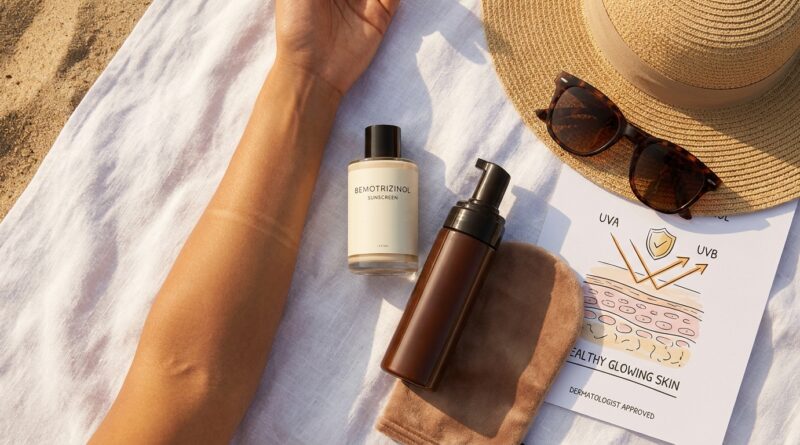
New ‘Bemotrizinol Tan-Shield’ Rule: The First Sunscreen Upgrade In 20 Years That Makes Your Sunless Glow Actually Safer Outside
If you use self-tanner, beach days can feel weirdly stressful. You want to protect your skin, keep your glow looking even, and avoid buying some chalky sunscreen that pills, streaks, or leaves you more confused than before. Then TikTok jumps in and tells you sunscreen is toxic, mineral is always better, or SPF will somehow ruin your tan. No wonder people feel stuck.
Here’s the part that actually matters right now. Bemotrizinol, also called BEMT, has just been cleared in the US, making it the first new sunscreen filter approved here in more than 20 years. Dermatologists are paying attention because it helps cover both UVA and UVB rays, stays stable in sunlight, has low skin absorption, and often looks better on the skin than older options. For anyone wondering whether bemotrizinol sunscreen safe for self tanner is a real thing, the short answer is yes. It can be a smart match for a sunless glow, especially if you care about protecting your skin without that heavy, chalky finish.
⚡ In a Hurry? Key Takeaways
- Yes, bemotrizinol sunscreen is generally a strong option for people who use self-tanner because it offers broad UV protection and tends to wear more elegantly on skin.
- Apply self-tanner first, let it fully develop, then use sunscreen on top the next day instead of mixing the two products together.
- The real win is not just preserving color. Better UVA and UVB protection helps cut wrinkle, dark spot, and skin cancer risk while your sunless glow stays looking natural.
Why this sunscreen news is a big deal
For years, US sunscreen shoppers have been dealing with an oddly outdated system. While other countries had access to newer UV filters, Americans were mostly stuck choosing from the same old list. So when bemotrizinol got cleared, experts paid attention fast.
Why? Because it checks several boxes people care about.
It covers the rays that matter
Bemotrizinol helps protect against both UVA and UVB rays. UVB is the stuff most people connect with sunburn. UVA is sneakier. It goes deeper and plays a big role in wrinkles, discoloration, and long-term skin damage.
If you love the look of a bronze glow, UVA is the one you really should not ignore. It can quietly age your skin while you think everything is fine.
It is photostable
This is a fancy way of saying it holds up well in sunlight. Some filters break down faster when exposed to UV rays. A photostable filter keeps doing its job more reliably.
That matters at the pool, at the beach, and during long afternoons outside when your sunscreen needs staying power.
It tends to look better on skin
Many people avoid sunscreen because of the feel and finish. They hate the white cast, the greasy shine, or the weird film that grabs onto self-tanner patches. Bemotrizinol-based formulas often feel more wearable, which means people are more likely to actually use enough.
And honestly, that is half the battle.
Is bemotrizinol sunscreen safe for self tanner?
In practical terms, yes. If your goal is to wear self-tanner and still use strong sun protection, bemotrizinol looks like a very promising fit.
Self-tanner works by coloring the very top layer of your skin. It does not protect you from UV rays. Not even a little. So the safest move is to treat your glow as cosmetic color only, then add real sunscreen on top when you go outside.
Bemotrizinol does not “cancel out” self-tanner. It does not strip the color just because the ingredient is new. What matters more is the full formula. A sunscreen that is very oily, heavily fragranced, or full of exfoliating extras could wear badly over a fresh tan, even if the UV filter itself is fine.
That means you should shop by formula, not hype.
What the latest sunscreen concerns are really about
A major report recently found that only a minority of sunscreens on shelves are both strongly protective and free from common red flags. That has made shoppers nervous, and social media has filled the gap with oversimplified advice.
Usually it goes one of three ways.
Myth 1: Sunscreen is toxic, so skip it
Bad advice. The risk from UV damage is well established. Sunburn, skin cancer, collagen loss, dark spots, and texture changes are real. Throwing out SPF because a video sounded scary is not a smart trade.
Myth 2: Mineral is always better
Not automatically. Mineral sunscreens can be great, especially for sensitive skin, but some leave a cast, feel drying, or sit unevenly over self-tanner. A sunscreen only helps if you use enough and reapply it. If the formula makes you avoid wearing it, it is not the best pick for you.
Myth 3: Sunscreen ruins your tan
It does not ruin a self-tan. Friction, patchy application, harsh cleansers, and exfoliation are much bigger threats. In fact, protecting your skin can help your overall look because burned, peeling, irritated skin is the fastest way to wreck a nice glow.
If you want a deeper how-to on layering the two, this guide on New ‘Safe Tan Routine’ Rule: How To Pair Self‑Tanner With The Just‑Approved BEMT Sunscreens For Stronger Skin (Not Just Color) is worth a read.
How to use sunscreen without messing up your self-tanner
This is where people get tripped up. The order matters.
1. Apply self-tanner to clean, dry skin
Do your normal prep. Exfoliate ahead of time, moisturize dry spots lightly if needed, and apply your self-tanner evenly.
2. Let it fully develop
Do not slather sunscreen over a self-tanner that is still developing. Give it the full processing time recommended by the product, then rinse if the instructions say to rinse.
3. Use sunscreen the next day before sun exposure
Once your color has developed, apply sunscreen generously as the last step before heading out. That is the sweet spot.
4. Choose lotion or fluid textures if your tan gets streaky easily
Sprays can be convenient, but they are easy to underapply. Thick mineral pastes can drag across the skin and catch on dry patches. Fluids, milks, and elegant lotions often spread more evenly over self-tanner.
5. Reapply by patting and smoothing, not aggressive rubbing
You do not need to scrub sunscreen in like you are polishing a countertop. Gentle, even application helps preserve your color.
What to look for on the label
If you are standing in the sunscreen aisle feeling your brain shut down, keep it simple.
Look for broad-spectrum protection
This means it covers UVA and UVB. Do not skip this.
Look for SPF 30 or higher
For beach or pool days, SPF 30 is the floor, not the goal. Many people do better with SPF 50 because real-world application is rarely perfect.
Check the finish
If you wear self-tanner, words like “sheer,” “invisible,” “lightweight,” and “non-greasy” may matter more than trendy marketing claims.
Be careful with extras
If a sunscreen contains acids, retinoid-like actives, or strong exfoliating ingredients, it may not be your best beach-bag pick over a fresh self-tan.
Water resistance matters
For swimming or sweating, choose a water-resistant formula and still reapply as directed.
Why this matters for more than just looks
It is easy to think of sunscreen as something that only prevents burns. But for people who care about how their skin looks, it is also one of the best anti-aging tools around.
UVA exposure can speed up sagging, fine lines, and uneven pigment. In other words, the same sun that makes people want to look bronzed can quietly age the skin underneath. Self-tanner gives you color without asking your skin to pay that price.
That is why this new ingredient news lands at the right time. If a sunscreen is easier to wear, less chalky, more stable in sunlight, and supports real broad protection, it becomes a lot easier to stick with healthy habits.
At a Glance: Comparison
| Feature/Aspect | Details | Verdict |
|---|---|---|
| UV protection | Bemotrizinol helps provide broad UVA and UVB coverage and stays stable in sunlight. | Strong choice for real outdoor protection. |
| Works with self-tanner | It does not remove self-tanner by itself. The overall formula and how you apply it matter more. | Generally yes, especially in lightweight, even-spreading formulas. |
| Cosmetic finish | Often less chalky than some older or heavy mineral formulas, with lower chance of visible cast. | Helpful for keeping a sunless glow looking natural. |
Conclusion
This is one of those rare skincare updates that actually means something in real life. In the last 24 hours, dermatologists and news outlets have been buzzing about bemotrizinol because it is the first new sunscreen ingredient cleared in the US in over two decades, and it brings a lot to the table: strong UVA and UVB coverage, good photostability, low skin absorption, and a finish that often looks better on real skin. For anyone in the I Love Tanning crowd, that matters a lot. A new report has already raised concerns that only a minority of sunscreens are both safe and truly protective, while social media keeps pushing confused advice that leaves people either skipping SPF or grabbing anything labeled mineral without thinking it through. The good news is simple. You do not have to choose between protecting your skin and keeping your bronze. A smart, well-formulated sunscreen can help you do both, so your glow looks good now and your skin has a better shot at staying healthy for the long haul.