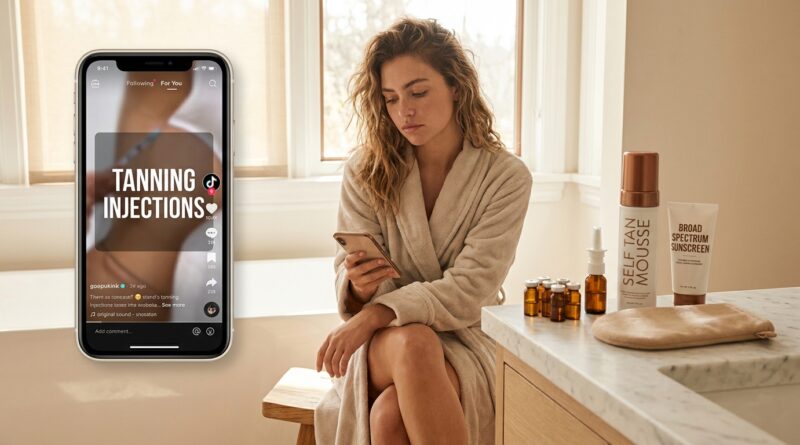
New ‘Peptide Tan’ Warning Rule: Why TikTok’s Tanning Injections And Nasal Sprays Are The Riskiest Glow Trend Of 2026
If your feed suddenly looks like a parade of “peptide tan” glow-ups, you are not imagining it. Tanning injections and nasal sprays are everywhere right now, usually pitched as the clever shortcut for people who do not want sun damage, tanning beds, or another streaky self-tanner disaster. I get why that is tempting. When a trend promises deep color with “no UV” and “science-backed melanin support,” it can sound like the safer, smarter option. The problem is that the new warning rule and public health alerts are not about ruining anyone’s fun. They are about risk. A lot of these products are unapproved, loosely sold online, and often used without any real medical oversight. That means you may not know what is actually in them, how strong they are, or what they could do long term. For anyone searching tanning injections nasal spray safety, this is the part that matters most.
⚡ In a Hurry? Key Takeaways
- Tanning injections and nasal sprays are not a proven safe shortcut. Many are unapproved and poorly studied in humans.
- If a product promises a “UV-free tan” through melanin injections or a nasal spray, treat that as a red flag, not a beauty hack.
- The safer play is still self-tanner, tanning drops, or spray tans, because the biggest risk with peptide tans is the unknown.
What the new warning is really about
The buzz phrase this year is “peptide tan,” but the concern is older and more serious than the rebrand makes it sound. These products are often tied to melanin-stimulating compounds sold as injections or nasal sprays. Online sellers and influencers may frame them as a beauty tool, but health agencies have been warning that many of these products are not approved medicines and have not been properly tested for cosmetic use.
That matters because people are not just rubbing on a lotion and washing it off if they hate the result. They are putting something into the body, sometimes by injection, sometimes through the nose, often with no clear ingredient verification and no doctor involved.
Why TikTok makes this trend look safer than it is
Short videos are great at showing before-and-after color. They are terrible at showing uncertainty. You see the tan line. You do not see the sourcing, the side effects, the dosing confusion, or what happens six months later.
A lot of the marketing language is built to calm your fears fast. “Peptide.” “Research grade.” “Melanin support.” “No UV needed.” “Cleaner than tanning beds.” Those phrases sound polished, but polished is not the same as safe.
Common red-flag phrases in ads
Be careful when you see claims like these:
- “Doctor-formulated” with no named doctor or clinic
- “Lab tested” with no public testing report
- “For research use only” next to beauty results
- “Natural melanin activation” with no real explanation
- “Safer than sun exposure” used as the whole sales pitch
That last one gets people. Yes, heavy UV exposure is harmful. But “less risky than tanning beds” does not automatically mean “safe to buy from the internet and inject yourself.” Those are two very different standards.
Tanning injections nasal spray safety. What people need to know
Here is the plain-English version. The main safety problem is not just one side effect. It is the giant stack of unknowns.
You may not know the true ingredient. You may not know the dose. You may not know whether the product was made in clean conditions. And you may not know how it interacts with your body, your skin, or any health condition you already have.
Researchers and regulators have raised concerns around side effects and unpredictable reactions. Reports tied to these products have included nausea, flushing, appetite changes, headaches, changes in moles and pigmentation, and other worrying skin effects. The exact risk profile can be hard to pin down because products sold online are not always what they claim to be.
That is why the new warning rule matters. It is trying to cut through a marketing machine that acts like this is just another beauty add-on.
The biggest issue is not just the tan. It is the lack of control
People often assume the main risk is “What if I look too dark or orange?” Honestly, that is the least of it.
With DIY injections, you are also dealing with sterile technique, needle handling, dosage accuracy, storage, contamination risk, and fake or mislabeled products. With nasal sprays, people can get lulled into thinking it is gentler because there is no needle. That does not make the chemistry harmless. It just changes the route into the body.
If you have ever been careful about SPF, skipped tanning beds, and spent years protecting your skin, this is the moment to pause. It would be a shame to undo all that caution for a trend built on uncertainty.
Why “zero UV” is not the same as “zero risk”
This is where the trend gets especially sticky. The sales pitch often targets people who already know UV damage is a problem. So the message becomes, “Relax, this is the responsible way to tan.”
But removing one risk does not erase the others. If a product pushes your body to change pigment through an unapproved compound, the fact that you skipped the beach does not make that process automatically safe.
If you want a fuller breakdown of the concern around these products, this piece on New ‘Peptide Tan’ Cancer Warning: The Truth About Melanotan, Injections And Why Sunless Glow Lovers Should Care is worth reading. It helps separate panic from facts, which is exactly what this conversation needs.
So what should you do if you are tempted?
First, do not let a viral trend make you feel behind. A tan is not a health upgrade. It is a look.
Second, if a seller is vague about approval status, ingredients, dosing, side effects, or sourcing, walk away. Fast.
Third, stick with options that are proven and predictable. Self-tanner, tanning drops used externally, bronzing lotions, and professional spray tans may not be as flashy as a “biohacked glow,” but they do not ask you to gamble with mystery compounds.
Safer ways to get the look
- Professional spray tan for an event or vacation
- At-home self-tanner with a patch test first
- Gradual tanning lotions for easier color control
- Bronzing drops mixed into moisturizer, used on the skin, not injected
None of those are perfect. But they are a lot easier to understand, a lot easier to stop using, and far less likely to spiral into a medical issue.
At a Glance: Comparison
| Feature/Aspect | Details | Verdict |
|---|---|---|
| Tanning injections and nasal sprays | Often sold online with unclear approval, uncertain ingredients, limited human safety data, and self-use without supervision | High-risk trend with too many unknowns |
| Marketing claims | Terms like “UV-free,” “peptide tan,” and “melanin support” can make the products sound cleaner and safer than the evidence supports | Use caution. Buzzwords are not proof |
| Safer glow alternatives | Self-tanner, gradual lotion, bronzing products, and spray tans give cosmetic color without injecting or inhaling unapproved compounds | Best choice for most people |
Conclusion
Tanning peptides and DIY melanin injections are spreading fast because they are being sold as a quicker, “healthier” answer for people who already avoid tanning beds and too much sun. That is exactly why this trend deserves a hard look. Health agencies and researchers are warning that many of these products are unapproved, poorly studied in humans, and wrapped in too many unknowns, especially when they are bought online and self-injected without medical supervision. The real risk is not just a bad beauty result. It is what you may be doing to your skin and your long-term health without realizing it. If you have worked hard to build good sun habits, do not let a flashy TikTok shortcut talk you out of them. The smarter move is still the boring one. Stick with proven sunless options, read the claims carefully, and treat “peptide tan” hype like any other internet trend that sounds a little too easy.