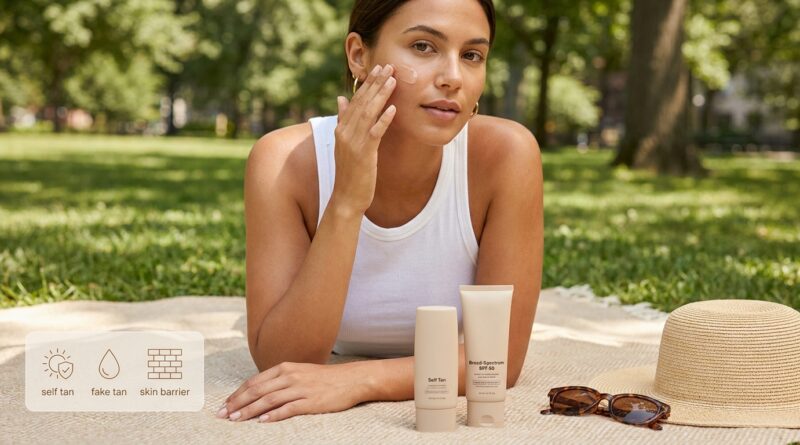
New ‘Sunscreen-Smart Tan’ Rule: How To Pair Your Self Tan With 2026’s New UV Filters Without Frying Your Skin
Your confusion is completely fair. One minute you are told to avoid “chemical sunscreens.” The next minute dermatologists are saying those scary posts are overblown, and new filter names like bemotrizinol are supposed to be good news. Meanwhile, you still want your self tan to look even, not streaky, and you still need to walk the dog, sit at your kid’s game, or grab lunch outside without cooking your skin. Here is the simple truth. A self tan does not protect you from UV. It only colors the top layer of skin. So if you are wondering how to use sunscreen with self tanner in 2026, the answer is not to choose one or the other. It is to pair them in the right order, with the right timing, and with enough reapplication that your glow survives and your actual skin does too.
⚡ In a Hurry? Key Takeaways
- Self tanner gives color, not sun protection. You still need broad-spectrum SPF 30 or higher every day you get UV exposure.
- Apply self tanner to clean, dry skin first, let it fully develop, then use sunscreen on top the next day or after the tan has set.
- Newer sunscreen filters in 2026 are not a reason to skip SPF. What matters most is broad-spectrum coverage, comfort, and reapplying every two hours outdoors.
The new rule is simple: fake the tan, block the UV
This is the part that cuts through most of the noise. If your skin gets darker from the sun, that is not your body “building protection” in some healthy way. Doctors keep repeating this because it is still widely misunderstood. A real tan is a stress response to UV damage.
Self tanner is different. It stains the outermost dead skin cells so you look bronzed without asking your skin to absorb UV. That means your safest setup in 2026 is straightforward. Use self tanner for color. Use sunscreen for protection. Do not expect one to do the other’s job.
What changed in 2026, and why people are suddenly confused
The sunscreen chatter got louder for three reasons.
1. More people are hearing about newer UV filters
Names like bemotrizinol sound intimidating, mostly because they are unfamiliar. But unfamiliar does not mean dangerous. In plain English, these newer filters are being discussed because they can offer broad UVA and UVB coverage and can be easier to wear cosmetically in some formulas.
2. Social media keeps treating “chemical” as a warning label
This is where many people get stuck. Mineral and chemical sunscreens both use chemicals. One group uses mineral UV filters like zinc oxide or titanium dioxide. The other uses organic filters that absorb UV energy. For most people, the better sunscreen is the one you will actually use enough of and reapply.
3. Health warnings are getting more urgent in high-UV months
State agencies and skin cancer groups are pushing harder because UV index spikes fast in summer and people still underestimate casual exposure. Walking to the car counts. Patio brunch counts. Sitting by a window for long stretches can matter too, especially for UVA.
How to use sunscreen with self tanner in 2026, step by step
Night before or tanning day: apply the self tanner correctly
Exfoliate first if needed. Moisturize dry spots like elbows, knees, ankles, and wrists lightly. Then apply your self tanner evenly to dry skin.
Once it is on, let it dry fully. Avoid sweating, showering, tight clothes, and anything oily until the product has had time to develop based on its directions.
This matters because sunscreen layered on top too soon can smear the tan guide color, create patchiness, or interfere with even development.
After the tan develops: sunscreen goes on top
Once the self tan has set and you have done the first rinse if your product requires one, sunscreen becomes the top layer for daytime wear.
Think of it like this. Self tanner is your cosmetic layer. Sunscreen is your safety layer.
Choose broad-spectrum SPF 30 or higher
For everyday errands, SPF 30 is a reasonable floor. If you are outdoors for a while, sweating, swimming, or spending time during peak UV hours, SPF 50 gives you a bit more margin for real-life underapplication.
Broad-spectrum is the key label. That means the product covers both UVB, which burns, and UVA, which ages skin and also contributes to skin cancer risk.
Use enough sunscreen, even if you are worried about ruining the glow
This is where many self-tan fans accidentally sabotage protection. They dab on a tiny amount because they do not want to disturb the bronzed look. Unfortunately, underapplying sunscreen is one of the fastest ways to get burned.
Use a generous amount. For face and neck, many dermatologists suggest roughly two finger lengths of product, depending on texture. For the body, you need much more than most people think, roughly a shot-glass amount for full-body coverage.
Reapply without scrubbing
Reapply every two hours when outdoors, and sooner after swimming or sweating. Do not rub aggressively like you are trying to polish a countertop. Smooth it on gently and evenly.
If you hate heavy lotions over self tan, try a lightweight milk, gel-cream, or clear spray for top-ups. Just do not use spray as a lazy mist from a foot away. Sprays still need enough product and often need hand-spreading for even coverage.
Best sunscreen textures if you wear self tanner often
For face: fluid, gel-cream, or sheer mineral formulas
These are usually easier to layer over a sunless tan without pilling or streaking makeup. If your self tan tends to collect around the nose or hairline, avoid greasy face SPFs that make you touch and rub your skin all day.
For body: lotion or milk for first coat, spray for reapplication
A lotion or milk usually gives better initial coverage. Sprays can be handy at the beach, pool, or on the go, but only if you use enough. A quick fog is not real protection.
Water-resistant if you sweat easily
If your summer routine involves heat, humidity, workouts, or outdoor events, water-resistant formulas are worth it. They help the sunscreen stay put better and reduce the chance that you rub away both protection and parts of your tan.
If heat is already making your color look patchy, it is worth reading New ‘Heatwave Tan’ Rule: How To Keep Your Self-Tan Safe When UV And Humidity Go Extreme In Summer 2026. Hot weather changes how both self tan and sunscreen behave on skin.
Mineral vs newer chemical filters: which is better over self tan?
There is no one winner for everyone. The better choice depends on your skin, your budget, and whether you will actually wear it correctly.
Mineral sunscreen
Pros. Good option for very sensitive skin. Easy to understand ingredient list if you prefer zinc oxide or titanium dioxide. Often trusted by people with rosacea or post-procedure skin.
Cons. Can feel thicker. May leave a cast. On body self tan, some formulas can look chalky if not rubbed in well.
Newer chemical-filter sunscreen
Pros. Often feels lighter and more elegant. Can be easier to apply in the full amount needed. Some newer filters have strong broad-spectrum performance.
Cons. Some people with sensitive eyes or reactive skin may need trial and error. The names can sound scary online, which does not help.
Bottom line. If a newer-filter sunscreen feels better and makes you more likely to reapply, that is a practical win. If mineral works best for your skin and you use enough, that is also a win.
Common mistakes that fry skin while the tan still looks fine
Mistake 1: Assuming your glow means you are “covered”
You can look bronzed and still be fully vulnerable to UV. Self tanner changes color, not your skin’s UV defenses.
Mistake 2: Applying sunscreen too soon after tanning
If your self tanner has not finished developing, layering sunscreen right away can create uneven results. Give the tan time to set first.
Mistake 3: Using tanning oil instead of sunscreen
If it does not clearly say broad-spectrum SPF 30 or higher, it is not a proper substitute. Shiny skin is not protected skin.
Mistake 4: Skipping reapplication because you do not want streaks
A slightly faded self tan is easier to fix than a sunburn. Reapply gently and keep your skin intact.
Mistake 5: Forgetting high-risk spots
Ears, chest, shoulders, hands, scalp part, and tops of feet get missed constantly. These areas also tend to show self tan unevenly, so people avoid them. Do not.
A glow-friendly daytime routine that actually works
Here is a simple routine you can copy.
If you self tan at night
1. Exfoliate and prep skin.
2. Apply self tanner.
3. Let it develop overnight.
4. Rinse if your product says to.
5. Next morning, apply broad-spectrum SPF 30 or 50 evenly.
6. Reapply every two hours outdoors.
If you need glow and sun safety the same day
Use a tinted body lotion or cosmetic bronzing product instead of a developing self tanner. That way you do not have to gamble with development time. Put sunscreen on first if the bronzer is makeup-like and temporary, or choose a bronzing product specifically designed to layer over SPF.
If you are at the beach or pool
Do not try to “save” a fresh self tan by wearing less sunscreen. Wear more protection instead. UPF clothing, a hat, shade, sunglasses, and a water-resistant SPF are your friends.
What about sunscreen sticks, powders, and mists?
They can help, but they are usually best as backup, not your only line of defense.
Sticks
Good for nose, ears, around eyes, and quick reapplication. You still need enough passes to build real coverage.
Powders
Nice for reducing shine on the face and touching up over makeup. Not ideal as your main sunscreen layer for a long day outside.
Mists and sprays
Convenient, especially over body self tan. Just remember that convenience can trick you into underusing them. Spray thoroughly and spread if needed.
At a Glance: Comparison
| Feature/Aspect | Details | Verdict |
|---|---|---|
| Self tanner vs real tan | Self tanner colors dead surface skin cells. A real tan comes from UV exposure and skin damage. | Choose self tanner for glow. Never chase sun for color. |
| Mineral vs newer chemical sunscreen filters | Mineral can suit sensitive skin. Newer filters often feel lighter and may be easier to wear daily. | Pick the one you will apply generously and reapply. |
| Order of use | Apply self tanner first and let it fully develop. Apply sunscreen after the tan has set, usually the next day or after the first rinse. | This gives the best shot at even color and proper UV protection. |
Conclusion
You do not need to choose between looking nicely bronzed and being smart about UV. The 2026 rule is refreshingly boring, which is usually a sign it is the right one. Keep getting your glow from self tanner. Keep getting your protection from a broad-spectrum sunscreen you like enough to use properly. That matters right now because UV guidance is moving fast, agencies are repeating that a sun tan is still skin damage, dermatologists are pushing back on panic about “toxic” filters while talking up newer options like bemotrizinol, and summer UV spikes are triggering fresh skin-cancer warnings. The useful part is not the ingredient drama. It is having a routine you can actually follow. If this guide helps you step outside with your self tan intact and your skin better protected, then it has done more than most of the shouting online.