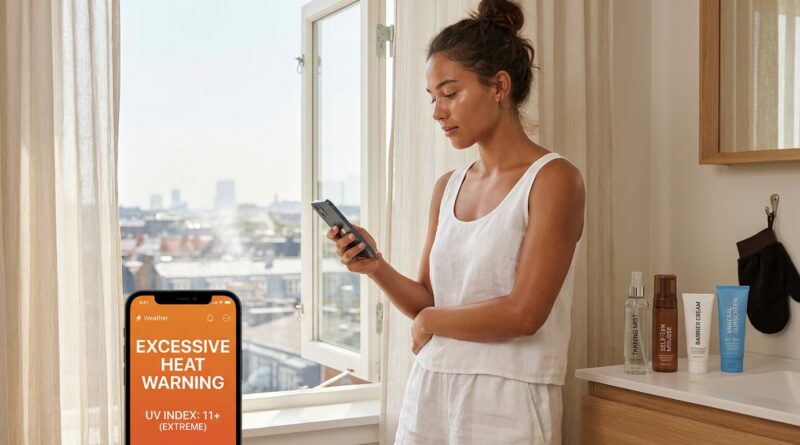
New ‘Heatwave Tan’ Rule: How To Keep Your Self-Tan Safe When UV And Humidity Go Extreme In Summer 2026
If your self-tan has started looking blotchy the minute the temperature spikes, you are not imagining it. Heatwaves make everything harder. Your skin gets sweaty, your sunscreen needs constant topping up, and sticky air can turn a smooth bronze into streaks, rough patches, or an itchy mess by lunchtime. That is why self tan safety in heatwave conditions matters more than most beauty advice admits. Dermatologists say extreme heat and high UV can push the skin barrier into stress mode, which means more water loss, more irritation, and more flare-ups if you already deal with acne, eczema, or heat rash. Add self-tanner on top of SPF, bug spray, body oil, and sweat, and it is easy to see why summer 2026 has become a perfect storm. The good news is that a few routine changes can protect your skin and help your tan last without turning your bathroom into a chemistry lab.
⚡ In a Hurry? Key Takeaways
- In a heatwave, apply self-tan only to cool, dry, calm skin. Not right after sun, shaving, sweating, or a hot shower.
- Let self-tan fully develop before layering SPF, deodorant, tight clothes, or bug spray, and use lightweight products to reduce streaking.
- If you notice stinging, rash, clogged bumps, or angry dry patches, stop tanning for a few days and focus on barrier repair.
Why heatwaves mess with self-tan so fast
Self-tanner seems simple. Put it on, wait, rinse, glow. But in very hot and humid weather, your skin behaves differently.
You sweat more. Your pores stay more active. Friction increases in places like underarms, inner elbows, knees, under the chest, and behind the knees. On top of that, high UV exposure can leave skin slightly inflamed even before you notice a sunburn.
That matters because self-tan develops best on skin that is clean, dry, and steady. Not skin that is damp, overheated, or irritated.
When your skin barrier is stressed, self-tan can grab unevenly. It may turn darker on dry spots, slide off sweaty spots, or sting if the formula is heavily fragranced. In humid weather, products also stay trapped longer in folds and under snug clothing, which can raise the chance of folliculitis, heat rash, or plain old itching.
The new summer rule: Tan for the forecast, not the calendar
If there is one rule to follow in summer 2026, it is this. Do not use your spring self-tan routine during a heat advisory.
Instead, match your routine to the weather:
On extreme heat days
Skip fresh tanning if your skin is already hot, flushed, or sweaty. Wait until evening, after your body has cooled down, and only if your skin feels calm.
On high UV days
Sun protection comes first. Always. A tan from a bottle does not protect you from UV damage, and trying to stack too many products at once often causes the exact streaks people are trying to avoid.
On humid days
Use less product than you think you need. Humidity can slow drying time and make transfer more likely, especially around ankles, wrists, and body folds.
How to prep skin safely before self-tan
Preparation matters more in summer than product price.
1. Exfoliate gently, not aggressively
A light exfoliation 12 to 24 hours before tanning can help smooth rough areas. But skip harsh scrubs, strong acids, and rough mitts if your skin is already irritated from heat or sun. Overdoing it can create micro-irritation, and self-tan loves to settle into damaged patches.
2. Avoid tanning right after shaving or waxing
Freshly shaved skin can be more reactive. In hot weather, that reaction can be worse because sweat and friction join the party. Give skin time to settle before applying self-tanner.
3. Cool down first
This one is big. Do not self-tan right after a hot shower, workout, beach trip, or walk in 95-degree heat. Wait until your skin is completely cool and dry. If you are still warm, the formula is more likely to streak or develop unevenly.
4. Moisturize strategically
Apply a tiny amount of plain, fragrance-free moisturizer only to extra-dry spots like elbows, knees, ankles, and knuckles. Do not slather lotion everywhere unless the tanner specifically says to. Too much slip can dilute color.
What to avoid layering with self-tan
This is where many summer tans go wrong. People are not just wearing self-tanner. They are also using SPF, body oil, deodorant, anti-chafe balm, and bug spray.
None of those are bad. But timing matters.
Do not apply self-tan on top of:
- Fresh sunscreen
- Body oil
- Bug spray
- Heavy lotion
- Sticky aloe gels with fragrance
Those products can block even development or create odd patches where the tanner cannot sit evenly on skin.
Best order of operations
Use self-tan at night on clean, dry skin. Let it develop fully. Rinse if the directions say to. Then use your daytime products the next day.
If you must wear SPF the same day your tan is developing, choose a lightweight formula and pat it on gently rather than rubbing hard.
How to keep a tan from streaking in humidity
Humidity is sneaky. You may feel dry enough to get dressed, then start sweating the second you move.
Try these fixes:
Wear loose, dark clothing after application
Tight waistbands, sports bras, and leggings can rub lines into a developing tan. Loose cotton is your friend.
Use a fan, not a hot bathroom
Let your skin dry in a cool room. A steamy bathroom is the wrong place to finish this job.
Do not sleep in a sauna
If your bedroom runs hot, use a fan or lighter bedding. Night sweat is one of the fastest ways to get chest, neck, and back streaks.
Skip intense exercise until the tan sets
Yes, even if it is leg day. Sweat can create drip marks, patching, and irritation.
When self-tan can make skin problems worse
Most people can use self-tanner without major trouble, but heat changes the risk a bit.
Acne and folliculitis
If you are getting tiny bumps on the chest, shoulders, buttocks, or back, sweat and occlusion may be trapping product and oil around hair follicles. Lightweight formulas tend to be easier to tolerate than thick mousse layers if you are breakout-prone.
Eczema and dry patches
Self-tan usually clings to dry, inflamed skin and makes it look darker and rougher. If your eczema is active, it is better to calm the flare first than try to tan over it.
Heat rash
If you already have prickly, red, itchy heat rash, skip self-tan until it clears. Adding fragrance or preservatives to irritated skin can make things feel much worse.
Sunburn
Never apply self-tan over sunburned skin. It will not look right, and your skin needs recovery, not more ingredients.
The best self tan safety in heatwave routine
Here is the simple version.
- Check the weather. If it is brutally hot or very humid, wait until evening.
- Take a lukewarm shower. No harsh scrub if your skin feels irritated.
- Dry off completely and cool down for at least 20 to 30 minutes.
- Apply a little plain moisturizer to very dry areas only.
- Use a light, even layer of self-tanner.
- Let it dry fully before getting dressed.
- Wear loose clothes and avoid sweating while it develops.
- The next day, use gentle cleanser, light moisturizer, and broad-spectrum SPF.
How to choose a better formula for hot weather
If your current self-tanner keeps failing in summer, the formula may be the issue.
Look for:
- Lightweight lotion, gel, or serum textures
- Fragrance-free or lower-fragrance formulas if you are sensitive
- Clear ingredient labeling
- Buildable color instead of very dark one-shot formulas
Be cautious with:
- Very strong fragrance
- Heavy oils in extreme humidity
- Extra-dark formulas on dry or reactive skin
- Anything that stings on application
A gradual tanner is often the safest bet during long heatwaves because it gives you more control and lowers the chance of one dramatic, uneven result.
What to do if your tan turns patchy or your skin gets irritated
Do not panic and definitely do not scrub your skin raw.
If it is just streaky
Use a gentle washcloth and lukewarm water the next day. Then apply a gradual tanner to even things out rather than piling a full second coat onto stressed skin.
If it is itchy or stingy
Wash the product off if possible, stop using active skincare on the area, and switch to a bland moisturizer. Think simple and boring.
If you have rash, swelling, or painful bumps
Stop using the product and check with a dermatologist or urgent care, especially if the reaction is spreading or feels severe.
Summer tanning myths worth dropping
“A fake tan means I can relax about sunscreen.”
Nope. Self-tanner changes color, not UV protection.
“More product means longer wear.”
Usually the opposite in a heatwave. Thick layers are more likely to get sticky, transfer, and clog.
“If my skin is damp, it will blend better.”
It may spread easier, but development is often less even.
“I can fix patchiness by reapplying right away.”
That often creates darker islands of color. Give skin time to settle first.
At a Glance: Comparison
| Feature/Aspect | Details | Verdict |
|---|---|---|
| Best time to apply | Evening, after skin is cool, dry, and calm | Best choice in a heatwave |
| Layering with SPF and bug spray | Apply self-tan first on a separate schedule, then daytime protection later | Safer for skin and better for even color |
| Sensitive or irritated skin | Avoid tanning over sunburn, heat rash, eczema flares, or active bumps | Pause tanning and repair the barrier first |
Conclusion
Heatwaves do not mean you have to give up self-tanner, but they do mean you need a smarter routine. Dermatologists are warning that extreme heat and high UV are colliding with summer skincare habits right now, which can mean more irritation, faster water loss, and more flare-ups of acne, eczema, and heat rash. For self-tanners, that creates a perfect storm. Sweat, SPF, bug spray, body oils, and friction all change how products sit on skin. The fix is not fancy. It is practical. Apply tan only to cool, dry skin. Keep your layers light. Respect your skin barrier. And if your skin starts sending unhappy signals, listen early. That is the real secret to self tan safety in heatwave conditions. Not just a better glow, but calmer, healthier skin while the UV index stays high.