New ‘DHA Dose-Safe Glow’ Rule: The 2026 Science On How Much Self Tanner Your Skin Can Actually Handle
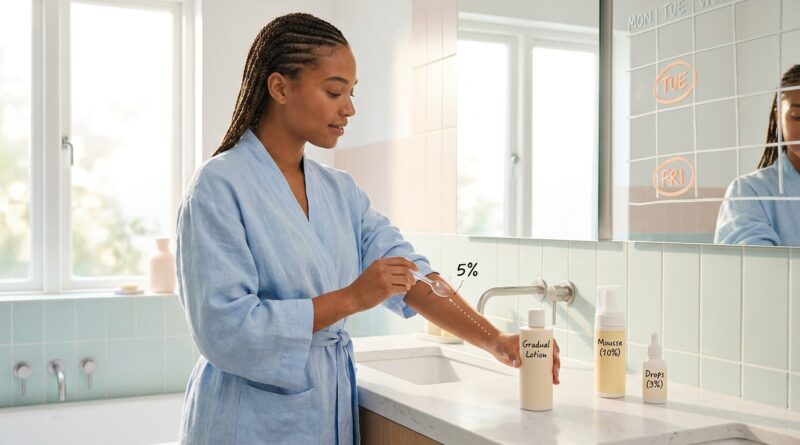
If you use mousse on Sunday, tanning drops in your moisturizer during the week, then a gradual lotion to “top up” by Friday, you are not being dramatic for wondering if that is a lot. It probably is. The awkward truth is that most self-tan safety data was built around lighter, occasional use, not the modern habit of layering several DHA products across large areas of skin week after week. That does not mean self tanner is suddenly unsafe. It means the old assumptions may not match how many people actually use it now. The smart move in 2026 is to become dose-aware. Think of it like caffeine. One coffee is one thing. Three coffees, an energy drink, and a pre-workout is another. Self tanner works the same way. The question is no longer just “is DHA allowed in this product?” It is also “how much self tanner is safe to use when I am stacking products all week?”
⚡ In a Hurry? Key Takeaways
- There is no simple one-size-fits-all weekly DHA limit for home users, but heavy layering across the whole body goes beyond what many older safety assessments assumed.
- The safest practical habit is to cut down overlap. Pick one main tanning product, know its DHA percentage, and reduce “top-up” use on days you do not really need it.
- If you are pregnant, have skin barrier issues, or use spray tans, be extra careful and follow newer fact sheets and product directions closely.
Why this matters now
DHA, short for dihydroxyacetone, is the active ingredient in most self tanners. It reacts with the top layer of dead skin cells to create that bronzed look. For years, the usual reassurance was that DHA mostly stays on the skin surface.
That is still broadly true. But the newer conversation is more specific. Researchers, clinicians, and safety reviewers are looking harder at real-life use patterns. Not one neat application on a small test area. Real people. Full body mousse. Face drops. Daily gradual lotion. Weekly maintenance. Sometimes all at once.
That fresh push matters because exposure is not just about concentration. It is also about coverage and frequency. A low percentage product used every day over your whole body can add up. A stronger product used less often can also add up. The dose picture gets fuzzy fast.
The hard truth about “safe”
If you were hoping for a perfect answer like “12 pumps per week is fine,” science is not there yet. There is no universal consumer rule that says exactly how much self tanner is safe to use for every body, every product, and every routine.
What we do know is more useful than it sounds:
- Older safety thinking often assumed smaller, occasional applications.
- Today’s users often apply to more skin, more often, using more than one product type.
- Pregnancy and medical fact sheets are starting to spell out typical DHA strengths more clearly and remind people not to assume “more is harmless just because it is topical.”
So the new rule is not panic. It is awareness. If your routine is much heavier than the routine safety assessments were based on, that is your signal to scale back and simplify.
How much self tanner is safe to use in real life?
A simple way to think about it
Ask three questions.
- How strong is the product?
- How much skin am I covering?
- How often am I reapplying?
Those three things together give you your practical DHA load.
Typical DHA percentages
Most self tanners fall somewhere in these rough ranges:
- Gradual tan lotions: often around 1% to 3% DHA
- Classic mousses and lotions: often around 4% to 8% DHA
- Darker or “ultra dark” formulas: can run higher
- Face drops: highly variable, often concentrated because you choose the number of drops
That means your weekly routine matters more than the label mood words like “light,” “medium,” or “dark.” A “gentle” gradual tan used daily on arms, legs, chest, and back may expose you to more total DHA over a week than one stronger application of mousse.
The new Dose-Safe Glow rule
Here is the practical 2026 version.
1. Stop stacking by default
Many people treat products like they are separate categories, not one total dose. Mousse on the body. Drops on the face. Gradual lotion on dry spots. Instant top-up before an event. But your skin does not sort those into tidy little buckets.
If you use multiple DHA products in the same 24 to 48 hours, count them together.
2. Use one “anchor” product
Pick one main tanning product for most of your color. Then use one support product only where truly needed. For example, a weekly mousse plus plain moisturizer in between is a lower-dose routine than weekly mousse plus daily gradual tan plus face drops every morning.
3. Match reapplication to fade, not anxiety
A lot of overuse comes from fear of fading, not actual fading. If your tan still looks fine, skip the top-up. Reapply when the color has clearly broken up, gone patchy, or dropped more than you like.
4. Be careful with damaged skin
Fresh shaving cuts, eczema flares, over-exfoliated skin, retinoid irritation, and a compromised skin barrier can all make “normal use” less predictable. This is where less is more.
5. Treat face use as extra, not free
Face drops feel tiny because the bottle is tiny. But they are often used often. If your face moisturizer already contains DHA, adding separate drops at night is still stacking.
What a smarter routine looks like
Here are some common routines, translated into plain English.
Lower-load routine
Full-body mousse once a week. Plain moisturizer on non-tan days. Face product only when the face clearly fades faster than the body.
This is closer to the kind of use safety reviewers have historically been more comfortable with.
Medium-load routine
Full-body mousse every 5 to 7 days, plus a gradual tan lotion once or twice midweek on legs and arms only.
Usually reasonable for many adults, but still worth tracking if you use stronger formulas.
Higher-load routine
Dark mousse weekly, face drops most days, and gradual lotion across the whole body between applications.
This is the kind of pattern getting more attention now. Not because it is proven dangerous, but because it moves farther away from the lighter-use assumptions behind older data.
Who should be extra cautious?
Pregnant users
Many medical sources still say topical self tanner is generally considered lower concern than UV tanning. But newer fact sheets also tend to be more careful with wording. They often point out that data is limited, inhalation should be avoided, and heavy use was not the basis for most safety assessments.
If you are pregnant, the lowest-fuss approach is sensible. Use less. Avoid spray exposure. Skip unnecessary top-ups. Ask your midwife, OB, or dermatologist if you want advice tailored to your situation.
People with asthma or who get spray tans
This article is about skin dose, but inhalation is a separate issue. If you use spray tans, read New ‘Spray-Tan Lung Safe’ Rule: The Fresh 2026 Science On DHA Inhalation And How To Protect Your Lungs In The Booth. Skin exposure and breathing exposure are not the same problem, and both deserve attention.
Anyone with barrier-damaged skin
If your skin is irritated, inflamed, peeling, sunburned, or heavily exfoliated, take a break. It is not the week to chase maximum color.
How to do a quick weekly DHA reality check
You do not need a chemistry degree. Just do this once.
- List every DHA product you use in a normal week.
- Write down the DHA percentage if the brand discloses it.
- Mark where you apply it. Face only, legs only, or full body.
- Mark how often you use it.
- Circle anything that overlaps.
If you have three or more overlapping DHA products in the same week, especially over large body areas, you are probably in the “worth simplifying” zone.
Signs you may be overdoing it
These are not proof of harm. They are clues that your routine may be heavier than it needs to be.
- You cannot remember your last no-DHA day.
- You use one product for color and another “just to maintain,” nearly every day.
- You top up before the old tan has actually faded.
- You use stronger formulas because you stopped noticing your normal shade.
- Your skin gets dry, irritated, or uneven and you keep applying anyway.
Best-practice tips for a safer glow
Keep the skin healthy
Healthy skin gives a better tan with less product. Moisturize dry areas. Do not over-exfoliate. Give retinoids and acids some space if your skin is getting touchy.
Apply only where you want color
Sounds obvious, but many people spread gradual tan like regular lotion from neck to ankle every single day. If only your lower legs and forearms fade first, only top up those areas.
Do not confuse darker with better
Ultra-dark formulas can make it easier to use more DHA than you need. Often, improving prep and application gets you a better result than buying a stronger product.
Take breaks
If you tan year-round, a short break now and then is a sensible reset. It also helps you see how much product you were actually using.
At a Glance: Comparison
| Feature/Aspect | Details | Verdict |
|---|---|---|
| Single weekly product | One mousse or lotion used once every several days, with plain moisturizer between uses | Usually the easiest low-drama option |
| Layered weekly routine | Mousse plus drops plus gradual tan, often over the same week and body areas | Most likely to push beyond older light-use assumptions |
| Pregnancy or sensitive skin use | Topical use may still be preferred over UV tanning, but newer guidance favors extra caution and less exposure | Keep routines simple and ask a clinician if unsure |
Conclusion
The useful shift in 2026 is not that self tanner suddenly became scary. It is that people are finally asking a smarter question. Not just “is DHA in this bottle considered okay,” but “how much self tanner is safe to use when I am applying several products across the week?” That is a better question because it matches real life. There has been a fresh push in recent months to re-examine how much topical DHA may be absorbed when we use multiple products across the body, not just one controlled dose. At the same time, newer pregnancy and medical fact sheets are being more direct about typical DHA percentages and the fact that many safety assessments assumed smaller, occasional applications than heavy tanners use today. The good news is you do not need to give up your glow. You just need a more dose-aware routine. Know your product strength. Cut unnecessary overlap. Reapply with intention, not habit. That is how you keep the color you love without quietly overdoing it.