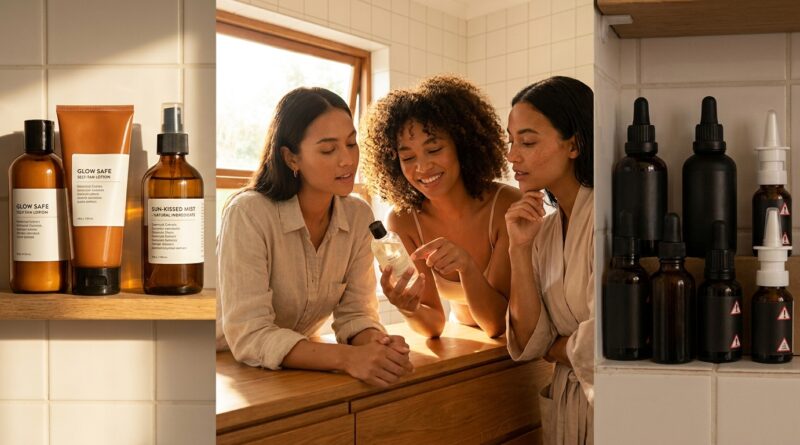
New ‘Peptide-Free Glow’ Rule: How To Choose Safe Sunless Tanners When Viral Tanning Drugs Are Everywhere
Your feed makes it sound like getting tan now requires a lab kit, a nasal spray, or an injection. That is enough to make anyone nervous. If you are wondering, are tanning peptides and nasal sprays safe compared to regular self tanner, the short answer is no. Doctors and health agencies have been warning people away from these products because they are often unregulated, sold online with unclear ingredients, and tied to real health risks. Regular self tanner is a very different thing. It sits on the skin and uses DHA to darken the top layer, rather than trying to change your body from the inside. If your goal is simple, believable color without turning your bathroom into a chemistry experiment, there is a safer path. You do not need to gamble with mystery sprays or viral “Barbie tan” hacks. You just need a smart checklist, a little patience, and a self tanner that does what it says on the bottle.
⚡ In a Hurry? Key Takeaways
- Tanning peptides, injections, and nasal sprays are not considered as safe as regular self tanner, and many doctors warn against them.
- If you want a safer glow, choose an FDA-compliant topical self tanner with clear ingredients, patch test first, and buy from a trusted retailer.
- The biggest risk today is not pale skin. It is using unregulated tanning shortcuts that can affect more than just your color.
The Big Difference Most People Miss
Self tanner and tanning peptides are not two versions of the same beauty product. They work in completely different ways.
Regular self tanner is topical. You put it on your skin. The active ingredient, usually DHA, reacts with the dead skin cells on the surface and creates a temporary darkening effect. It fades as your skin naturally sheds.
Tanning peptides, injections, and many nasal sprays aim to affect the body more deeply. Some are marketed as melanotan products or “Barbie tan” shortcuts. They are often sold online, through social media, or by sellers who make them sound casual and harmless. They are not casual. And harmless is not the word doctors are using.
So, Are Tanning Peptides and Nasal Sprays Safe Compared to Regular Self Tanner?
No. For most people, regular self tanner is the safer option by a wide margin.
Why self tanner is generally safer
Topical self tanners are made to stay on the outside of your body. When used as directed, they do not involve needles, inhalation, or unknown systemic effects. That matters.
Why peptides and nasal sprays raise red flags
These products often come with a stack of problems:
- They may be unregulated or illegally sold.
- The ingredient strength may be unclear.
- Purity can be questionable.
- They may not have gone through proper safety testing.
- Doctors have reported concerns including nausea, flushing, blood pressure changes, mole darkening, and other side effects.
There is also a simple common-sense test here. If you have to wonder whether an online nasal spray came from a real medical supply chain or a random warehouse, that is your sign to stop.
The New “Peptide-Free Glow” Rule
Here is the friendly rule to use from now on. If a tanning product asks your body to do the work internally, skip it. If it gives you color on the outside and washes off or fades with skin turnover, that is the lane to stay in.
Think of it like this. A self tanner is makeup-adjacent. A tanning injection or mystery nasal spray is chemistry-adjacent. Big difference.
How To Choose a Safe Sunless Tanner Step by Step
1. Stick to topical products
Look for lotions, mousses, drops, gels, or sprays that are meant for external use only. If the product is inhaled, injected, or described as a peptide tan booster, move on.
2. Read the ingredient list
The usual active ingredient in self tanner is DHA, sometimes paired with erythrulose. That is normal. What you do not want is a product with vague claims, missing ingredient details, or a label that sounds like social media slang instead of real cosmetic labeling.
3. Buy from trusted sellers
Use well-known beauty retailers, established tanning brands, or official brand websites. Be careful with marketplace listings, pop-up social accounts, and products sold only through DMs. If a seller makes huge promises and offers no real company details, that is a bad sign.
4. Patch test first
Even safe self tanners can irritate sensitive skin. Test a small area 24 hours before full use. This is boring advice. It is also the advice that saves people from a full-body regret spiral.
5. Check for clear use instructions
A trustworthy self tanner should tell you how to prep, apply, wait, and rinse if needed. If the directions are confusing or missing, skip it.
6. Be wary of “too good to be true” claims
“Permanent tan.” “Medical-grade bronze.” “Works from within.” “No need for sun or self tanner ever again.” These are not reassuring claims. They are warning signs dressed up as marketing.
7. Keep sunscreen in the routine
This part trips people up all the time. A self tan does not protect you from UV damage. You still need sunscreen. The color is cosmetic, not protective.
Red Flags That Should Make You Put the Product Down
If you see any of these, walk away:
- No full ingredient list
- No real business address or customer support
- Claims that it works like an injection without saying what is inside
- Sold as a “research chemical” or “not for human consumption”
- Influencer hype with no credible safety info
- Pressure to buy fast because it “keeps getting taken down”
That last one is especially telling. A product disappearing from platforms is not a sign that it is secret and amazing. Sometimes it is a sign that it should not be there in the first place.
What a Good Self Tanner Should Actually Feel Like
A good self tanner should feel boring in the best possible way. It should have a clear shade guide, straightforward directions, and an ingredient list that makes sense. It should not make you feel like you are joining an underground club.
You are looking for predictable results. Even color. Manageable fade. No mystery.
If You Are Tempted by Viral Tanning Shortcuts
That temptation is understandable. The videos make it look easy. One spray, one dose, one dramatic before-and-after. But social media is very good at hiding the unglamorous parts. Side effects. Unclear sourcing. Products with no meaningful oversight. The anxious late-night search that starts with “Is this safe?”
If your real goal is confidence, not risk, a quality self tanner gets you much closer to that goal.
At a Glance: Comparison
| Feature/Aspect | Details | Verdict |
|---|---|---|
| How it works | Regular self tanner colors the top layer of skin. Peptides and nasal sprays aim to affect pigment production from inside the body. | Topical self tanner is the safer route for most people. |
| Regulation and transparency | Self tanners from established brands usually have standard cosmetic labeling. Viral sprays and injections are often sold through unclear or unregulated channels. | Choose products with clear labeling and trusted retail sources. |
| Health risk | Self tanners can still irritate skin, but risks are usually local and manageable. Peptides and nasal sprays may carry broader health concerns and unknown side effects. | Avoid internal tanning shortcuts unless guided by a qualified medical professional, which most cosmetic products are not. |
Conclusion
The biggest tanning story right now is not how to get darker. It is how far people are being pushed toward unregulated injections and nasal sprays that doctors are openly warning against. If you want a glow without the stress, the answer is refreshingly simple. Stay peptide-free. Choose a regular self tanner from a trusted brand. Read the label. Patch test. Keep sunscreen in the mix. That approach protects your skin, avoids unnecessary health risks, and lets you enjoy the fun part of tanning without gambling on mystery products. A believable bronze should feel easy, not scary. That is the kind of glow worth keeping.